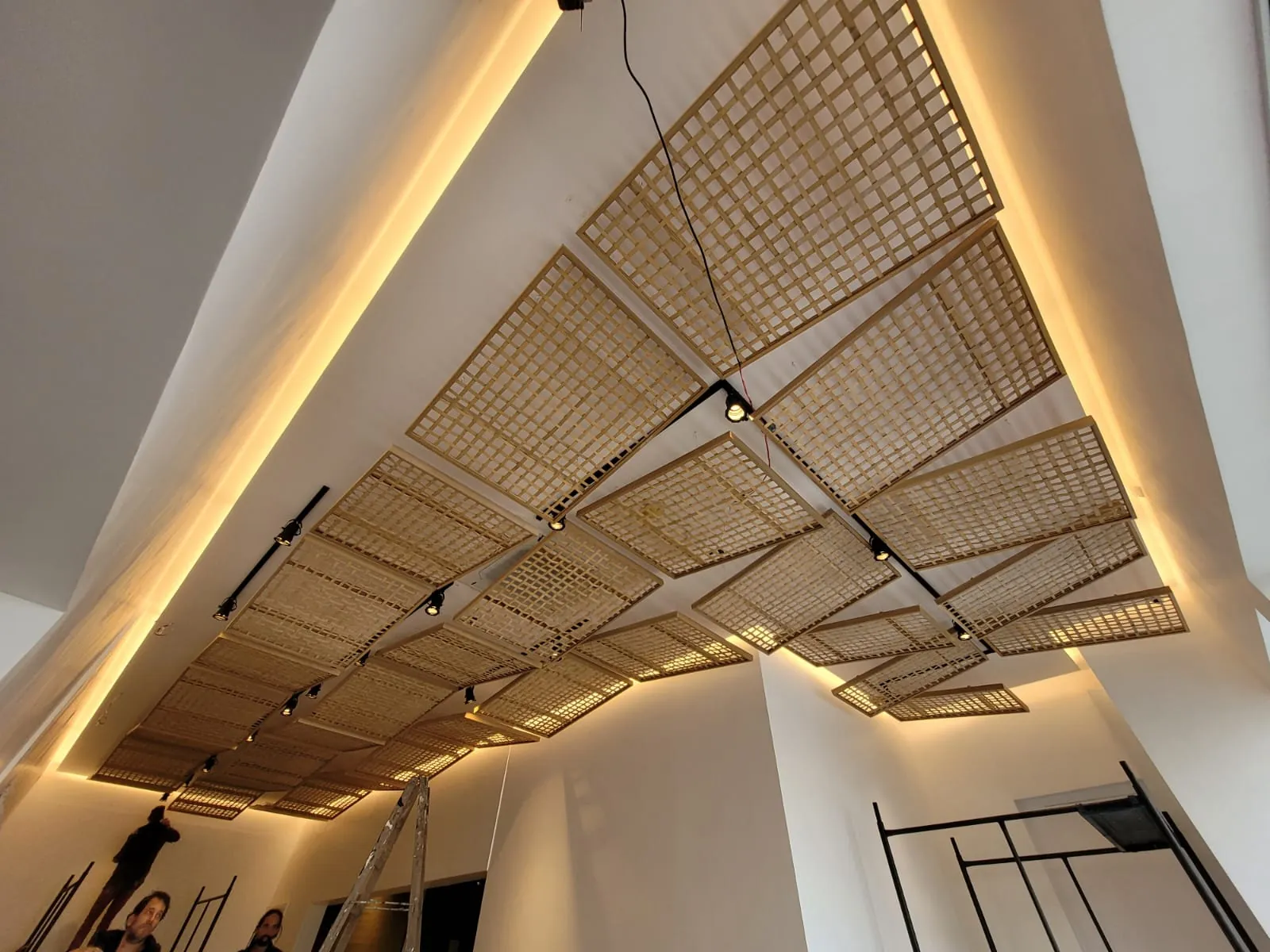
The Fire Safety Protocol: The Case Study that Validated Bamboo Safety in Public Spaces
The story of how the responsibility to protect a cultural heritage led us to develop the market's most rigorous fire safety engineering process to obtain the AVCB (Fire Department Inspection Certificate).
Project Context
Technical Sheet
Client
Museum of Japanese House and Culture
Partner(s)
CKC (Flame retardant supplier)
Location
São Paulo, SP
Execution
Tudubambusa — Methodology and Leadership
Scope
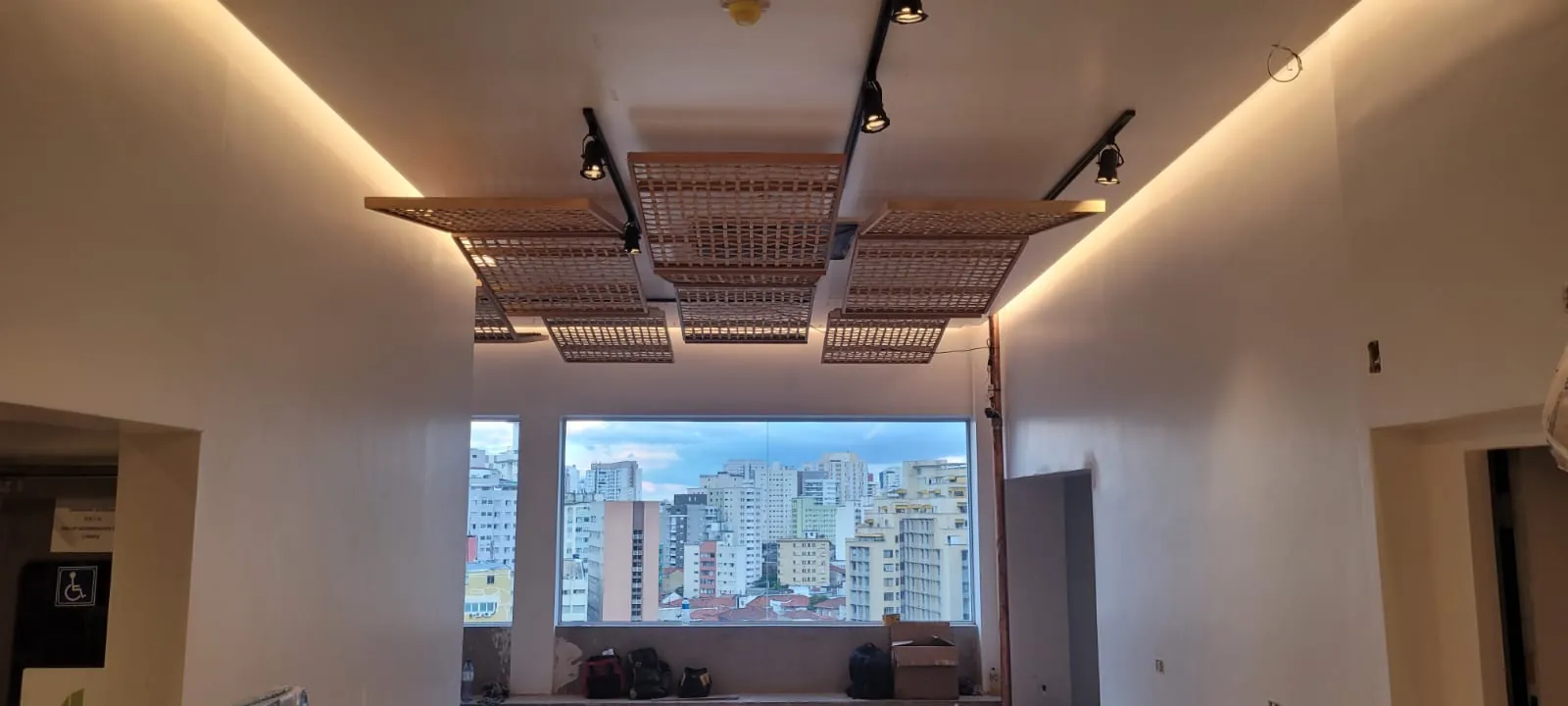
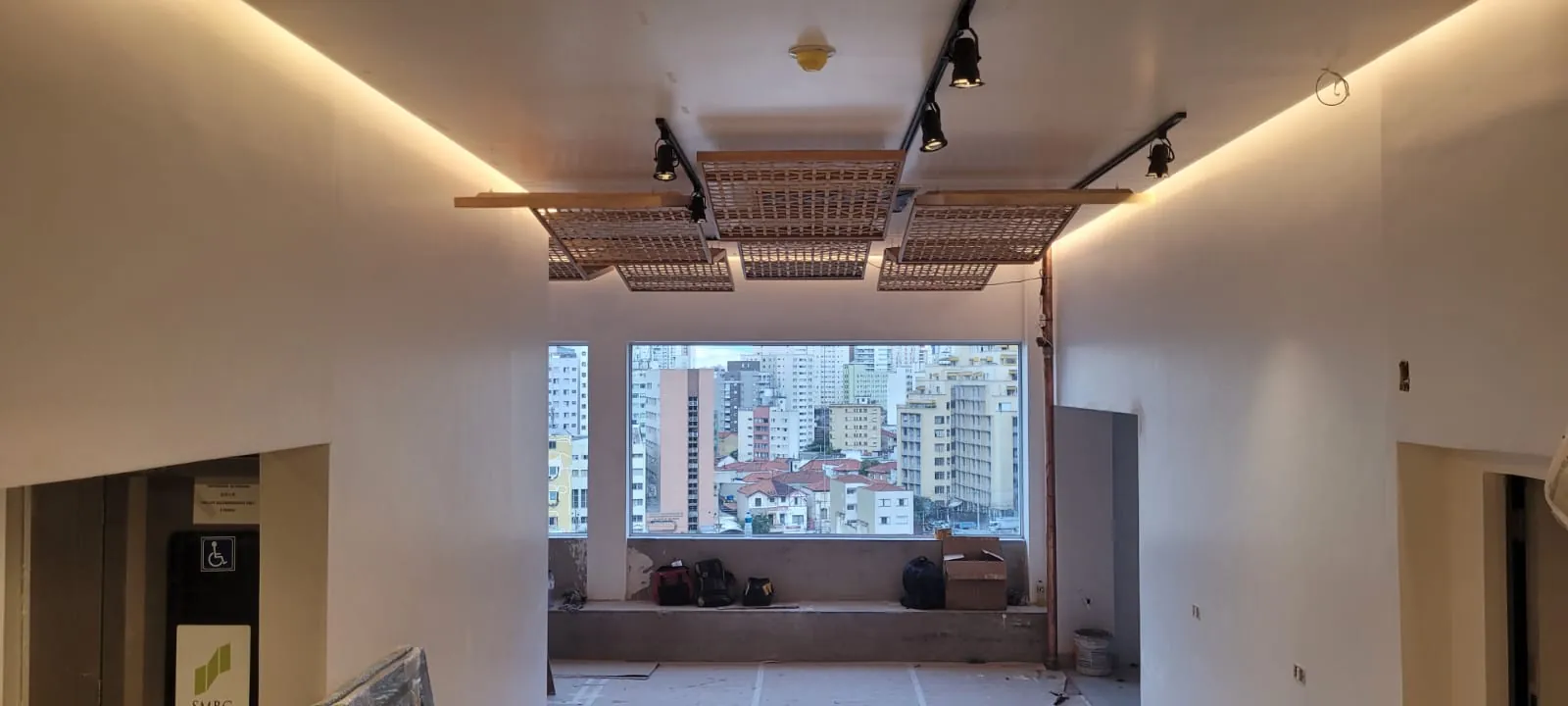
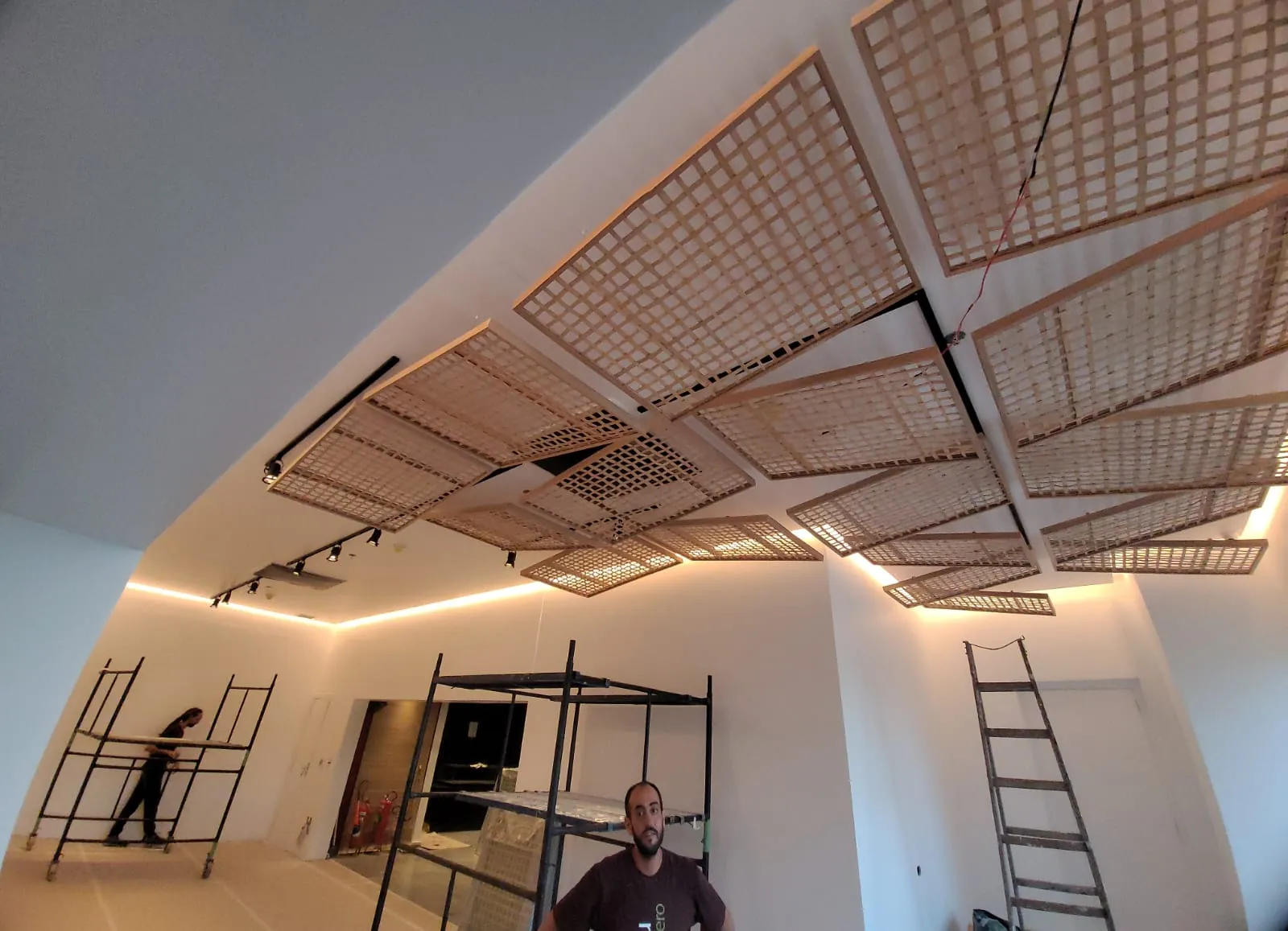
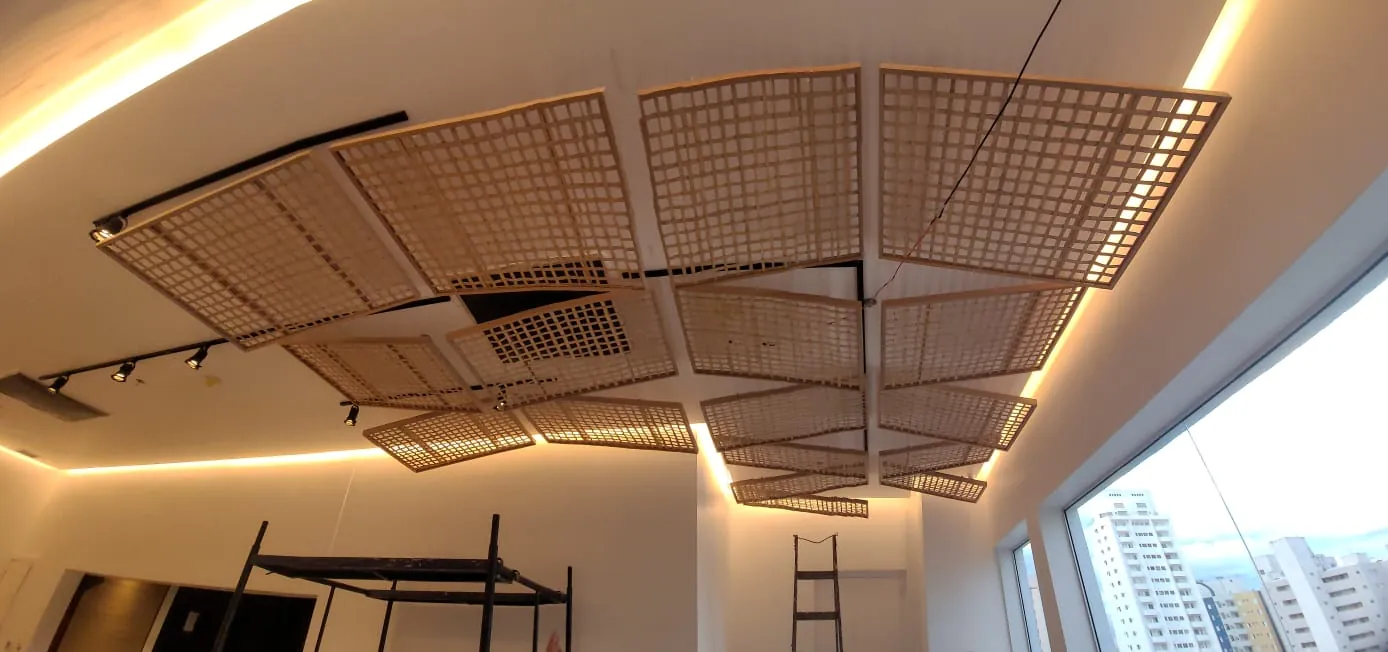
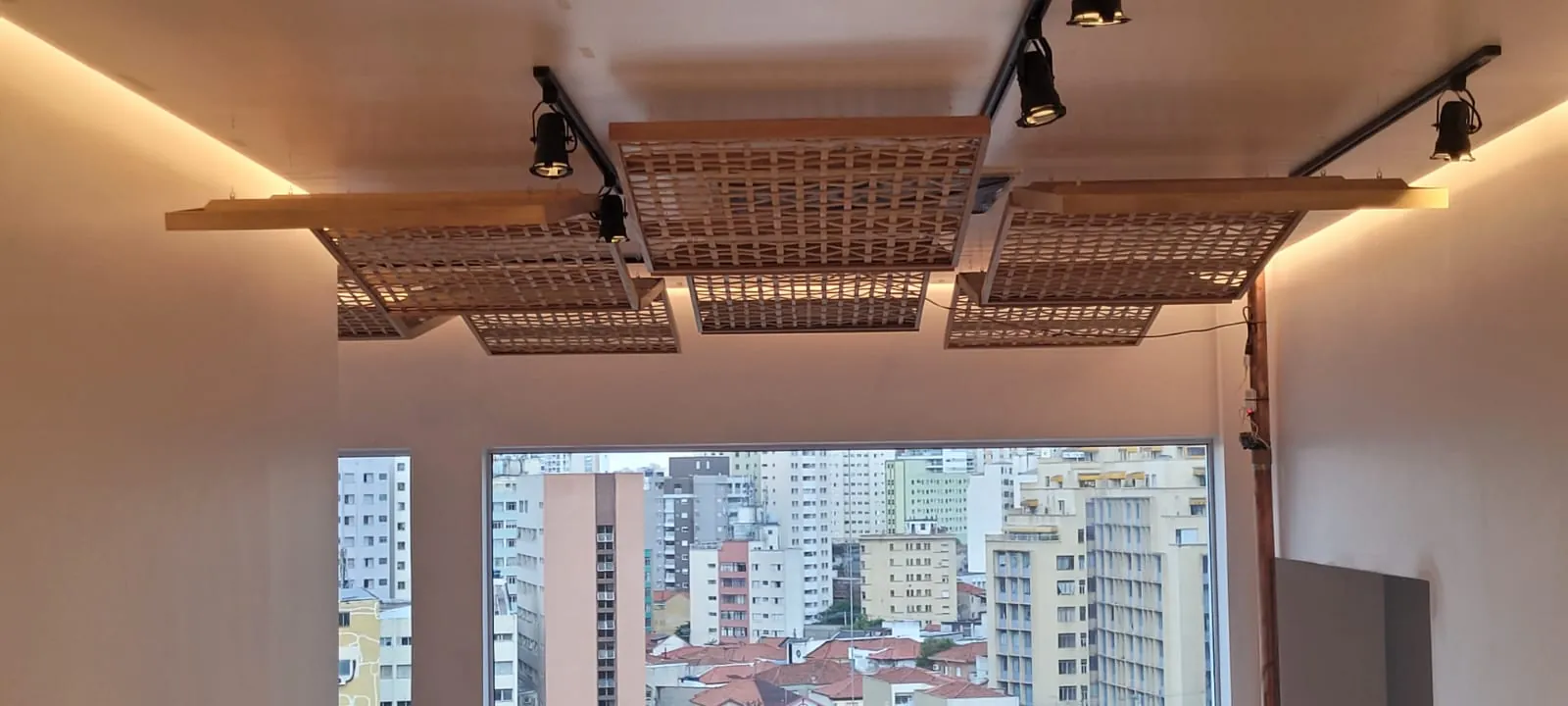
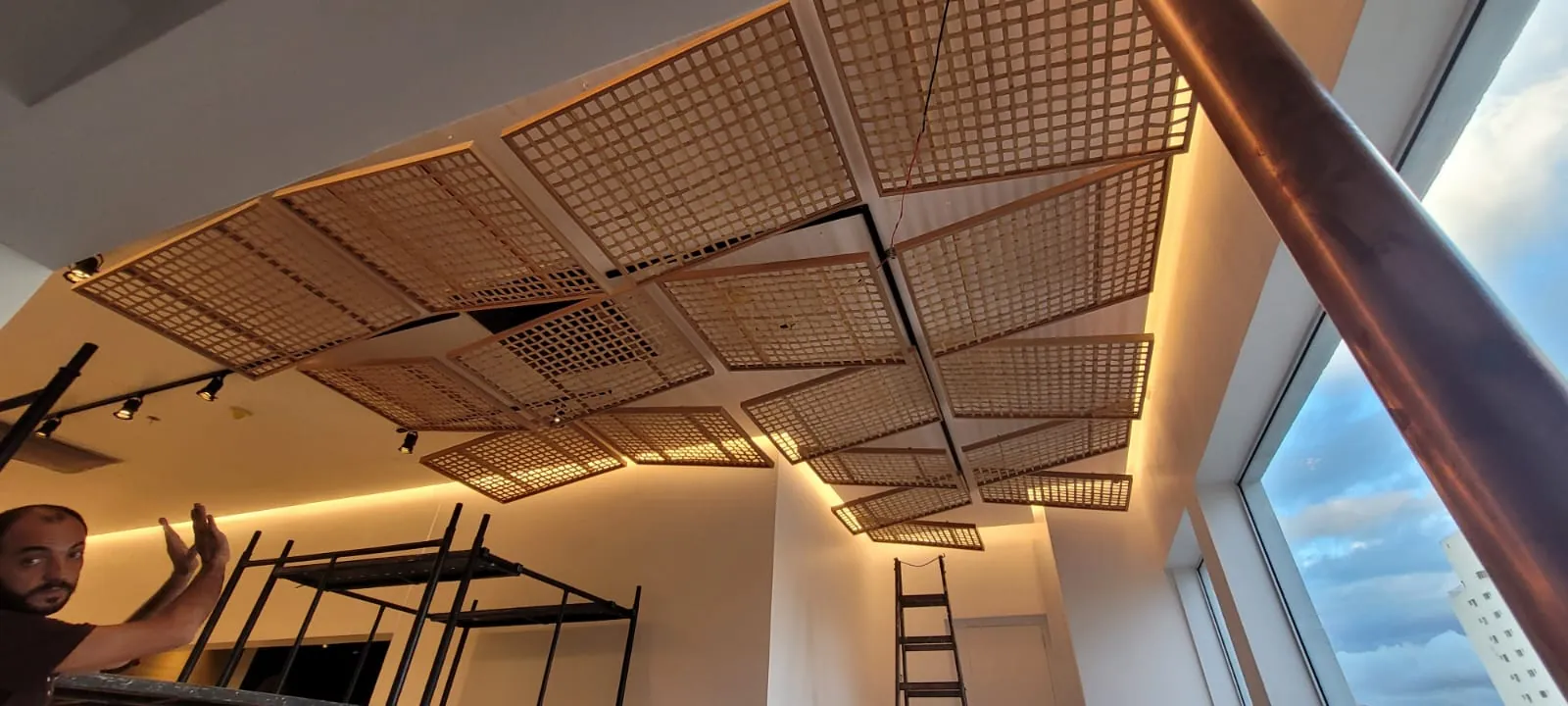
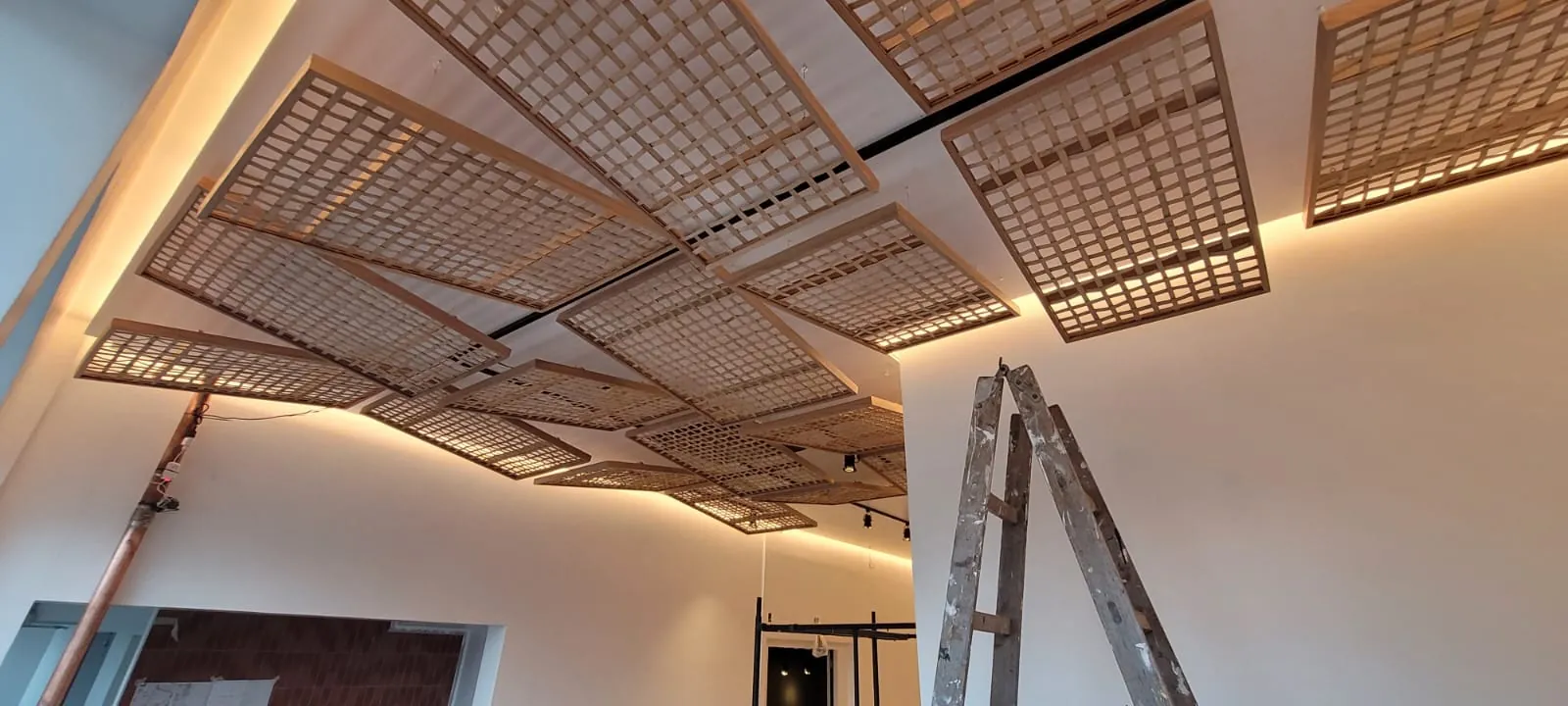
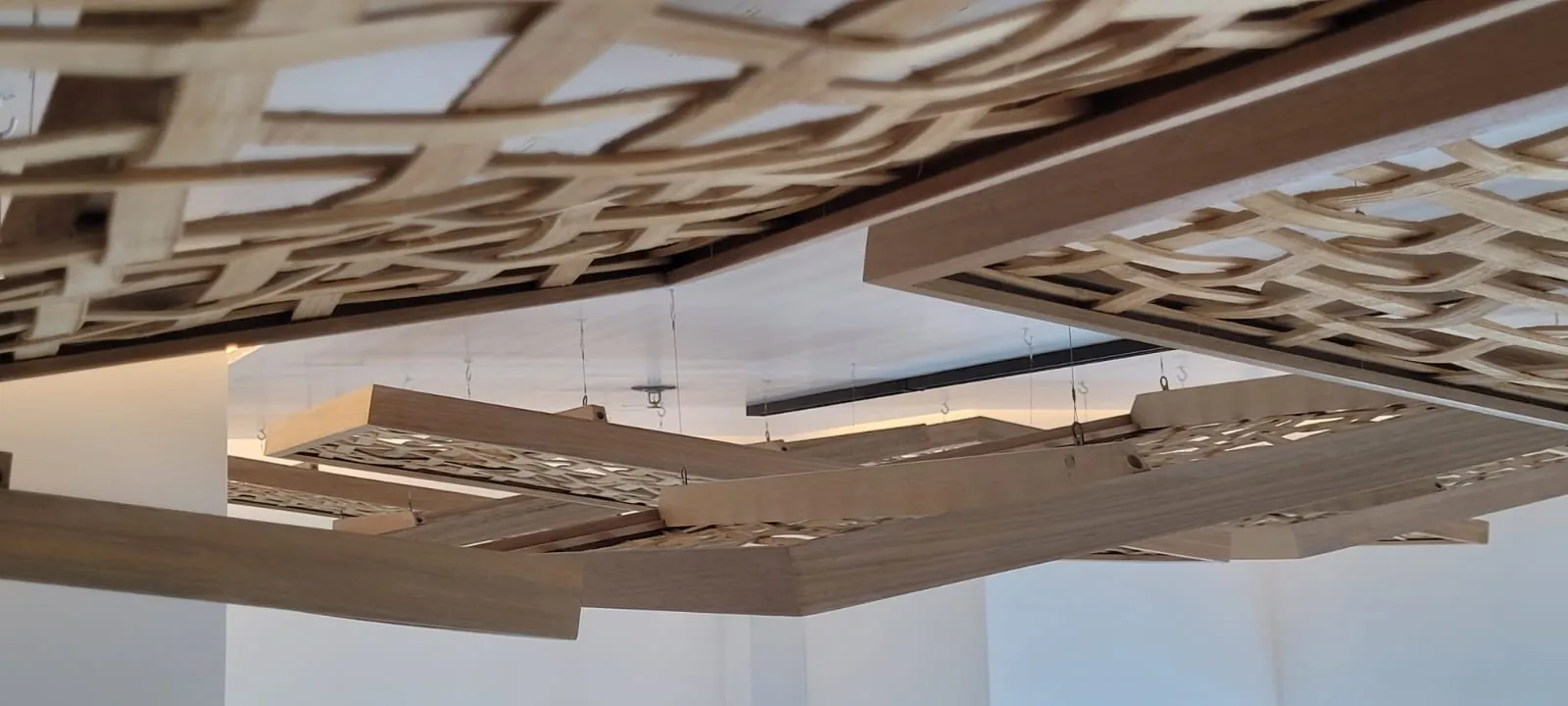
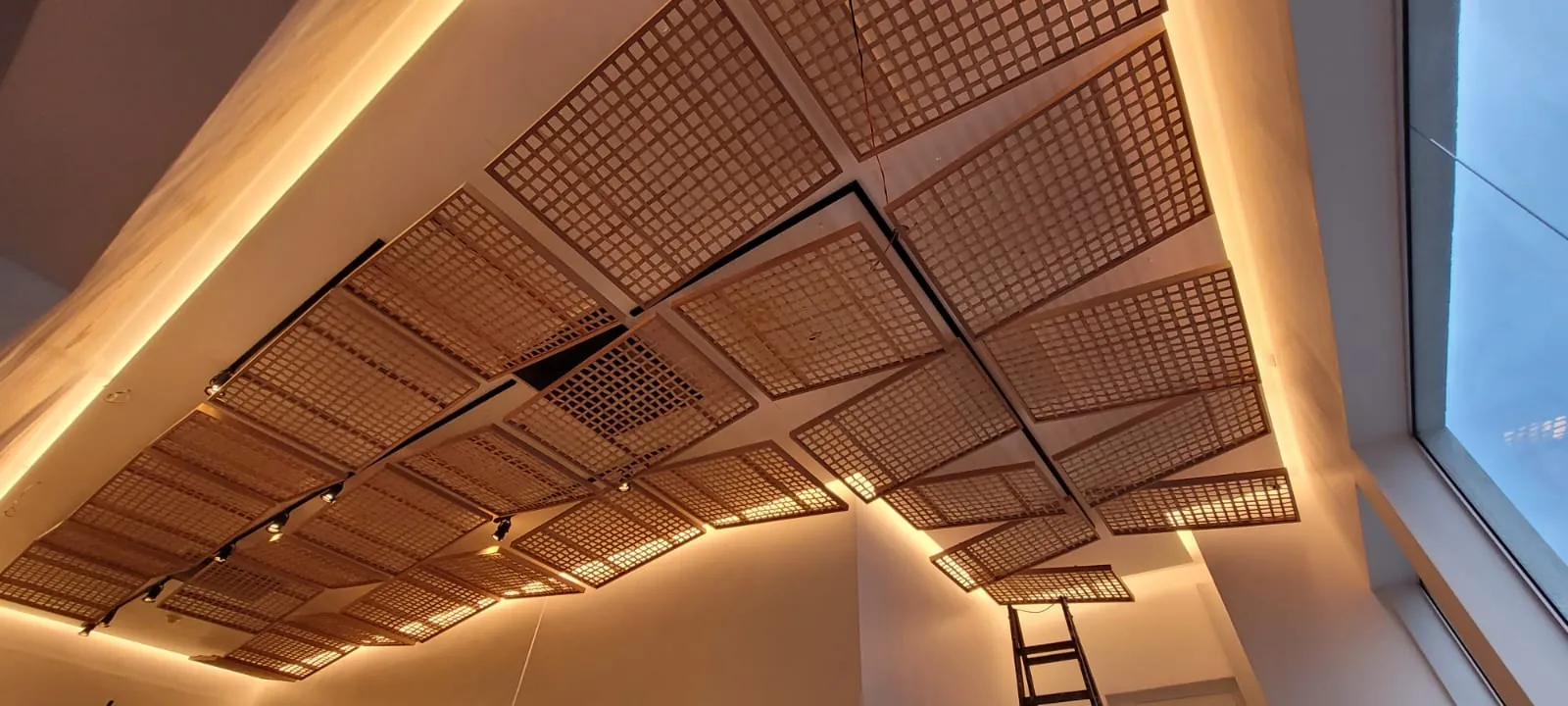
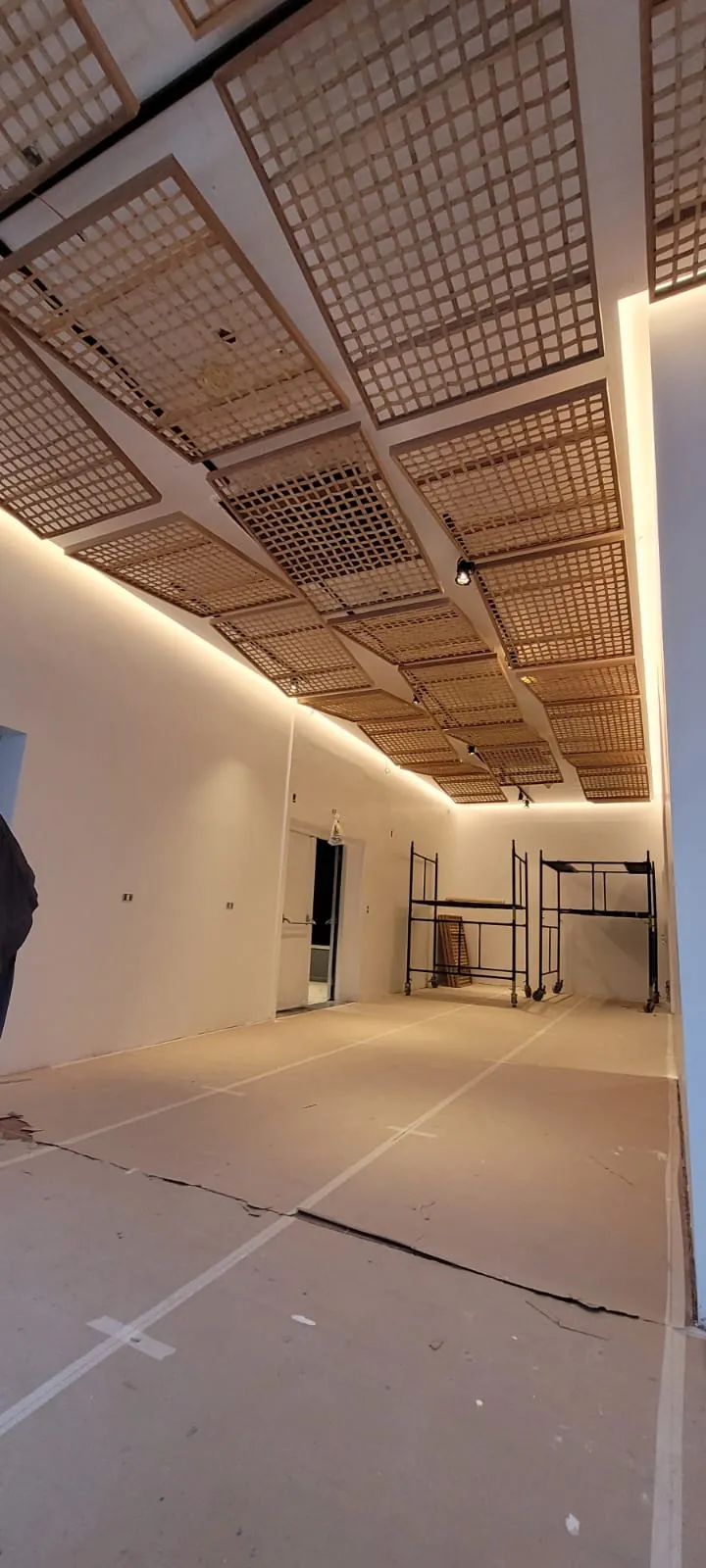
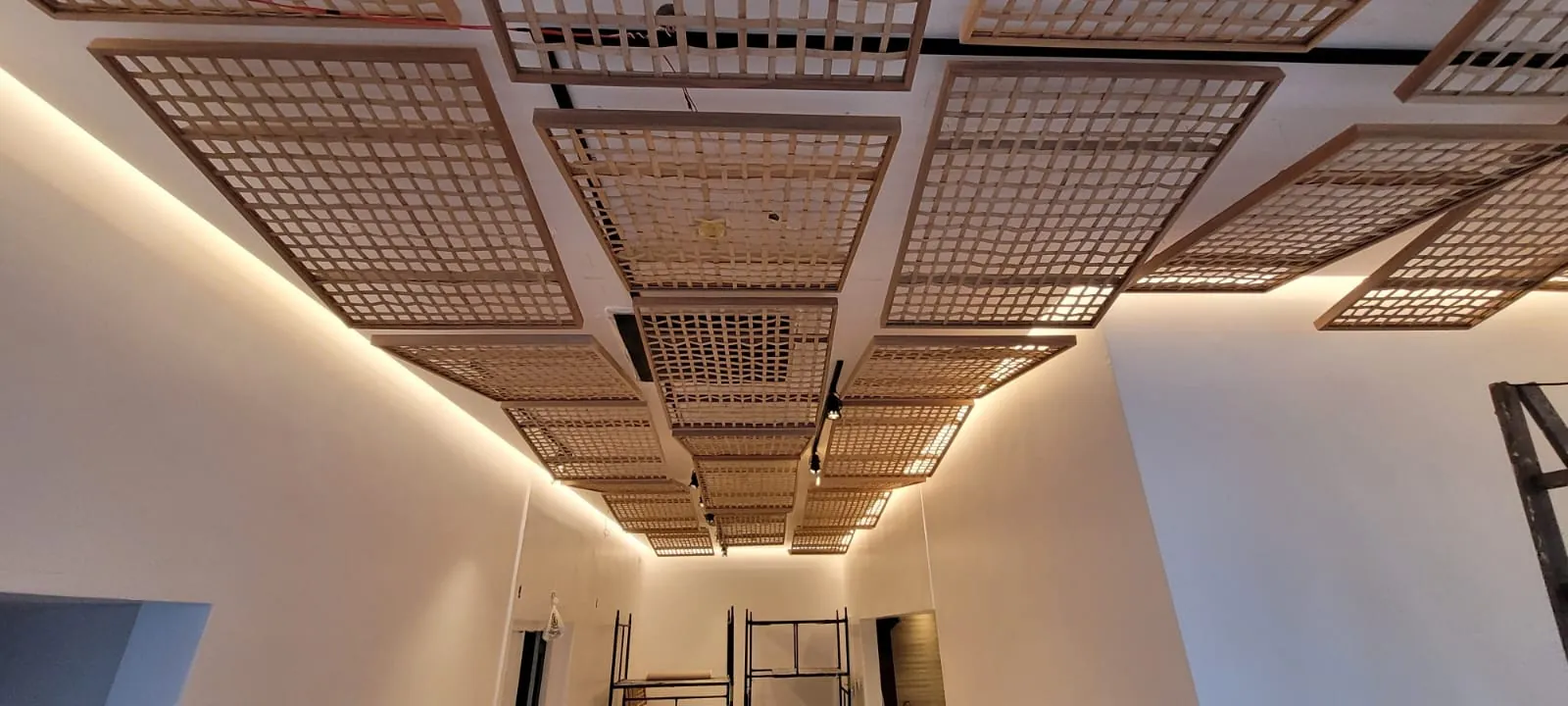
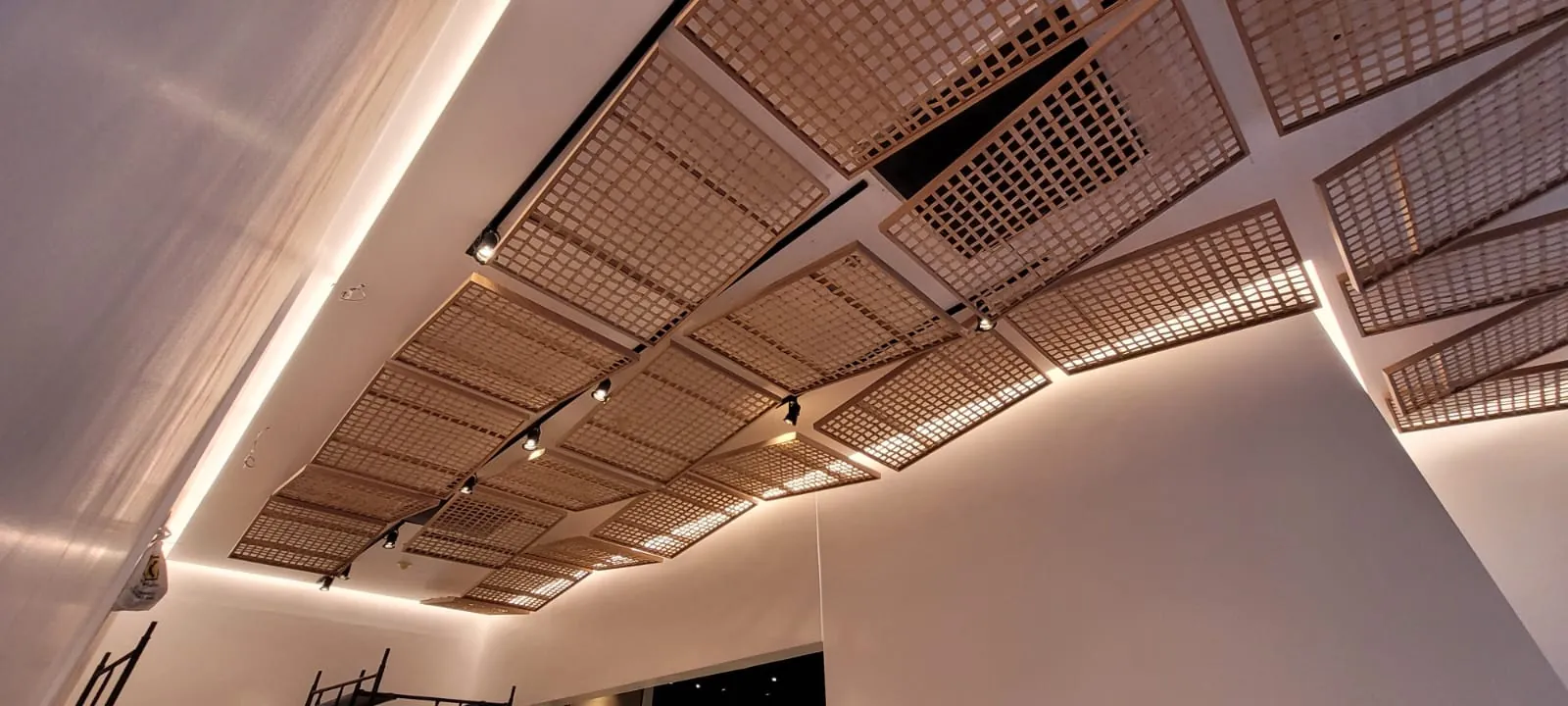
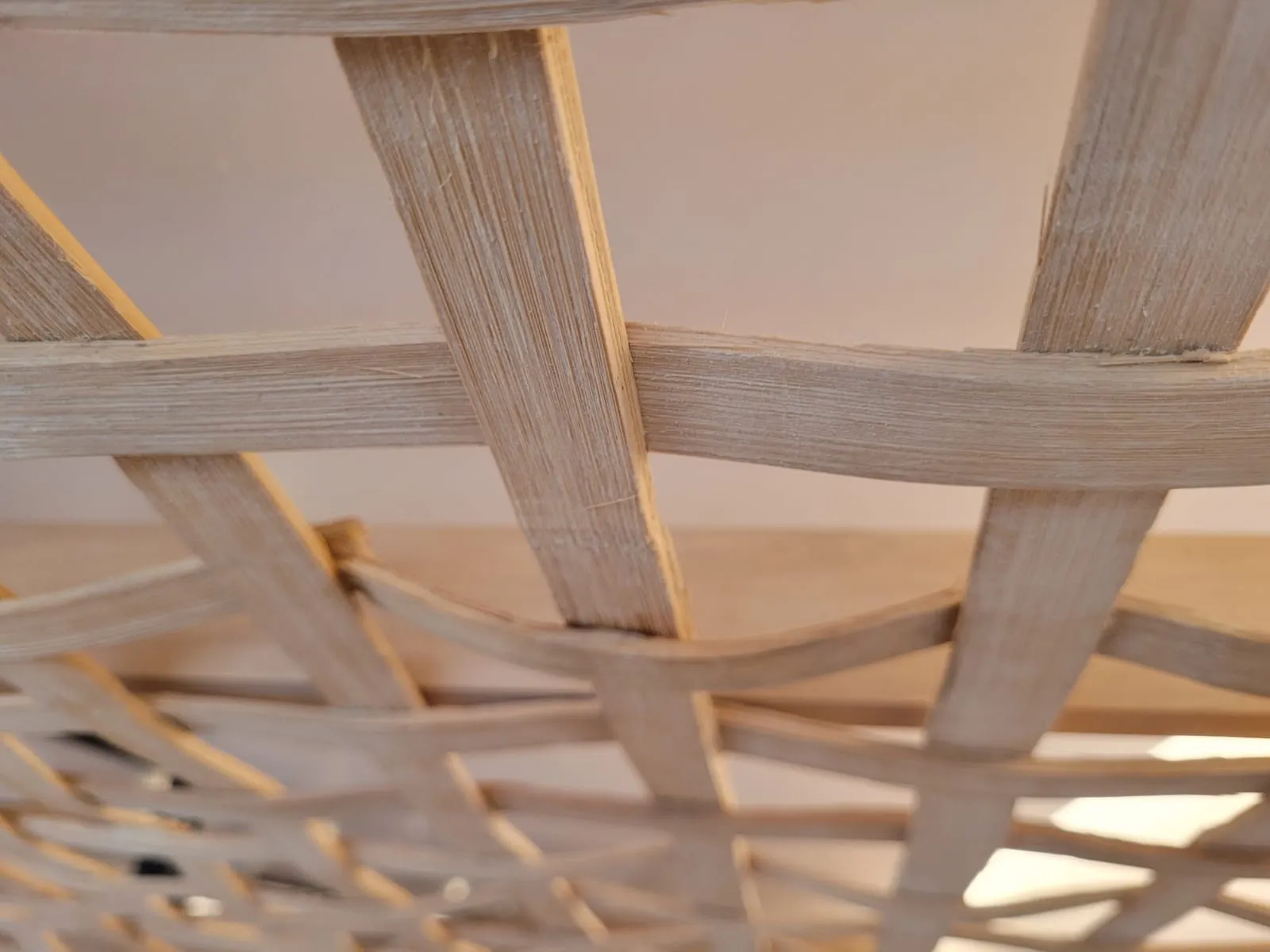
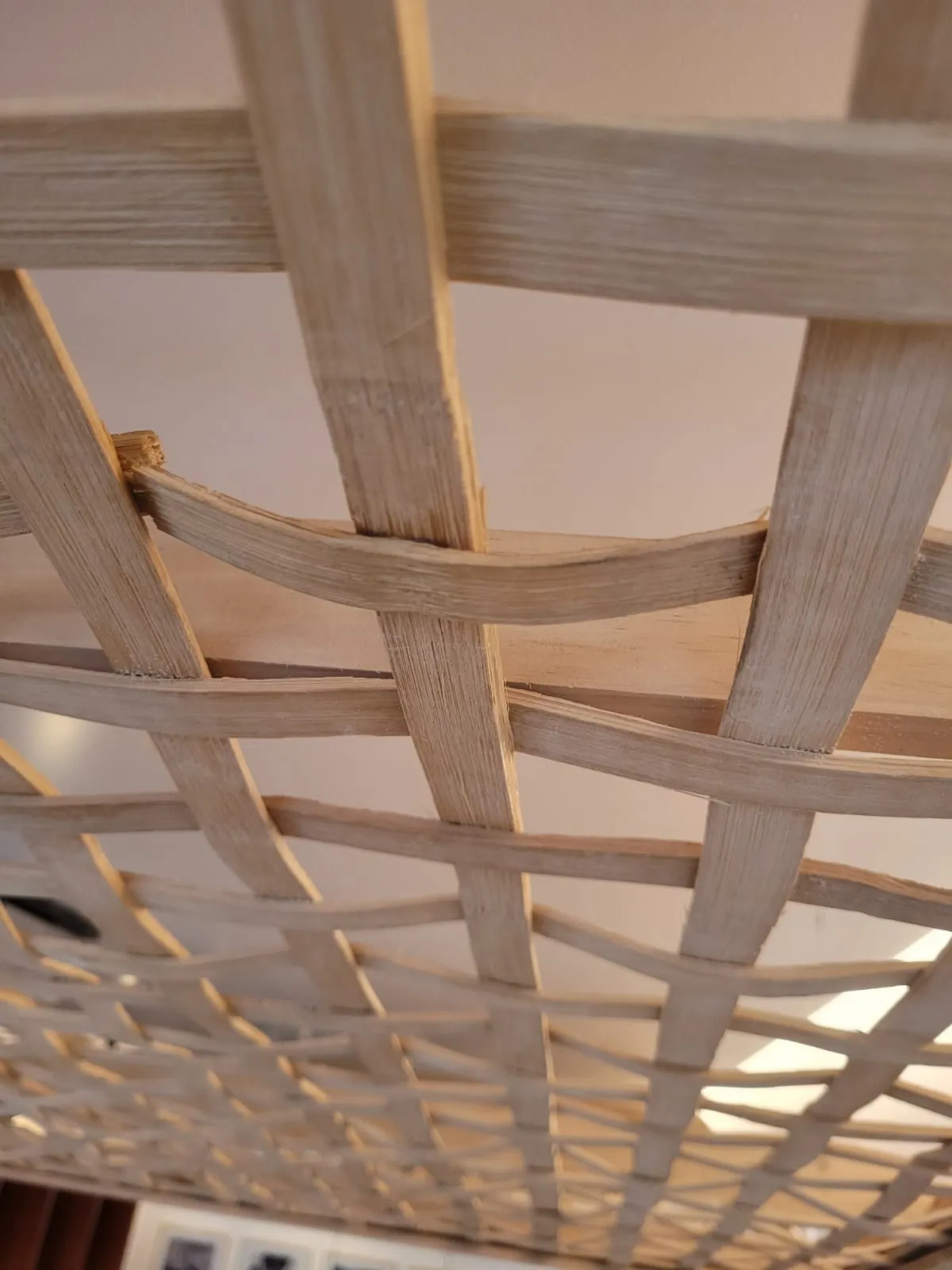
Ceiling decoration for the café area, composed of wooden frames with handmade bamboo weave, suspended by tie rods.
The Core Challenge
In a public space, beauty is optional, but safety is non-negotiable. How to create a light and organic ceiling installation with bamboo, a combustible material, and obtain unrestricted approval from the Fire Department?
Visual Record
Project Gallery
The Project Journey
The Silent Battle Against Fire
When we were chosen to create the ceiling for the Museum's cafe, the mission seemed purely artistic: to translate the lightness and precision of Japanese aesthetics into an installation that appeared to float. The complexity, however, was not in the design. It lay in the invisible enemy of any public space: fire risk. The real challenge was bureaucratic and technical. The Fire Department is not impressed by beauty; they demand proof. We needed a foolproof method to treat each bamboo piece with flame retardant and, more importantly, a process that could be documented, audited, and validated, ensuring the issuance of the AVCB.
The Triad of Engineering, Resolution, and Aesthetics
The answer was not just to apply a product, but to create a system. To solve the safety problem and ensure approval, we transformed a legal requirement into an engineering protocol, allowing the project's light and floating aesthetic to be executed with complete peace of mind.
Solução 1
The Tranquility Dossier — The Engineering of Documentation
For each project, we create a complete dossier. The invoice for the retardant product is linked to the project. Each treated bamboo lot is photographed. Product absorption is measured and recorded. Finally, a "test specimen" is sent to a laboratory, which issues a technical report. We deliver to the client not just a ceiling, but a package of documents proving safety.
Solução 2
The Intelligence of Prevention — The Resolution of Destructive Testing
Our process is so robust that it allows us to solve any architect's nightmare: destructive testing on site. With the test specimen report in hand, the Fire Department inspector has proof that the material complies, without the need to apply a torch to an already installed piece, preserving the final aesthetic.
The Undeniable Proof
The Results
The success of this project was measured by the most important metric for a public space: the final approval of the Fire Department and the issuance of the AVCB, ensuring the safety of thousands of visitors and our client's peace of mind.
Outcome Indicators
| Indicator | Result Achieved |
|---|---|
| Unquestionable Safety | AVCB approval by the Fire Department, validating 100% the effectiveness of the fire treatment. |
| Investment Preservation | The technical report avoided the need for destructive testing on site, maintaining the aesthetic integrity of the project. |
| Protocol Validation | Consolidation of a documented and replicable process, now a differentiator for any commercial project. |
Field Intelligence
What We Learned
The Japanese Museum was where we transcended the role of executors and became partners in risk management, generating crucial lessons:
Transform Legal Requirements into Competitive Advantages: The need to obtain the AVCB was not seen as an obstacle, but as an opportunity to create a protocol of excellence. This taught us that mastering regulatory complexities is a powerful way to build authority and create a barrier to entry for amateur competitors.
The "Destructive Test Specimen" is Tangible Execution Peace of Mind: Delivering a report is good, but delivering physical proof that the client and inspector can see and touch is immensely more powerful. This project validated the "PVF" (Physical Validation Protocol) as our best tool for generating trust and peace of mind.
Failure is a Driver for Innovation: During the project, we realized that our production method for bamboo slats was not ideal and caused cracks in some pieces. This "error" was not hidden; it was the trigger that forced us to improve our production process, and today, because of that lesson, our quality is exponentially higher.
Perguntas Frequentes sobre este Projeto
Next Step
Turn This Intelligence Into Action
Does your commercial project need to combine aesthetics and fire safety? Don't risk the approval of your fire safety certificate. Schedule a Diagnostic Session and understand how our Fire Safety Protocol can ensure your peace of mind.
Schedule an AssessmentWant to become one of the few professionals in Brazil who master the safety requirements for using bamboo in public spaces? Join the Tudubambusa Academy waitlist.
Talk to Engineering