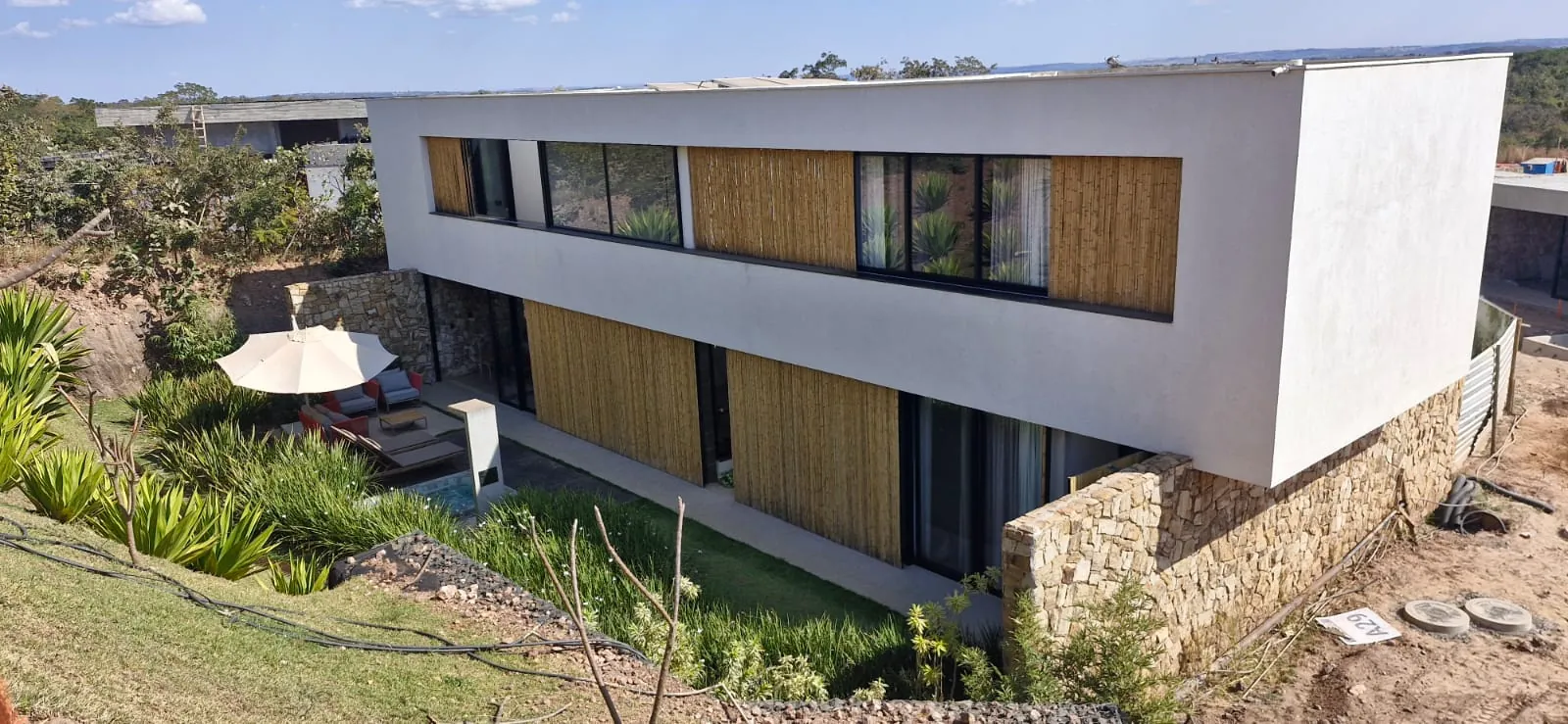
Materials & Components
The Foundation of Everything.
Culms, slats, poles, half-culms, mats, and bamboo panels, with treatment appropriate for exposure and origin documentation.
View Products and SpecificationsWhen quality begins at the source.
You specified a beautiful structure, designed impeccable cladding, and validated a fire-resistance protocol. Then comes the frightening question: where does the bamboo come from? A significant portion of failures in bamboo projects originates from the material: culms with walls too thin, treatment that does not penetrate the culm, specification that does not document origin.
This silo is not a price catalog. It is traceability of origin, quality, and durability distilled into the material that reaches your hands.
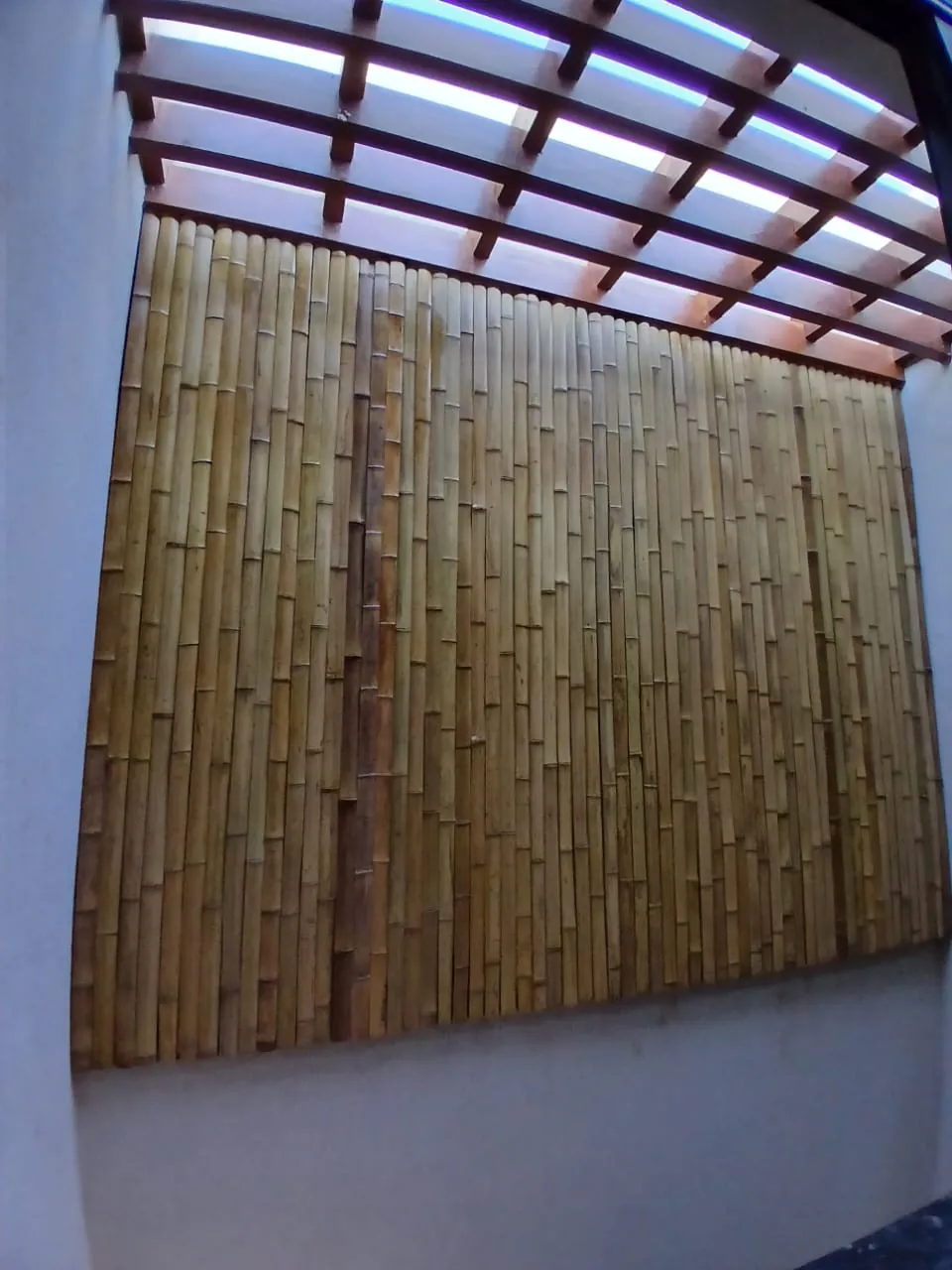
The Silent Risk. The origin and handling of the culm influence its final strength. Culms cut outside the appropriate season or stored without moisture control tend to absorb water and lose performance. That is why we document the history of each lot.
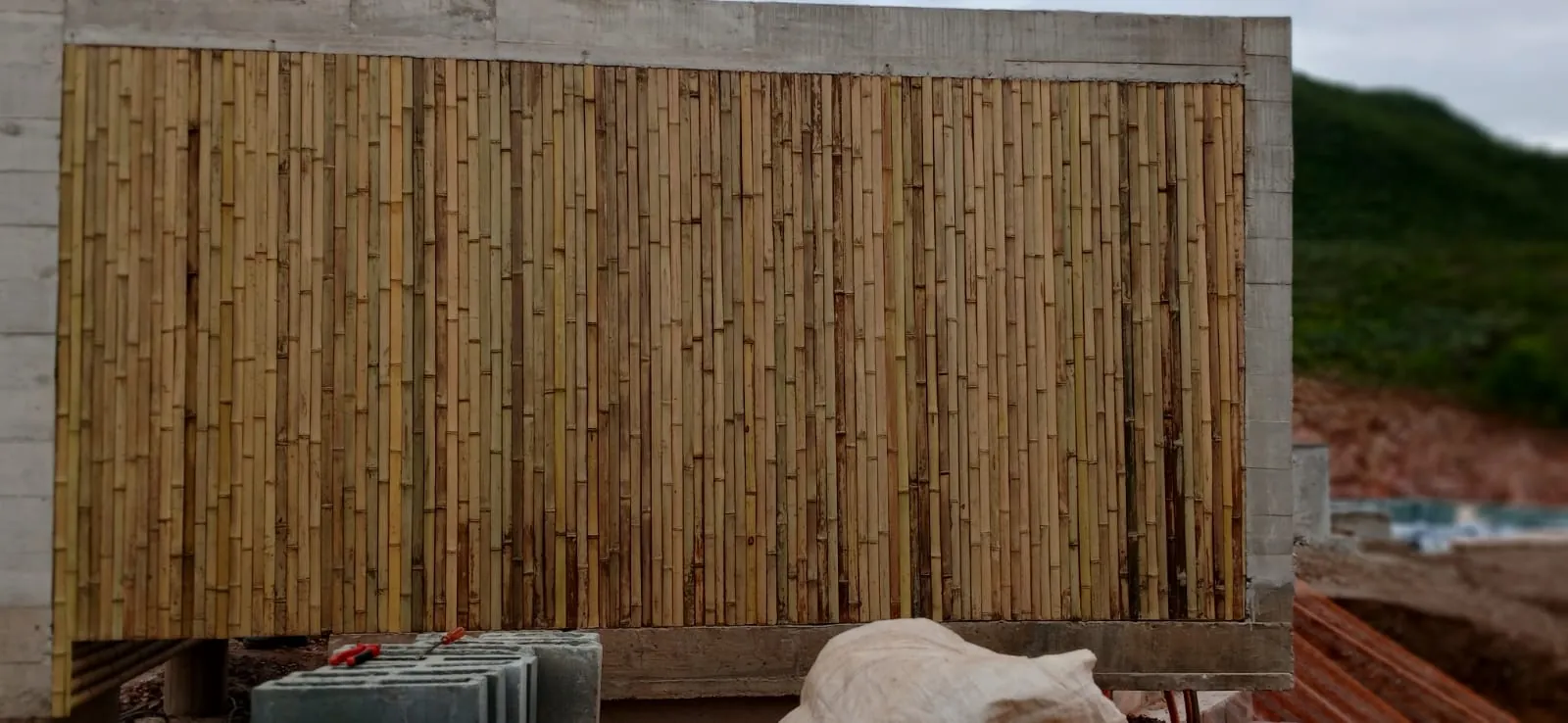
A Culm Is Not Just a Culm. You request 'mossô 12cm' — but from which region? Cut when? Dried for how long? Imprecise specification is what separates a durable material from one that fails prematurely. Documenting these variables reduces risk.
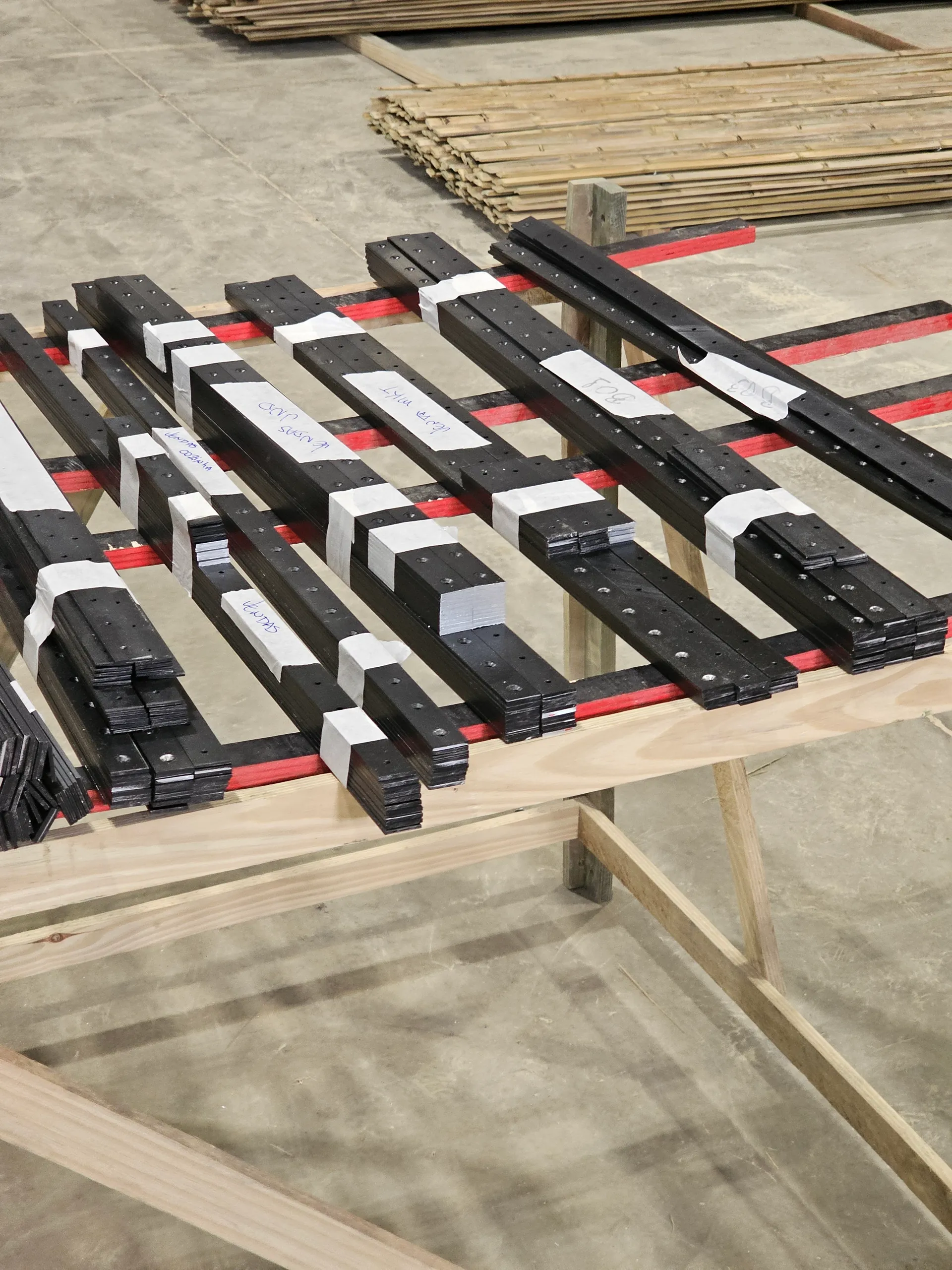
Documented Supply Chain. You receive the documentation we have regarding the material: provenance, drying parameters, applied treatment, and inspection, as recorded for the supplied lot.
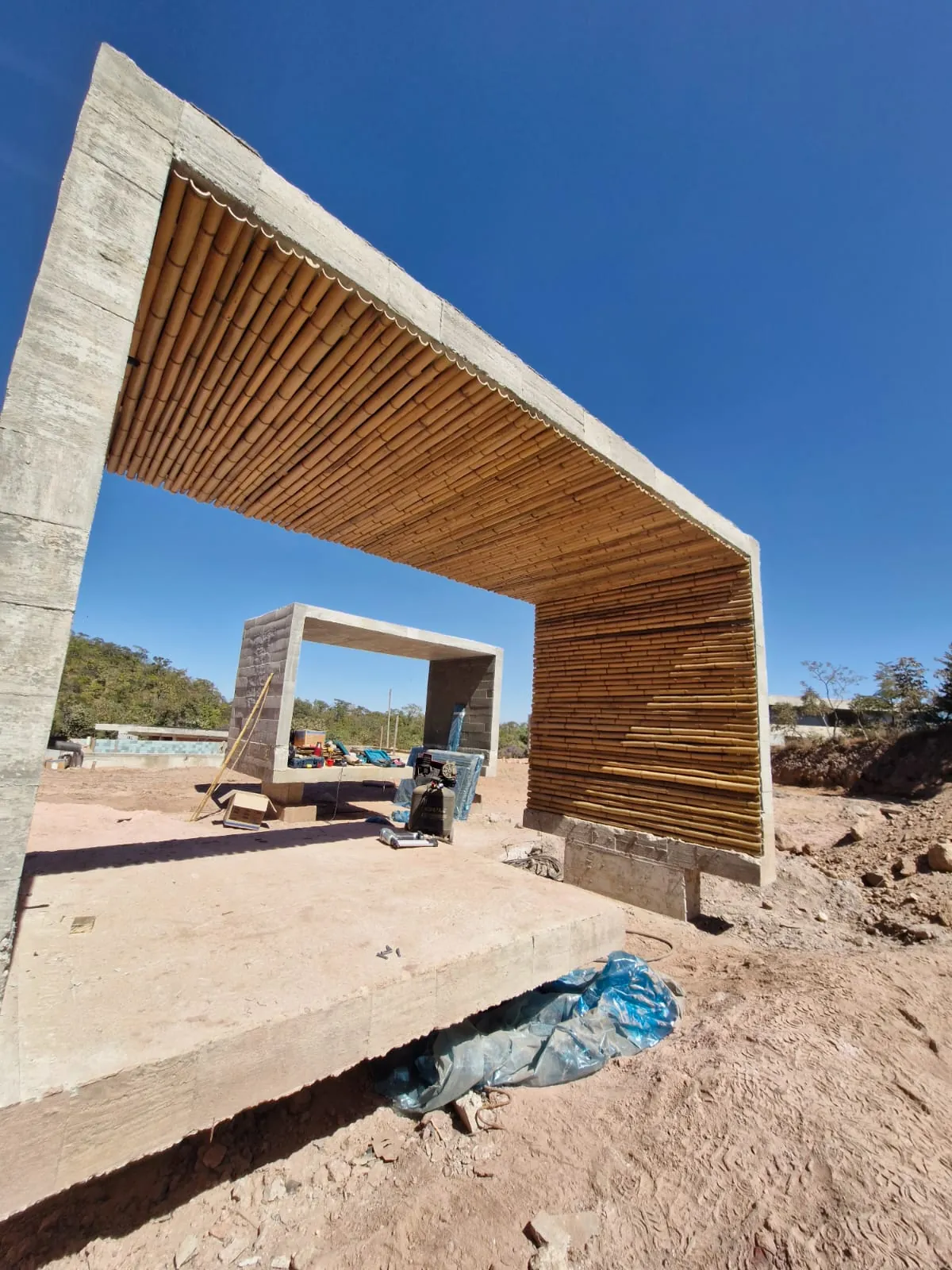
Technical Foundation for Real Projects. The quality seen in case studies like InCasa, Makoto, and Bombinhas begins before installation: it begins with the right material.
The Supply Chain Behind the Material.
Step 1. Origin Selection.
Partner plantations in Botucatu and region, with mossô managed in cutting cycles. When applicable, the material arrives with a record of lot, date, and reference dimensions.
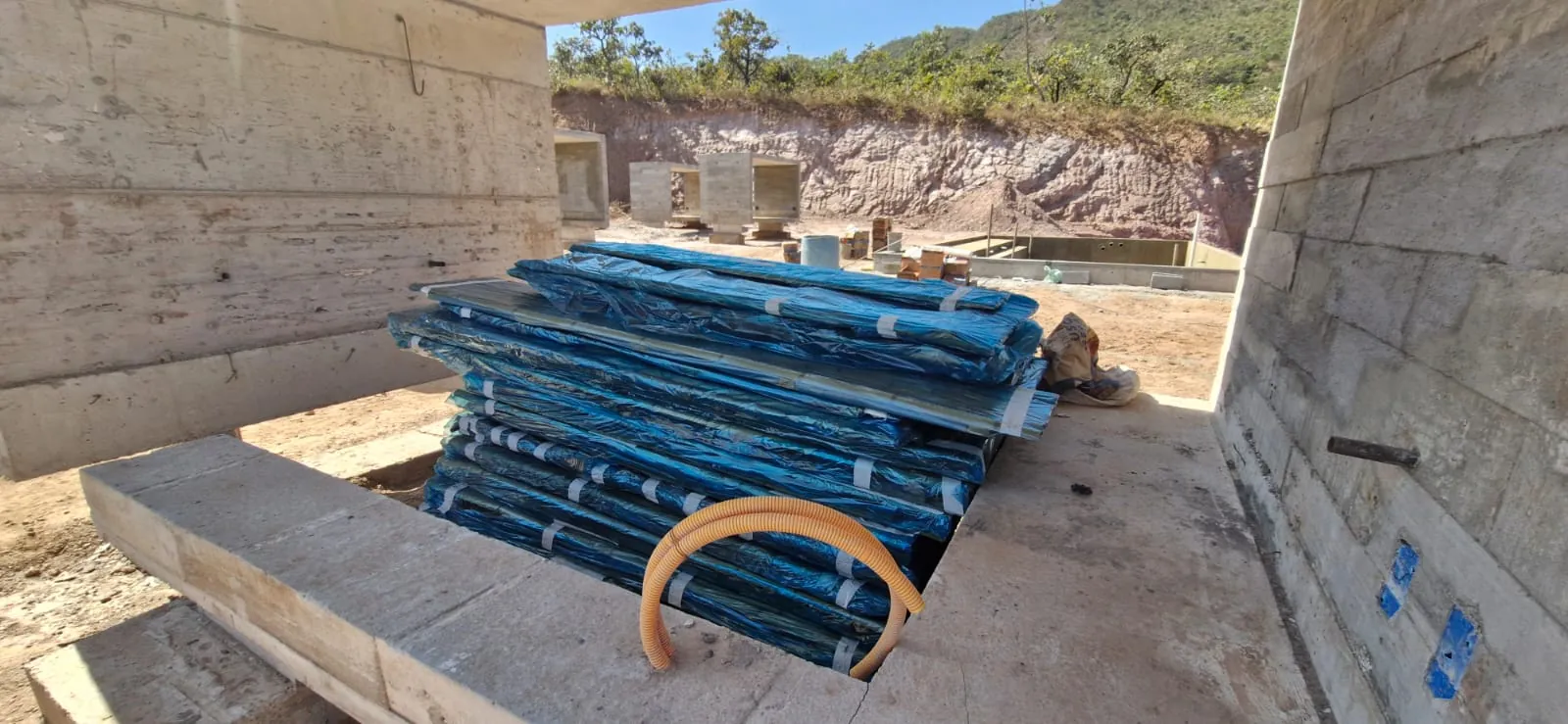
Step 2. Drying to Ideal Moisture Content.
Fresh culms rot. The culm is air-dried until it reaches 10–12% moisture content — verified with a moisture meter before treatment. Result: dimensional stability, reduced starch absorption by xylophagous insects.
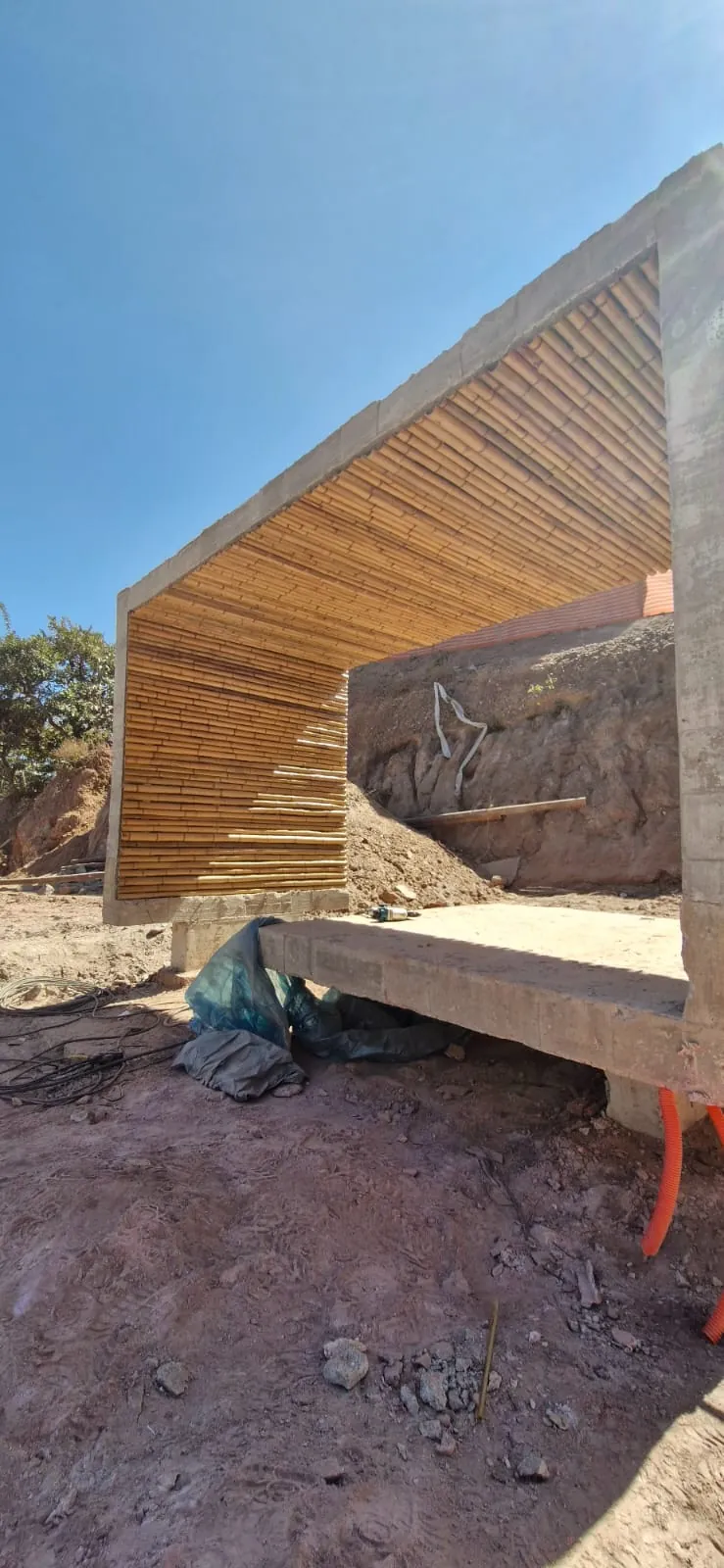
Step 3. Treatment Defined by Exposure.
The treatment is defined by the project's use and exposure: Octaborate (immersion) for indoor and covered areas; CCA or CCB autoclave for outdoor areas in permanent constructions. Each concentration is calculated per project.
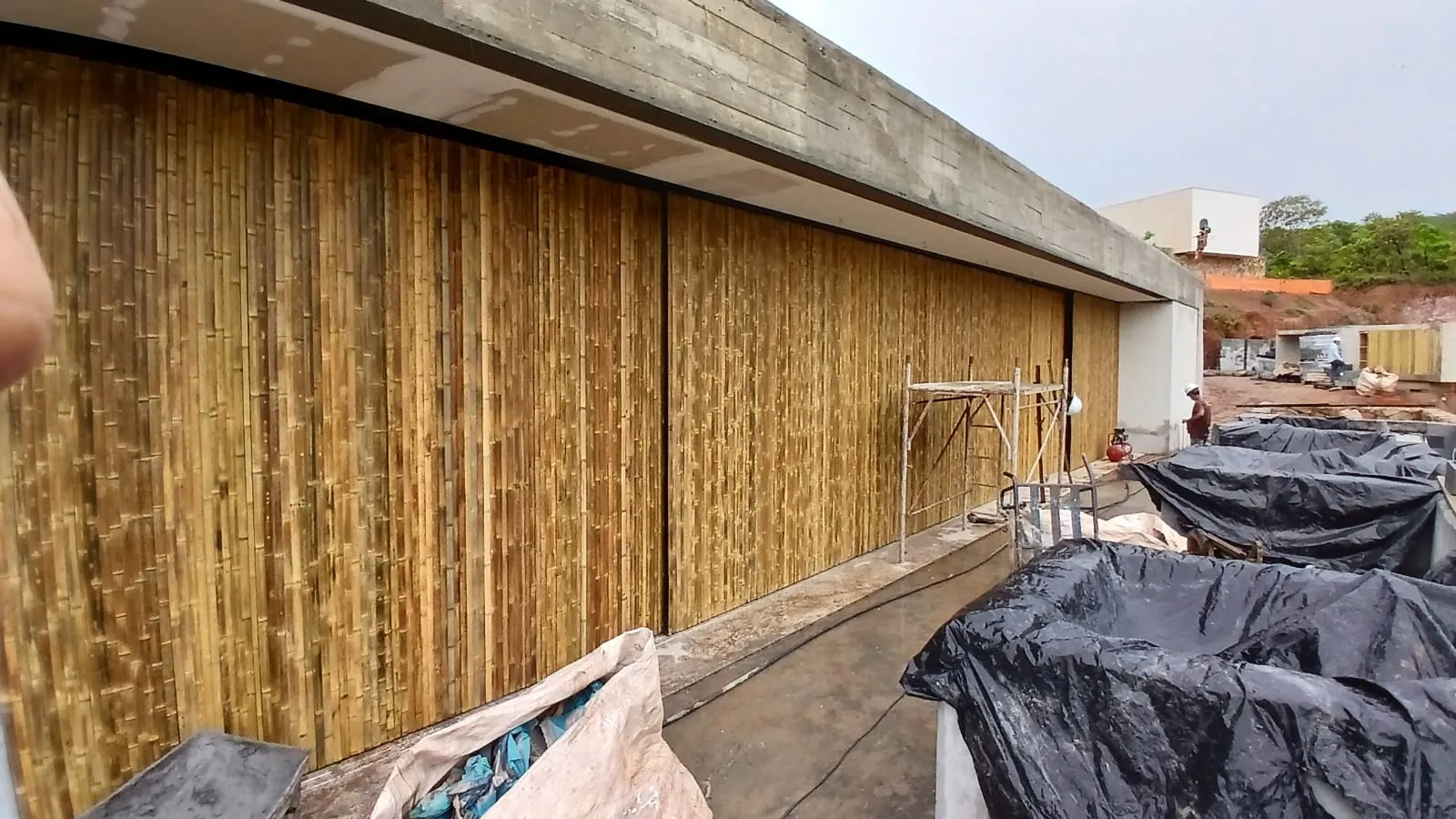
Step 4. Inspection & Classification.
Crack? Discard. Insufficient wall thickness? Discard. Off-standard color? Discard. Approved in two finish grades: Grade A (for scenography and fine cladding) and Grade B (structural use, where minor surface variations are acceptable and recorded in the lot).
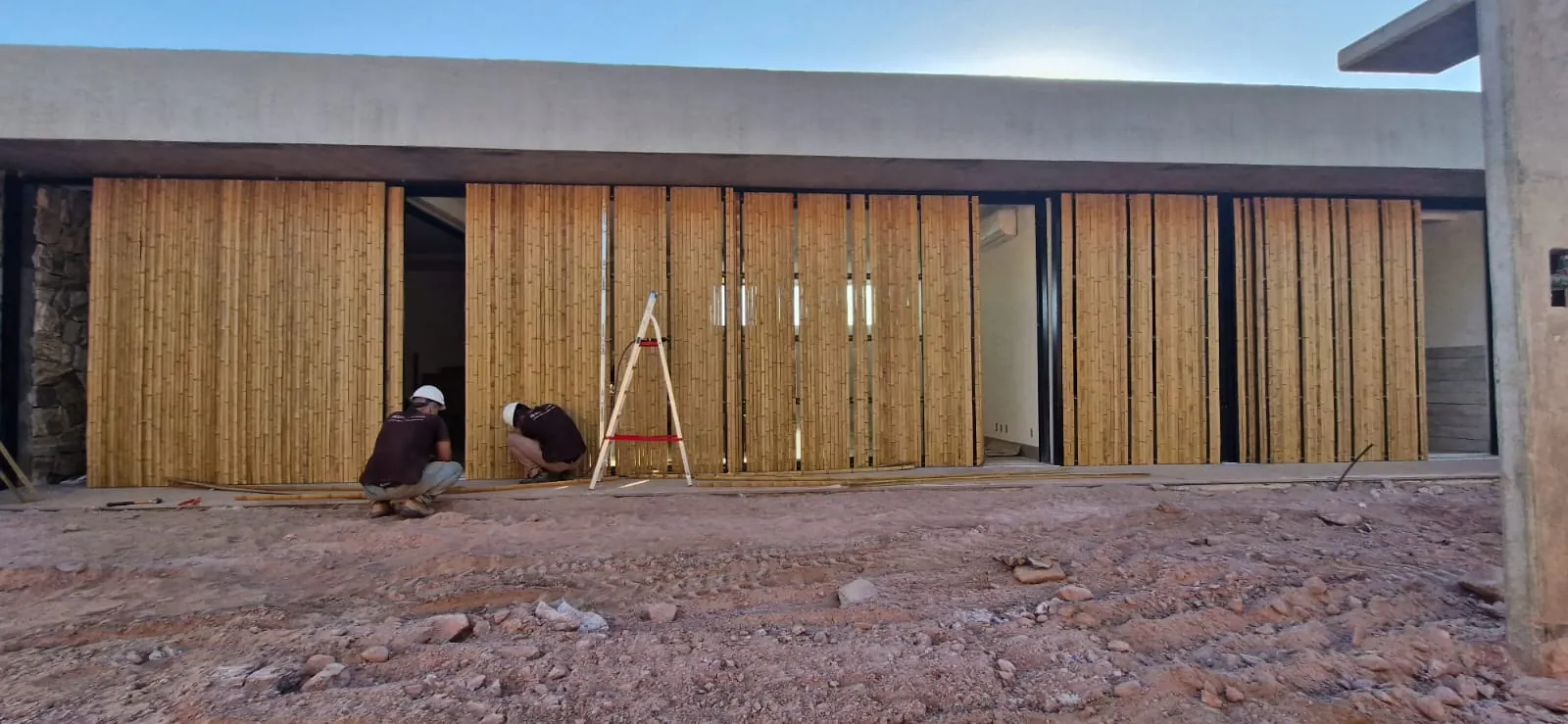
Step 5. Pre-fabrication & Packaging.
When the project requires a ready-made component, the material is cut, drilled, and treated according to specification before shipment. Raw culms are shipped in bundles with moisture protection. Each package includes lot number, date, grade, and applied treatment.
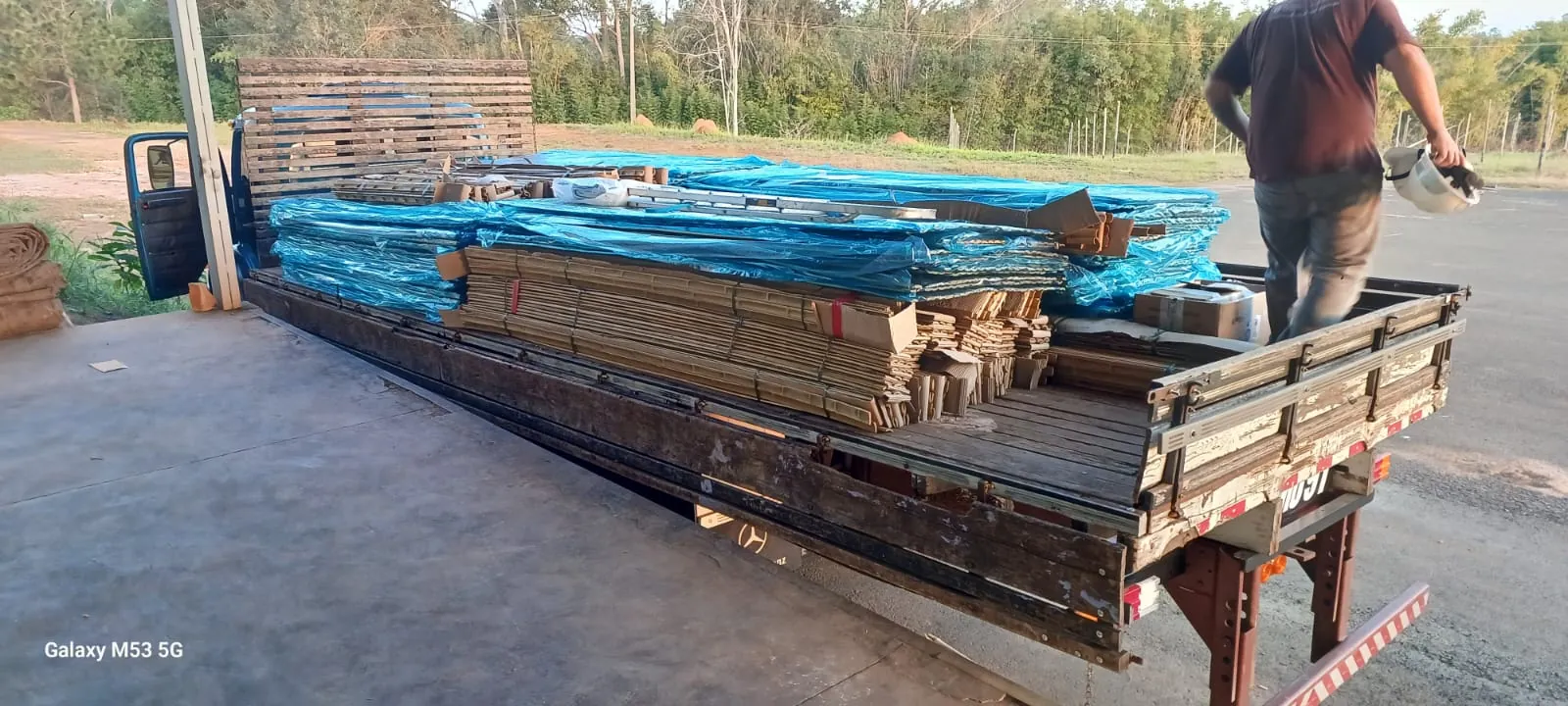
Step 6. Logistics & Arrival.
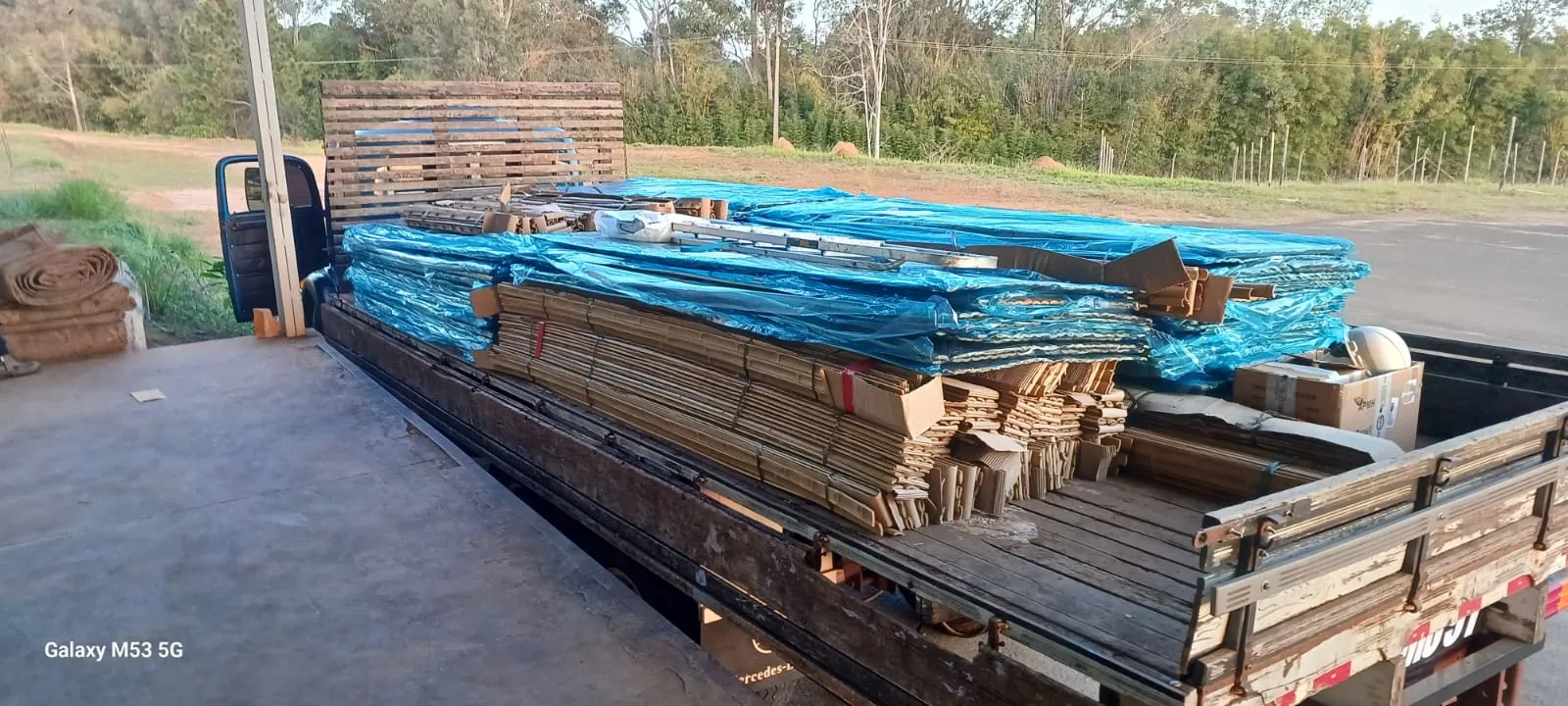
It departs with the material's origin documentation available for the supplied lot: provenance, treatment, and specification, along with a storage guide, assembly guide, and direct technical contact. When it arrives on site, you know what you are receiving.
The right
material for
each project.
There isn't one single bamboo for every project. Each application requires a different material — from the modular panel to the processed slat and the treated round culm. See the recommendation by audience:
For architects and interior designers — Bambusa 40 Panels and Architectural Slats: a repertoire of bamboo cladding, visual partitions, and compositions with an architectural aesthetic.
For construction and real estate development — Bambusa 40 Panels and Treated Round Bamboo Pole for common areas, facades, and bamboo brise-soleils in developments.
For carpentry and custom furniture — Bambusa Slats and Treated Round Bamboo Pole: processed bamboo material in standard supply for transformation into a custom piece.
For restaurants and hospitality — Woven bamboo ceiling panels (Tuldoide and Áurea) and Bambusa 40 Panels for natural ambiance in experience areas.
For natural material stores and technical resale — Bamboo slats and panels in a commercially organized line, still little offered in the market.
The products that make the project possible.
Slats, mats, panels, culms and poles — each material with treatment suitable for exposure, origin documentation and technical specification delivered together.
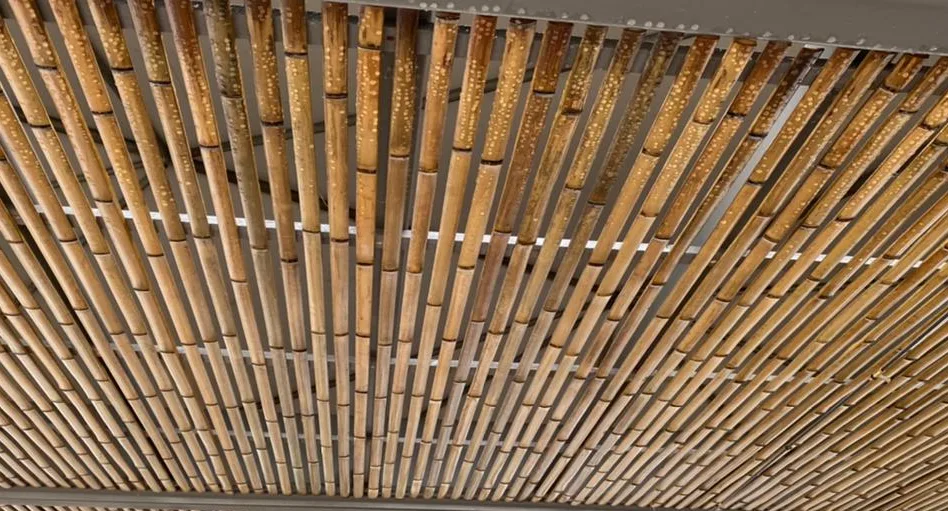
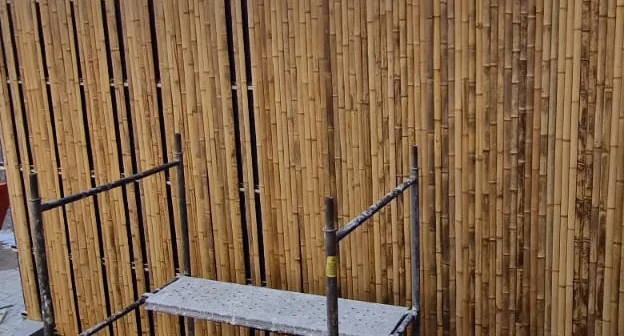
Spaced Wood
- Composition11 vertical 40 mm slats, 8 mm spacing (10 gaps)
- SlatBamboo with 3 planed faces and visible bark, ~12 mm thickness
- Rear supportWood strip 2 x 4.5 cm
- Slat fasteningHeadless pin applied from the front
- Modules52/150 (0.52 x 1.50 m) and 52/300 (0.52 x 3.00 m)
- Treatment and finishCCA or octaborate according to application; stain finish
- Included in supplyModules, 40 mm slats, rear supports, internal fasteners, treatment (as per scope), stain finish, and standard packaging
- Not includedFreight, unloading, installation, support structure, on-site fastening accessories, design/layout, and technical responsibility
Standard recommended use in indoor or protected environments.
- check_circleLight cladding on interior walls or protected areas
- check_circleVisual partitions and decorative panels
- check_circleStores, restaurants, hotels, gourmet areas, and corporate environments
Bambusa does not recommend exposed outdoor use as a standard application for the line.
- cancelAreas exposed to rain, permanent direct sun, or excessive humidity
- cancelIf chosen, technical assessment, fastening, protection, and maintenance are the responsibility of the application supervisor
“A lighter and more ventilated version, with bamboo slats spaced at 8 mm on a wooden rear support. Recommended for light cladding, visual partitions, and compositions with natural transparency.”
Continuous Wood
- Composition13 vertical 40 mm slats, without significant spacing
- SlatBamboo with 3 planed faces and visible bark, ~12 mm thickness
- Rear supportWood slat 2 x 4.5 cm
- Slat fasteningHeadless pin applied from the front
- Modules52/150 (0.52 x 1.50 m) and 52/300 (0.52 x 3.00 m)
- Treatment and finishCCA or octaborate as per application; stain finish
- Included in supplyModules, 40 mm slats, rear supports, internal fasteners, treatment (as per scope), stain finish, and standard packaging
- Not includedFreight, unloading, installation, support structure, on-site fastening accessories, design/layout, and technical responsibility
Standard use recommended for indoor or protected environments.
- check_circleDecorative claddings with greater material presence
- check_circleAccent panels in receptions, stores, restaurants, and residences
- check_circleBackdrop walls, headboards, halls, and living areas
Bambusa does not recommend exposed outdoor use as a standard application for the line.
- cancelAreas exposed to rain, permanent direct sun, or excessive humidity
- cancelIf opted for, technical evaluation, fastening, protection, and maintenance are the responsibility of the applicator.
“Wood version with a more closed appearance and greater bamboo presence: slats arranged without significant spacing, creating a denser surface. Recommended for accent walls and claddings with greater material presence.”
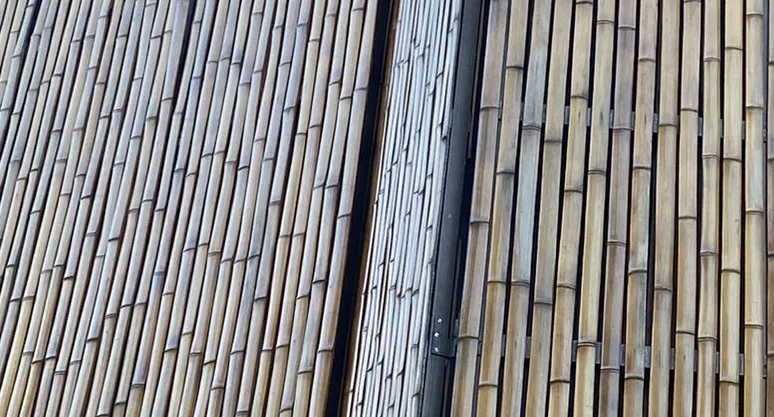
Spaced Aluminum
- Composition11 vertical 40 mm slats, 8 mm spacing (10 gaps)
- SlatBamboo with 3 planed faces and visible bark, ~12 mm thick
- Rear supportAluminum slat 1" x 1/8"
- Slat fasteningScrews applied from behind the aluminum slat
- Modules52/150 (0.52 x 1.50 m) and 52/300 (0.52 x 3.00 m)
- Treatment and finishCCA or octaborate as per application; stain finish
- Included in supplyModules, 40 mm slats, rear supports, internal fasteners, treatment (as per scope), stain finish, and standard packaging
- Not includedFreight, unloading, installation, support structure, on-site fastening accessories, design/layout, and technical responsibility
Standard recommended use in indoor or protected environments.
- check_circleArchitectural projects with higher technical requirements
- check_circleCommercial environments, corporate spaces, hotels, and high-end retail stores
- check_circleCompositions where the rear aluminum structure adds perceived value
Bambusa does not recommend exposed outdoor use as a standard application for the line.
- cancelAreas exposed to rain, permanent direct sunlight, or excessive humidity
- cancelIf chosen, technical evaluation, fastening, protection, and maintenance are the responsibility of the application manager
“Technical version of the line: slats spaced 8 mm apart on a rear aluminum support, with fastening behind the ruler. Suitable for projects with higher technical requirements, assembly stability, and more precise architectural aesthetics.”
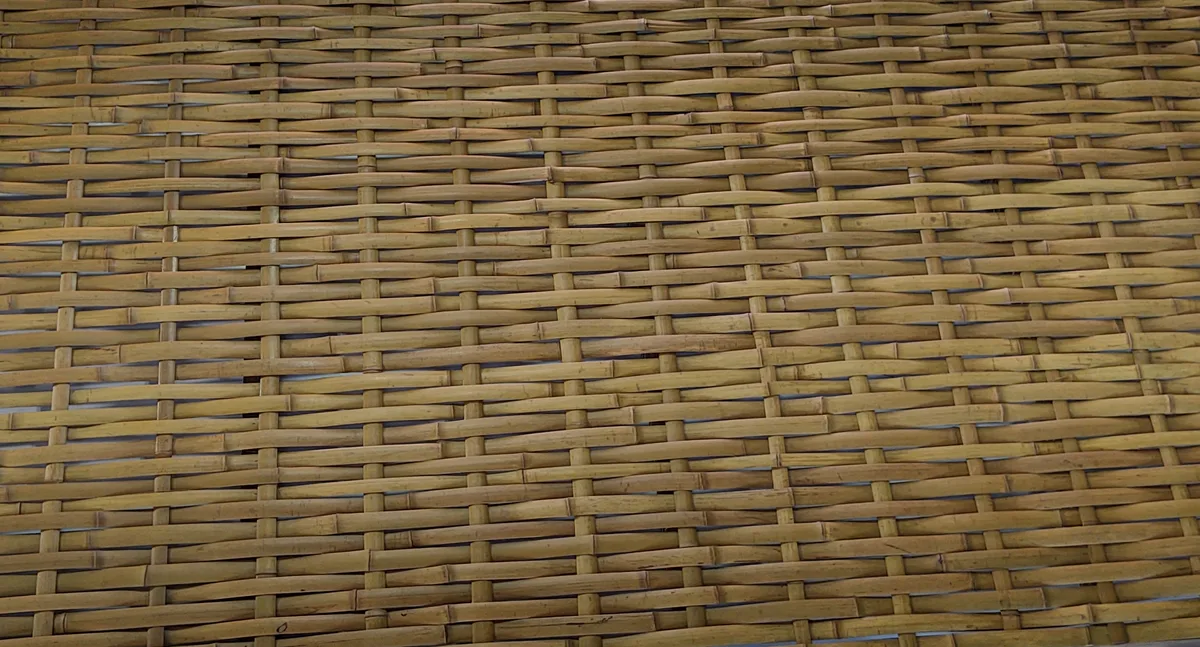
Tuldoide
- Bamboo typeTuldoide
- Nominal dimension1.50 m x 1.00 m
- Area per panel1.50 m²
- WeaveSimple
- TreatmentAutoclaved with CCA
- FinishNatural, unpainted
- Included in supplyPanels according to contracted version and quantity
- Not includedFreight, installation, support structure, fasteners, and layout
Recommended use in indoor or covered environments, with a more rustic, simple, and organic aesthetic and greater light transmission.
- check_circleDecorative ceilings for indoor or covered environments
- check_circleLightweight cladding and environmental compositions
- check_circleCovered gourmet areas, stores, restaurants, hotels, and showrooms
- check_circleProjects with higher price sensitivity
Bambusa does not recommend exposed outdoor application as a standard use for the line.
- cancelOutdoor areas exposed to rain or permanent direct sunlight
- cancelDamp areas or areas with excessive humidity
- cancelUse as a structural component
“Entry-level line of Bambusa Woven Ceiling Panels: Tuldoide bamboo panel with a more rustic, simple, and organic aesthetic. Suitable for projects seeking a natural bamboo finish with an artisanal feel.”
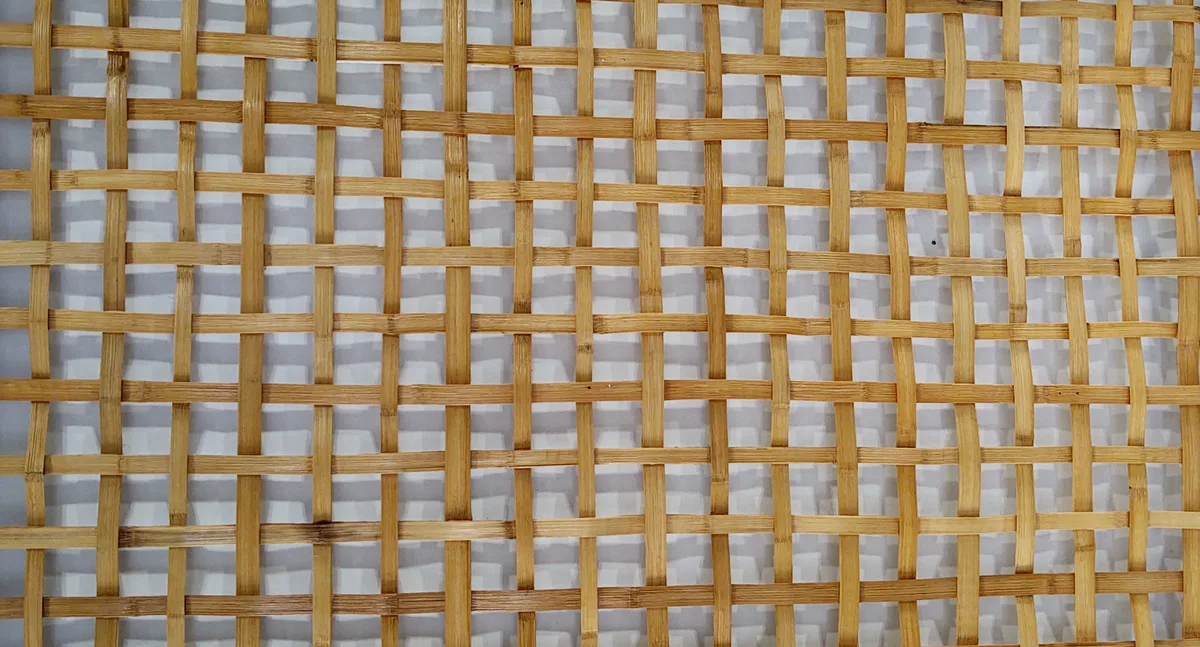
Áurea
- Bamboo typeÁurea
- Nominal dimension1.50 m x 1.00 m
- Area per panel1.50 m²
- WeaveSimple
- TreatmentAutoclaved with CCA
- FinishNatural, unpainted
- Included in supplyPanels according to contracted version and quantity
- Not includedFreight, installation, support structure, fasteners, and layout planning
Recommended for use in indoor or covered environments, with a more selected and refined visual appearance, maintaining the natural and handcrafted characteristics of the woven bamboo.
- check_circleDecorative ceilings with higher aesthetic demands
- check_circleLightweight cladding and compositions with higher perceived value
- check_circleReceptions, hospitality, restaurants, and experiential areas
- check_circleEnvironments where the aesthetics of bamboo should have a more refined presence
Bambusa does not recommend exposed external application as a standard use for this product line.
- cancelOutdoor areas exposed to permanent direct rain or sun
- cancelHumid areas or areas with excessive humidity
- cancelUse as a structural component
“Top-tier line of Bambusa Woven Ceiling Panels: Áurea bamboo panel with a more selected and refined visual appearance. Recommended for projects with higher aesthetic demands and a more sophisticated visual composition.”
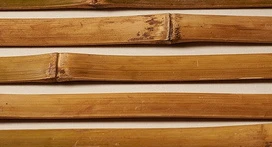
Natural Casca 20-25
- Nominal width20-25 mm
- Thickness3 mm ±1 mm
- Length3.00 m ±2 cm
- Finishwith skin / natural appearance
- Treatmentoctaborate (CCA upon request)
- Unitbundle of 20 slats / 60 linear meters
- Included in supplySlats according to model and quantity, octaborate treatment, and packaging in sealed bundles of 20 units
- Not includedFreight, fasteners/screws, final finish, design, calculation, and ART/RRT
Decorative and scenographic compositions where the visual variation of bamboo is part of the language.
- check_circleRustic and handmade compositions
- check_circleScenography and natural decoration
- check_circleLightweight panels and decorative weaves
- check_circleHandicrafts and decorative pieces
Suitability for outdoor, humid, or direct exposure areas depends on the treatment, final finish, fastening system, ventilation, and maintenance defined by the buyer.
- cancelNot recommended without specific finishing and application design
- cancelAn isolated slat is not a final structural element
“Rustic bamboo slat with visible, thin skin and an organic look. Natural variations in tone, texture, and curvature are part of the piece's aesthetic.”
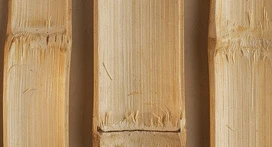
Natural Debarked 20-25
- Nominal width20-25 mm
- Thickness3 mm ±1 mm
- Length3.00 m ±2 cm
- Finishwithout skin / natural appearance
- Treatmentoctaborate (CCA upon request)
- Unitbundle with 20 slats / 60 linear meters
- Included in supplySlats according to model and quantity, octaborate treatment, and packaging in sealed bundles of 20 units
- Not includedFreight, fasteners/screws, final finish, design, calculation, and ART/RRT
Natural decorative compositions that require a more uniform appearance, without requiring calibrated slats.
- check_circleNatural decorative compositions
- check_circleScenography, crafts, and settings
- check_circleLightweight panels with a cleaner appearance
- check_circleProjects that do not require calibrated slats
Suitability for outdoor, humid, or direct exposure areas depends on the treatment, final finish, fastening system, ventilation, and maintenance defined by the buyer.
- cancelNot recommended without specific finish and application design
- cancelAn individual slat is not a final structural element
“Rustic debarked bamboo slat, with a cleaner visual appearance than the version with bark, maintaining its natural character. It does not achieve the calibrated standard of architectural slats.”
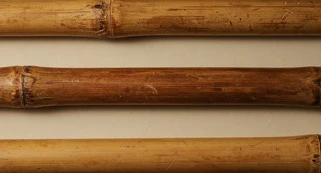
Natural With Bark 30-40
- Nominal width30-40 mm
- Thickness12 mm ±2 mm
- Length3.00 m ±2 cm
- Finishwith bark / robust natural appearance
- Treatmentoctaborate (CCA upon request)
- Unitbundle with 20 slats / 60 linear meters
- Included in supplySlats according to model and quantity, octaborate treatment, and packaging in sealed bundles of 20 units
- Not includedFreight, fasteners/screws, final finish, design, calculation, and ART/RRT
Natural compositions and cladding where bamboo texture should be the main feature.
- check_circleNatural cladding and decorative panels
- check_circleScenography with a greater material presence
- check_circleRobust rustic compositions
- check_circleSettings with a strong bamboo aesthetic
Suitability for outdoor, humid, or direct exposure areas depends on the treatment, final finishing, fastening system, ventilation, and maintenance defined by the buyer.
- cancelNot recommended without specific finishing and application design
- cancelAn isolated slat is not a final structural element
“Rustic bamboo slat with bark, wider and more robust, with an expressive material presence. It remains a natural slat, with inherent bamboo variations.”
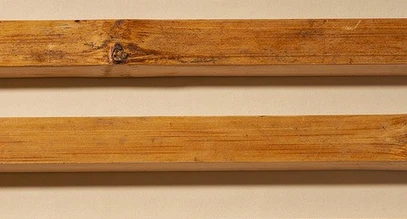
Bambusa 30 Architectural
- Nominal Width30 mm ±1 mm
- Thickness12 mm ±1 mm
- Length3,00 m ±2 cm
- Finish3 planed faces — sides and bottom — with visible bark
- Treatmentoctaborate (CCA on request)
- Unitbundle with 20 slats / 60 linear meters
- Included in supplySlats according to model and quantity, octaborate treatment, and packaging in sealed bundles of 20 units
- Not includedShipping, fasteners/screws, final finishing, design, calculation, and ART/RRT
Cladding, panels, and details that require greater visual regularity.
- check_circleArchitectural cladding and panels
- check_circleBrise-soleil and linear compositions
- check_circleJoinery and interior design details
- check_circleComposite elements with suitable technical design
Suitability for outdoor, humid, or direct exposure areas depends on the treatment, final finishing, fastening system, ventilation, and maintenance defined by the buyer.
- cancelNot recommended without specific finishing and application design
- cancelAn isolated slat is not a final structural element; composite use requires sizing by a qualified professional
“30 x 12 mm planed bamboo slat, with 3 planed faces (sides and bottom) and preserved visible bark. Greater dimensional regularity than natural slats.”
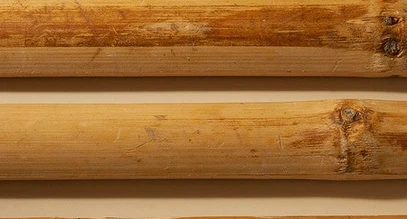
Architectural Bambusa 40
- Nominal Width40 mm ±1 mm
- Thickness12 mm ±1 mm
- Length3.00 m ±2 cm
- Finish3 planed faces — sides and bottom — with visible bark
- Treatmentoctaborate (CCA upon request)
- Unitbundle with 20 slats / 60 linear meters
- Included in supplySlats according to model and quantity, octaborate treatment and packaging in sealed bundles of 20 units
- Not includedFreight, fasteners/screws, final finish, design, calculation and ART/RRT
Brise-soleil, panels and cladding with greater visual presence and linear compositions.
- check_circleBrise-soleil, panels and cladding with greater presence
- check_circleLarger-scale architectural compositions
- check_circleLinear details with a robust presence
- check_circleComposite elements with specific dimensioning
Suitability for external, humid or direct exposure areas depends on the treatment, final finish, fastening system, ventilation and maintenance defined by the buyer.
- cancelNot recommended without specific finish and application design
- cancelAn individual slat is not a final structural element; composite use requires dimensioning by a qualified professional.
“Planed bamboo slat, 40 x 12 mm, with 3 planed faces (sides and bottom) and preserved visible bark. Largest nominal width in the line, with a more robust architectural presence.”
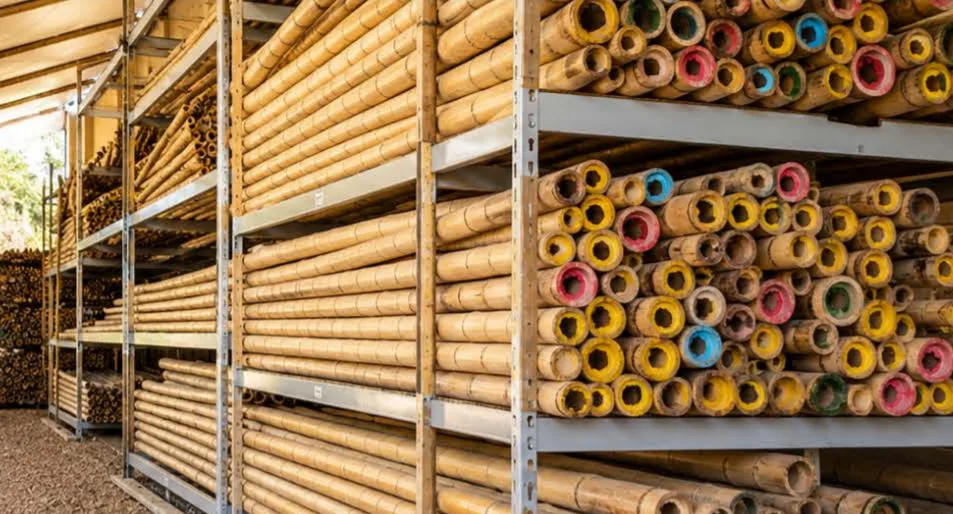
Treated Round Bamboo Pole
- Lengths3.00 m and 6.00 m (±10 cm)
- DiameterRanges of 8-10, 10-12 and 12-14 cm
- UnitPer piece
- TreatmentOctaborate (special CCA)
- FinishNatural treated, unpainted
- Included in the supplyPieces according to length, diameter and quantity, with standard octaborate treatment
- Not includedFreight (FOB), installation, final drying, project design and technical responsibility
Architecture, scenography and set design, and feature elements
- check_circleArchitecture, brises, pergolas and feature elements
- check_circleStructural (columns/beams) with project design and technical responsible
Landscaping and scenography
- check_circleLandscaping, scenography and set design, events and installations
- cancelDirect/humid exposure requires construction detailing and buyer maintenance
“Treated culm sold per piece for architecture, landscaping, scenography and set design, and structural applications (with project design). Three diameter ranges.”
Where to apply Bambusa 40 Panels.
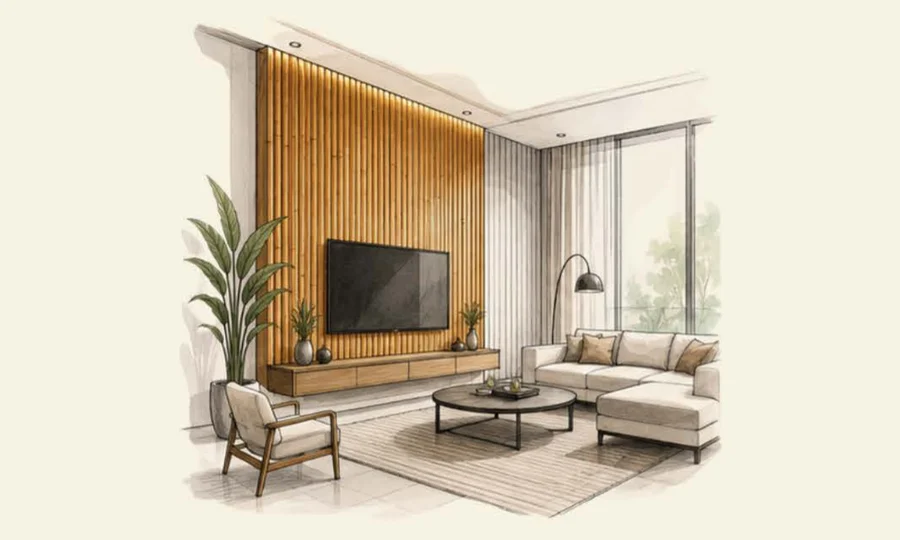
Living room
Continuous panel covering the TV wall, from baseboard to ceiling.
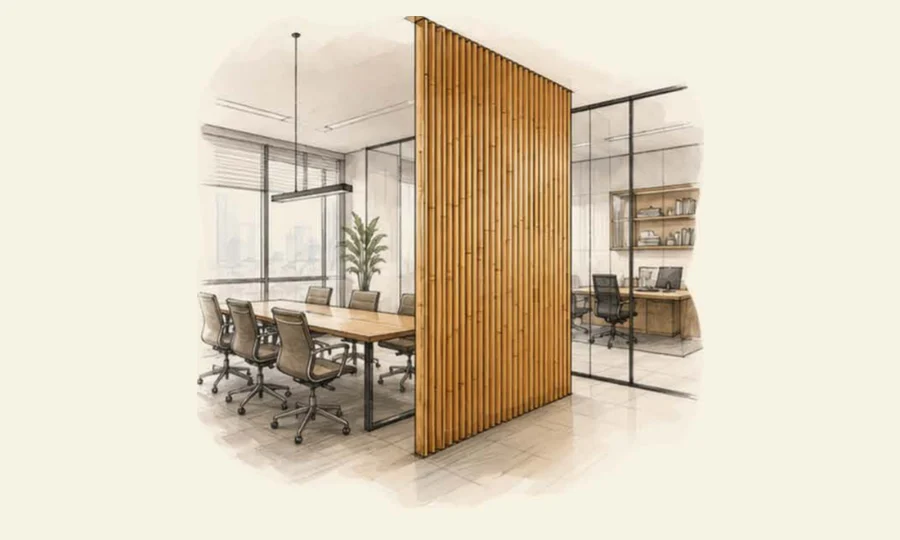
Meeting room
Panel as a partition between meeting and work area.
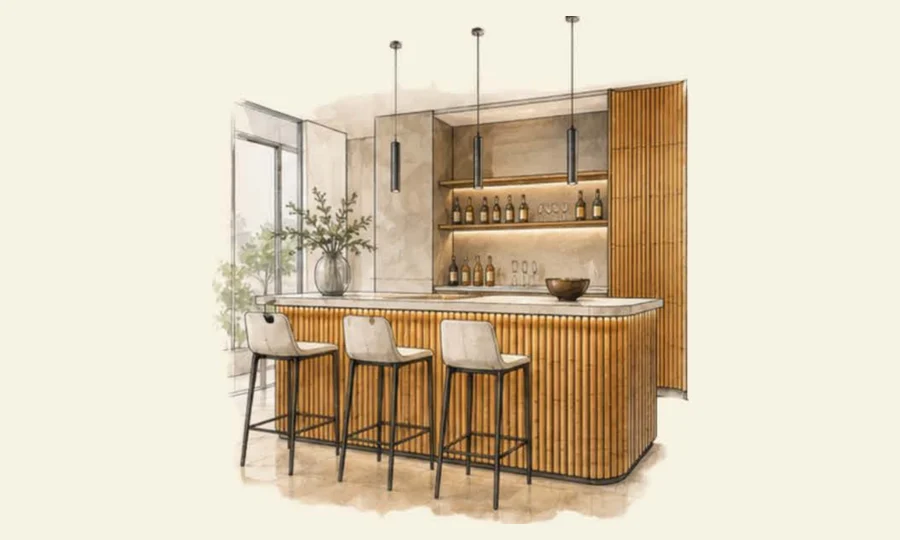
Kitchen and bar
Countertop and bar support wall cladding.
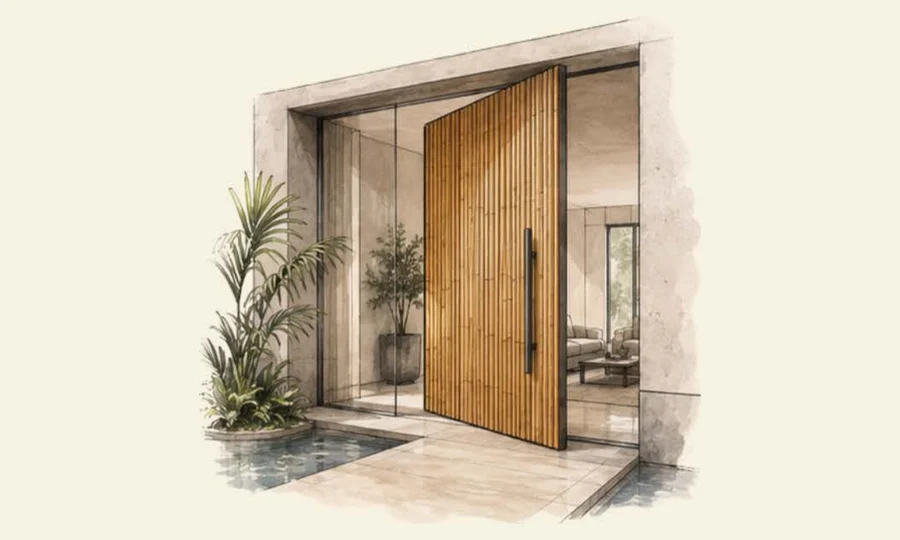
Pivot door
Panel applied on a large pivot leaf.
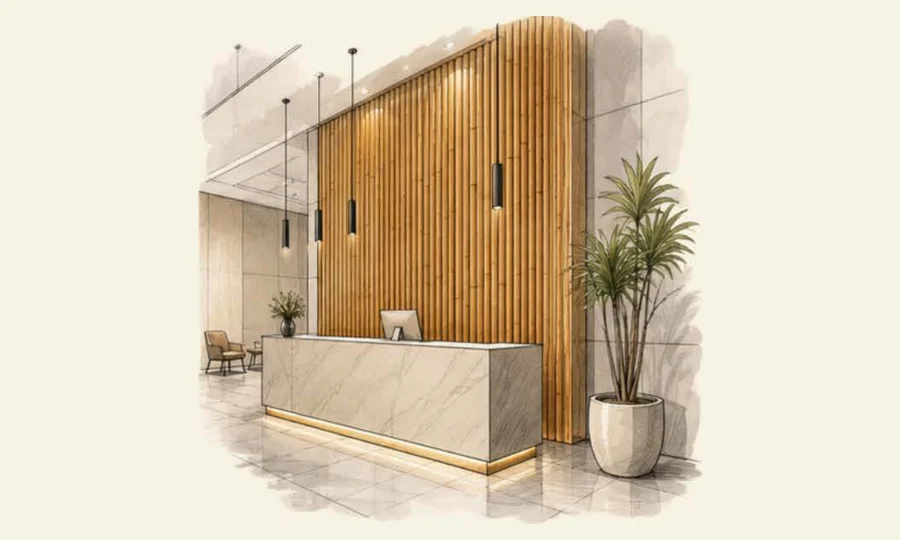
Reception
Back wall of the counter in a continuous panel.
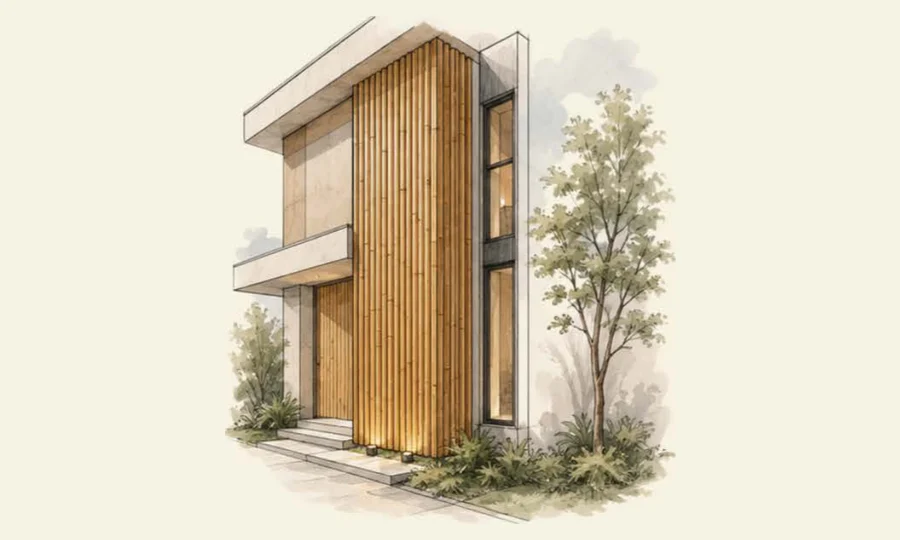
Residential facade
Panel in a vertical strip on the facade volume.
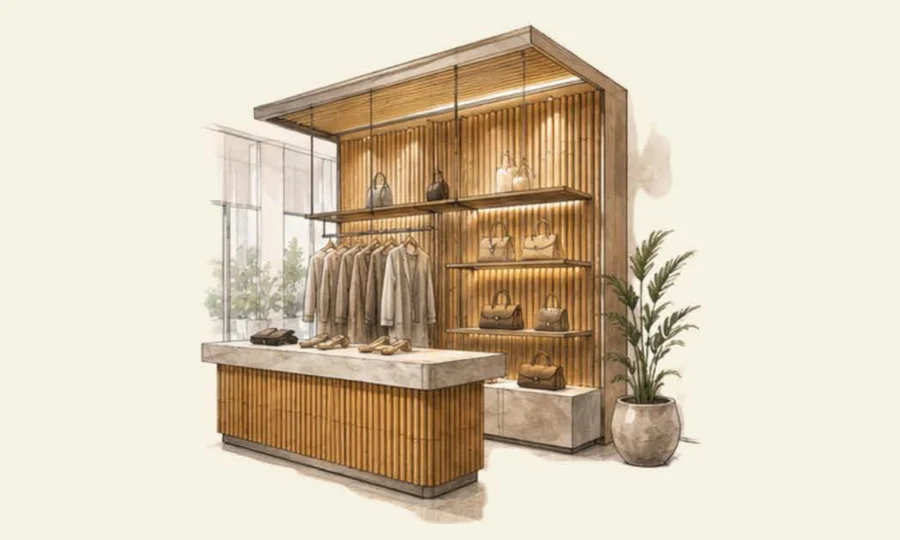
Store and retail
Panel at the back of the shelves and at the front of the checkout.
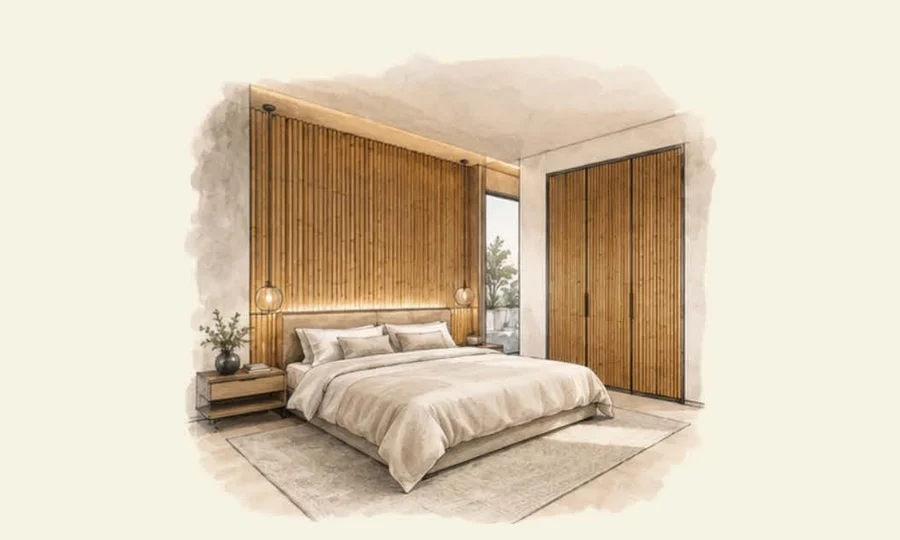
Bedroom
Panel at the headboard, continuing to the closet door.
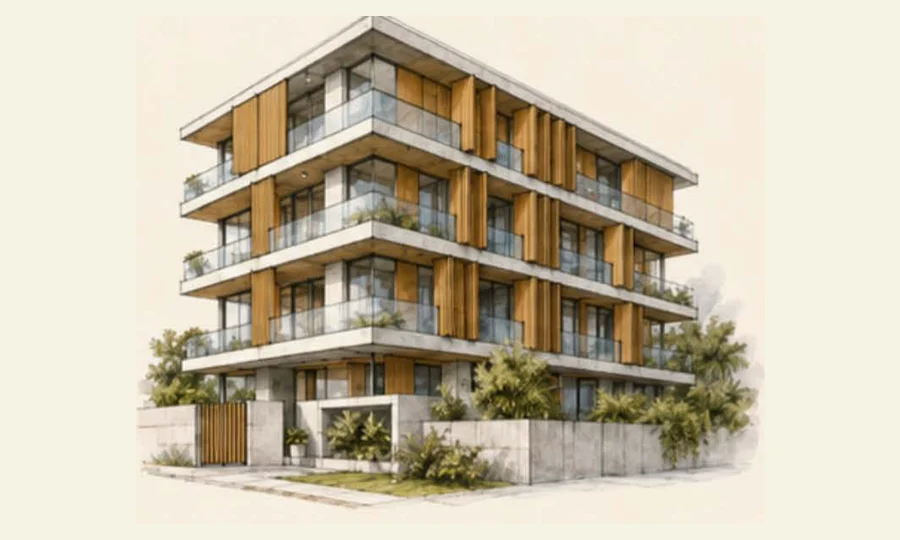
Multi-story building
Panels alternating between balconies on all floors.
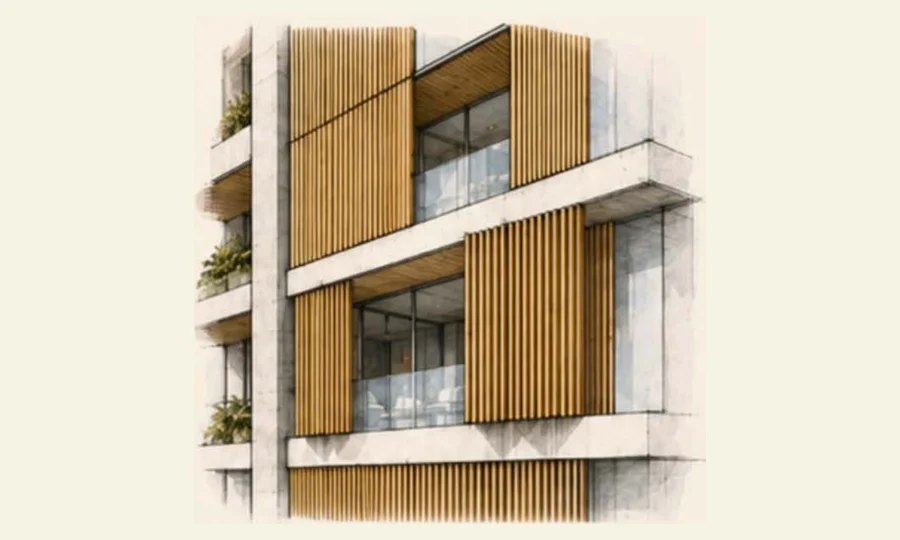
Facade detail
Panel meeting the concrete structure.
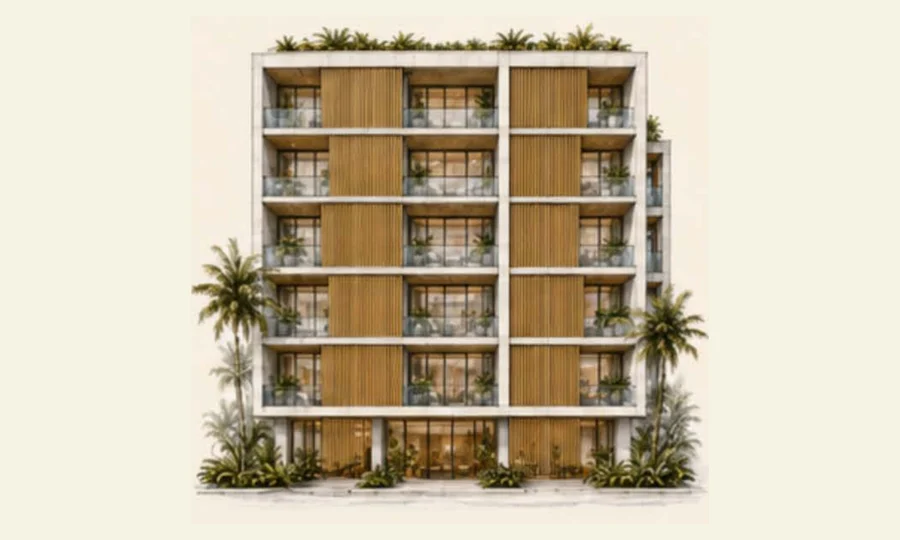
Facade with brise-soleils
Panels forming brise-soleils on the balconies.
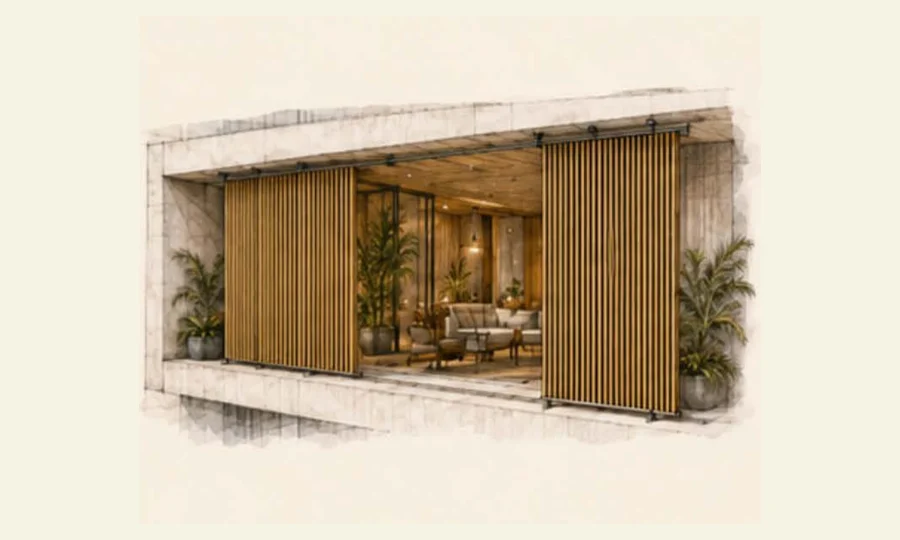
Opening with sliding panels
Sliding panels closing a large opening.
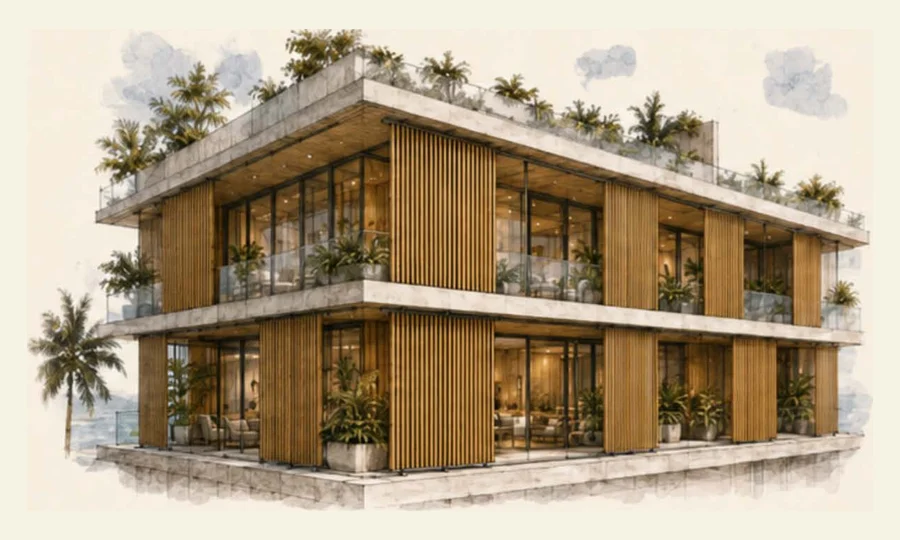
Commercial volume
Panels between the columns, on both floors.
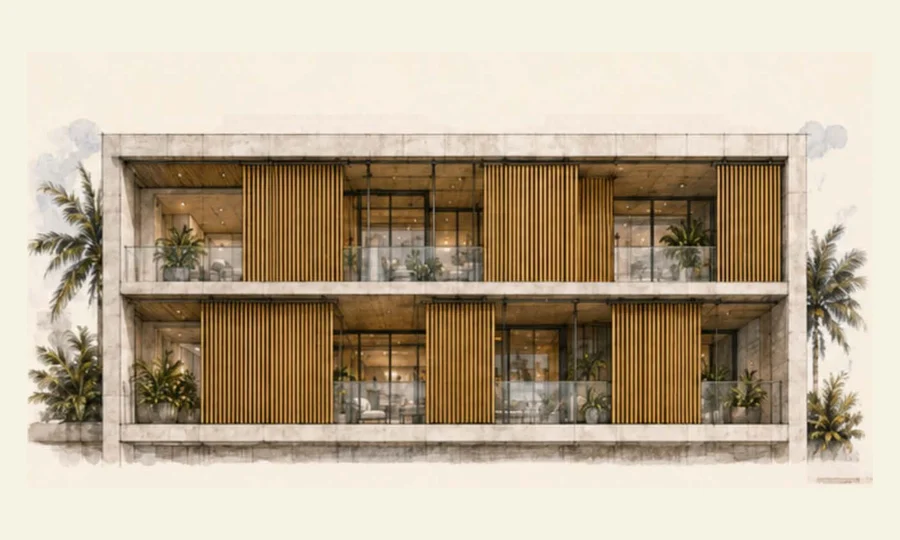
Ribbon facade
Panels in a regular rhythm along the entire facade.
Ceilings with Bambusa 40 Panels.
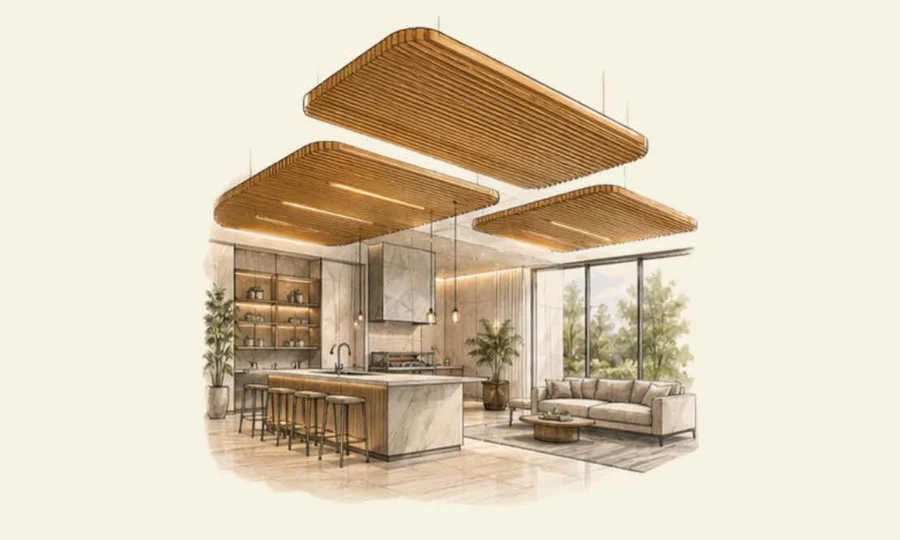
Suspended ceiling islands
Independent panels suspended above the kitchen and living area.
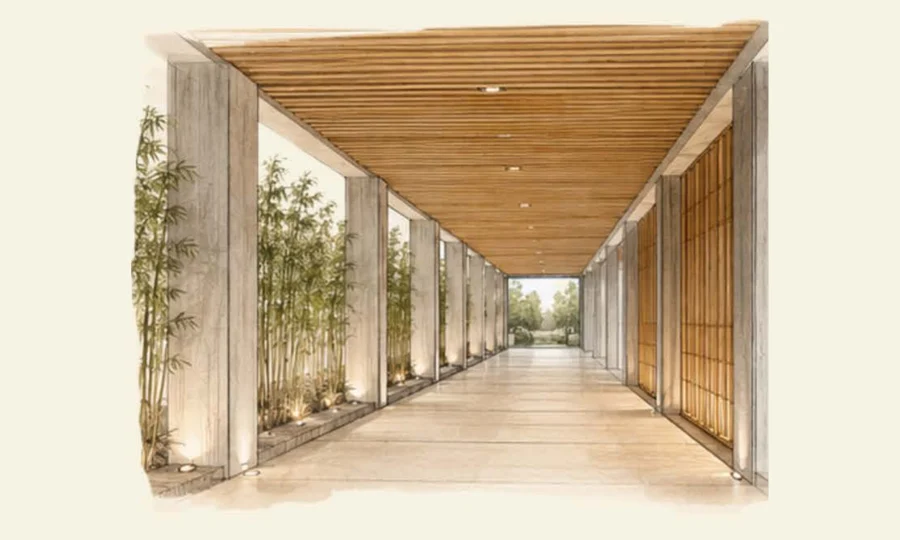
Hallway with continuous ceiling
Continuous ceiling following the hallway axis.
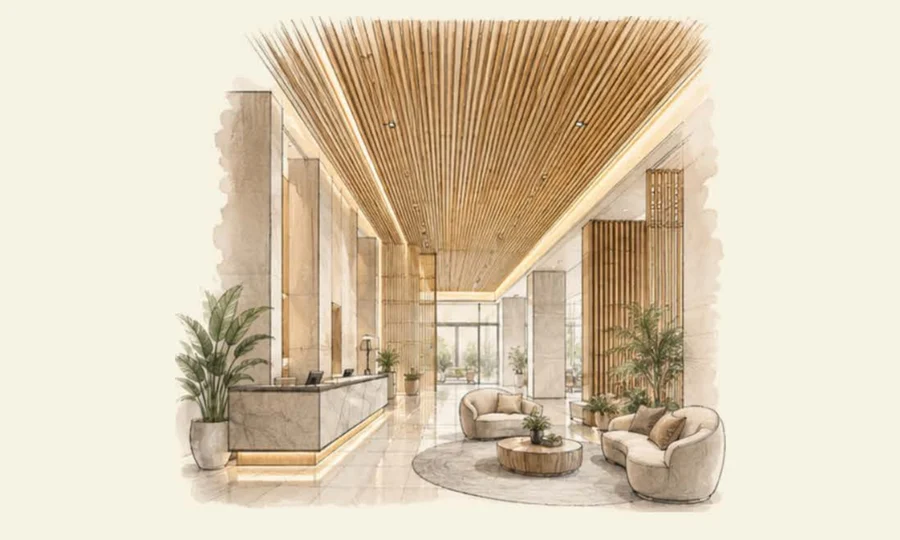
Radial ceiling in a lobby
Fan-shaped ceiling opening from the counter.
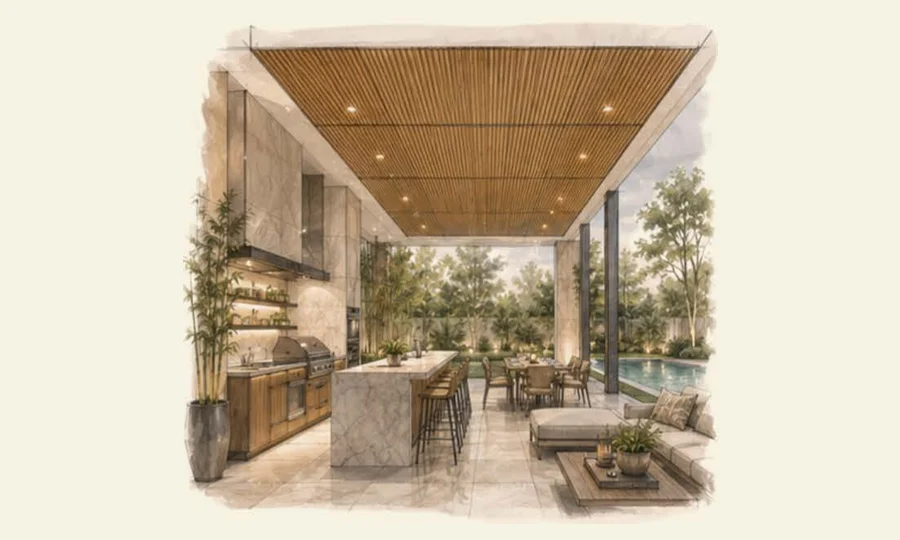
Gourmet area covering
Flat ceiling for the outdoor dining area covering.
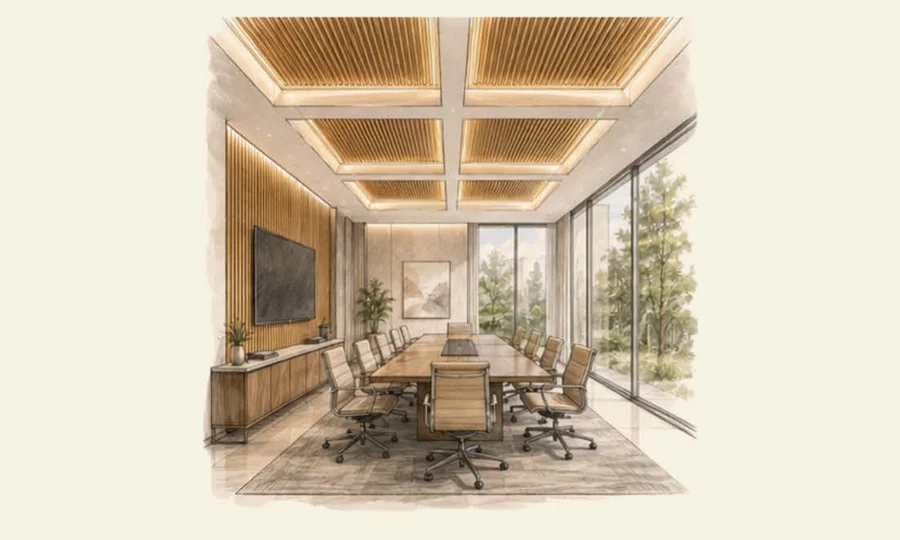
Ceiling in a meeting room
Modular ceiling with recessed lighting in the joints.
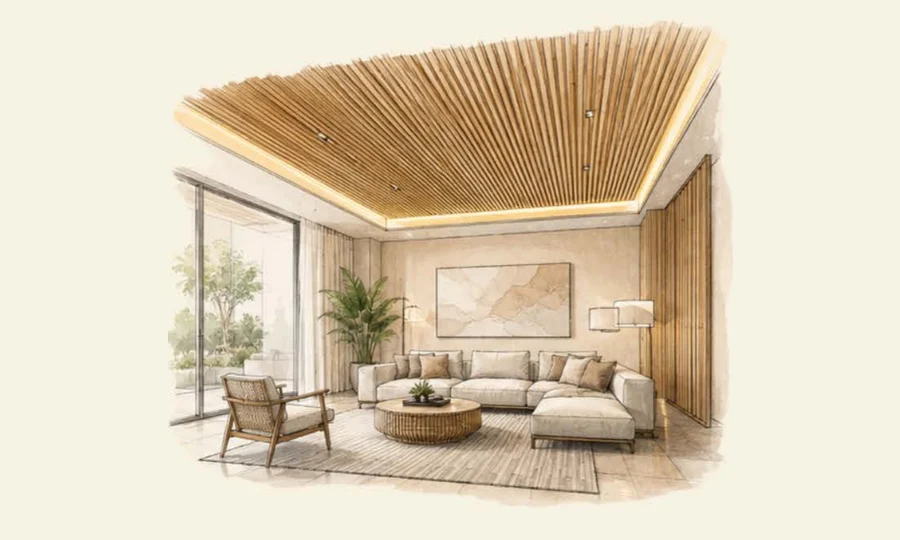
Radial ceiling in a living area
Fan-shaped ceiling with illuminated cove lighting along the perimeter.
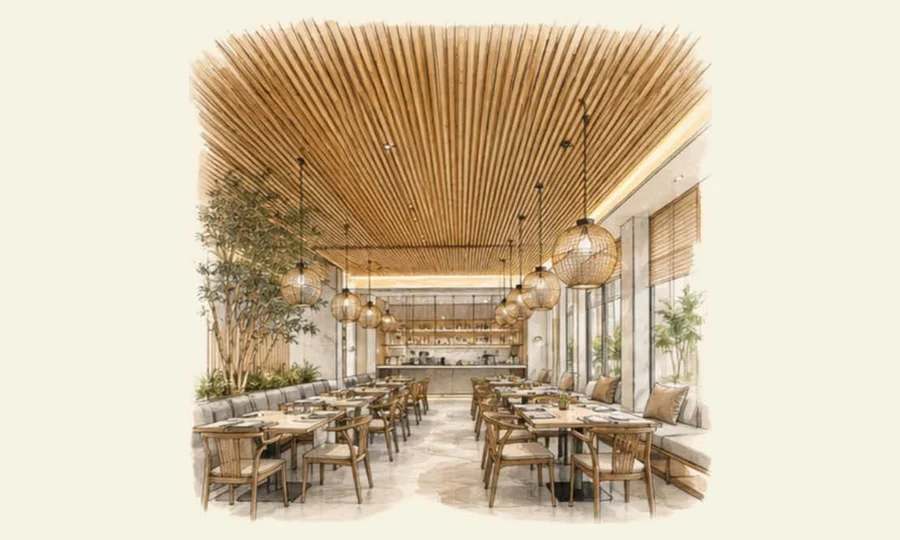
Radial ceiling in a restaurant
Fan-shaped ceiling covering the entire hall.

Access canopy
Ceiling for the vehicle drop-off canopy.
From Origin to Technical Specification
When you come to us to specify material — be it culm, slat, half-round, or panel — we are not selling kilograms of bamboo. We are starting a conversation about <strong>how long that project will last</strong>.
The Intelligence of Origin
Each project requires a different material. A culm for a seaside brise-soleil requires a different technical approach than a culm for an interior restaurant ceiling — exposure, humidity, and stress are different. Before specifying, we study: the ideal culm maturity (flexible juvenile or resistant mature), the destination environment (exposed, covered, or intermediate), the actual durability required by the client, and the required safety protocols.
The Treatment that Extends Lifespan
This is where organic matter meets chemical engineering. Autoclave treatment is not a surface coating — it's pressure impregnation of antifungal and hydrophobic agents into the culm's interior, not just its surface. The objective is to significantly extend the culm's lifespan compared to untreated culms. It is a documented protocol, with a history of monitored projects.
The Specification that Protects the Project
A material delivered without documentation is an unpriced future risk. Every material leaving Tudubambusa comes with available origin documentation: provenance, treatment, and specification. This document supports the architect, engineer, and builder when, years later, someone asks what material it is and what its specification is.
Everything you need to know about bamboo materials.
Each topic is a complete domain of knowledge. Explore each theme: from raw culm to ready-to-install panel.
The culm is the raw unit — what grows. Culm quality defines everything in a project. Mature (4+ years, lower starch content) is more suitable for outdoor environments. Young (2–3 years, more flexible) is ideal for woven structures and controlled interiors. Out-of-season harvesting and improper storage reduce performance. Precise specification is what separates a durable material from one that fails prematurely.
Treatment significantly extends the lifespan compared to an untreated culm. The BOV Method impregnates antifungal and hydrophobic agents into the culm's interior under pressure — it is not a surface coating. In Cascavel, mature Botucatu culm underwent the protocol. In Makoto, young culm received treatment suitable for high-humidity interiors.
The slat is the basic unit for most cladding and ceilings. Rectangular section (80×20mm or 60×15mm, dimensions vary by batch), with treatment appropriate for exposure. Pre-cutting reduces on-site sawing and adjustment. Poorly specified slats compromise cladding durability. In InCasa, pre-cut slats accelerated assembly compared to on-site cutting.
A round pole creates a monumental presence. It is a natural cylindrical culm, with nodes, in varying diameters according to the project. Unlike slats, the pole engages with the human body and scale in a way no other profile replicates. Technical challenge: the hollow pole can burn from the inside out, making the AVCB protocol more demanding. Casa Bombinhas: poles with no visible screws on a beachfront facade, with performance monitoring.
Culm cut longitudinally into two equal halves. Semicircular shape, flat back surface — organic form with structure. While slats are geometric and ordered, the split bamboo culm is gentle, inviting. Use split bamboo culm when the project seeks movement of light and shadow, tactile texture, or organic layout. Casa Iporanga: split bamboo culms in a diagonal weave on the multi-pitched roof — an effect that changes with daylight.
The synthesis of what we've learned: premium design, industrial assembly, artisanal result. Prefabricated panels (slats + aluminum frame) with hidden screws, prefabricated by interlocking. In the traditional system, each slat is cut on-site: 15m²/day. In the panel system, they arrive pre-cut, numbered by plan: 85m²/day. InCasa Residence: pre-cut and numbered panels provided consistent assembly rhythm.
Bamboo woven into a pattern — natural, artisanal, with variable density. An open weave provides diffuse light. A medium weave balances light and shadow. A closed weave creates total privacy. The challenge isn't beauty — it's specification: without adequate treatment, a woven panel in an outdoor environment degrades rapidly. With treatment appropriate for exposure, its outdoor lifespan significantly increases. The choice between open, medium, and closed is not aesthetic — it is engineering of the desired microclimate.
In projects that require fire performance (shopping centers, restaurants, public spaces), we master the bamboo fire-retardant treatment process, defined from the specification stage. In Makoto, the treatment was ready before construction began. The common mistake is to postpone this decision until after the material has arrived — we design safety from the outset.
The autoclave is central to the BOV Method. Inside the chamber, the culm undergoes vacuum and pressure cycles that force the reagent into the fibers, not just onto the surface. The result is internal impregnation, not surface coverage — which reduces the need for frequent reapplication compared to surface treatments.
Guided specification is the document that protects the project. It includes: exact culm type, maturity and origin, applied treatment protocol, factory dimensions and tolerances, fastening system, and installation instructions. It is the template you provide to the builder — defining precise requirements and reducing last-minute substitutions that compromise durability. It is a technical document that you can request with your order.
Knowing the origin of the bamboo, the treatment date, and the lot number. Traceability is integrated documentation from the forest. Each lot supplied by Tudubambusa comes with available documentation on origin, applied treatment, and specification — the record that supports the project when someone asks about the material years later.
Field intelligence is the knowledge captured from each project — distilled learning. In Cascavel, the capture of 57 tons of CO₂ was recorded, associated with a managed bamboo plantation. Makoto showed good acoustic performance with young bamboo treated in a high-humidity commercial environment. Bombinhas has been demonstrating the performance of round bamboo poles with hidden fastening in a salty marine environment. This intelligence resides in the articles, cases, and technical sheets within this silo.
How
Material
becomes Foundation.
The material we sell is not a marketplace commodity. It is the same base material that Tudubambusa specifies, treats, and installs in its own special projects — from raw culm to ready panel. Buying material here means bringing to your project the technical foundation that has already been proven in real projects, with the same engineering behind it.
The origin we already trust
The raw material comes from private areas that cultivate bamboo for commercial application. Before any culm becomes a product, it goes through the same criteria we apply when the destination is one of our own projects: species, maturity, wall thickness, and origin. The wrong culm compromises the project before it even starts — which is why selection happens at material intake, not on the job site.
The treatment that defines service life
There is no single treatment — there is the right treatment for the exposure. Octaborate (immersion) for indoor and covered areas; CCA or CCB autoclave for outdoor areas in perennial constructions. It is the same protocol we apply to our structures and cladding: what sustains durability is not a promise, but the suitability of the treatment to real-world use.
From raw material to the foundation of your project
Each material leaves with origin documentation — provenance, treatment, and specification — to arrive at the job site with the information the project requires. And when Tudubambusa is the technical responsible party, the project is delivered with ART and/or RRT by a qualified professional. Well-specified material is not a cost: it is what reduces project risk and sustains the result over time.
The wrong material is a project problem. Well-specified material reduces project risk.
When the culm arrives documented and treated according to exposure — you specify with greater confidence.
"My material has a documented origin."
"My specification is registered."
"I know the treatment applied to my material."
We supply material that you can specify and substantiate with documentation.
What's your next step?
Falar com um Especialista >Project Manager or Architect
You know that material matters. You want a supplier who documents the material's origin, understands your project, and records the lot's quality parameters.
Schedule a material specification session. We will map your project, recommend the right material, and create the document your supplier can execute.
Manufacturer or Developer
You want reliable material at scale, with documentation that supports your project and a supplier who understands engineering and deadlines.
Let's talk about a supply agreement: you define the volume, and we structure quality, documentation, and systematic delivery.
Professional who wants to master the material
You want to learn how to specify the right culm, validate quality on-site, and document the material's origin.
Join consultoria técnica in the "Technical Material Specification" module. Learn how the real supply chain works.
Frequently Asked Questions about Materials & Components.
Here are the questions you're thinking right now.