
The Math of Real Sustainability: How Bamboo Avoided 295 Tons of Carbon at Maringá's Christmas
The story of how a technical Life Cycle Assessment (LCA) report replaced "ecological romanticism" with unquestionable data, proving the environmental gap between Bambusa Atelier's bioarchitecture and traditional steel construction.
Project Context
Technical Sheet
Client
Maringá City Government, PR
Partner(s)
Bambusa Atelier, UGREEN Consulting
Location
Maringá, PR
Execution
Tudubambusa — Methodology and Leadership
Scope
Infrastructure for Christmas event + Comparative Life Cycle Assessment (LCA) Report.
The Core Challenge
Ephemeral projects and large-scale events are historically environmental villains, reliant on tons of steel. How to prove to public authorities and society that the choice of bamboo was not just "rustic decoration" but a high-climate-performance solution capable of delivering auditable ESG results?
Visual Record
Project Gallery













Video
Project Video
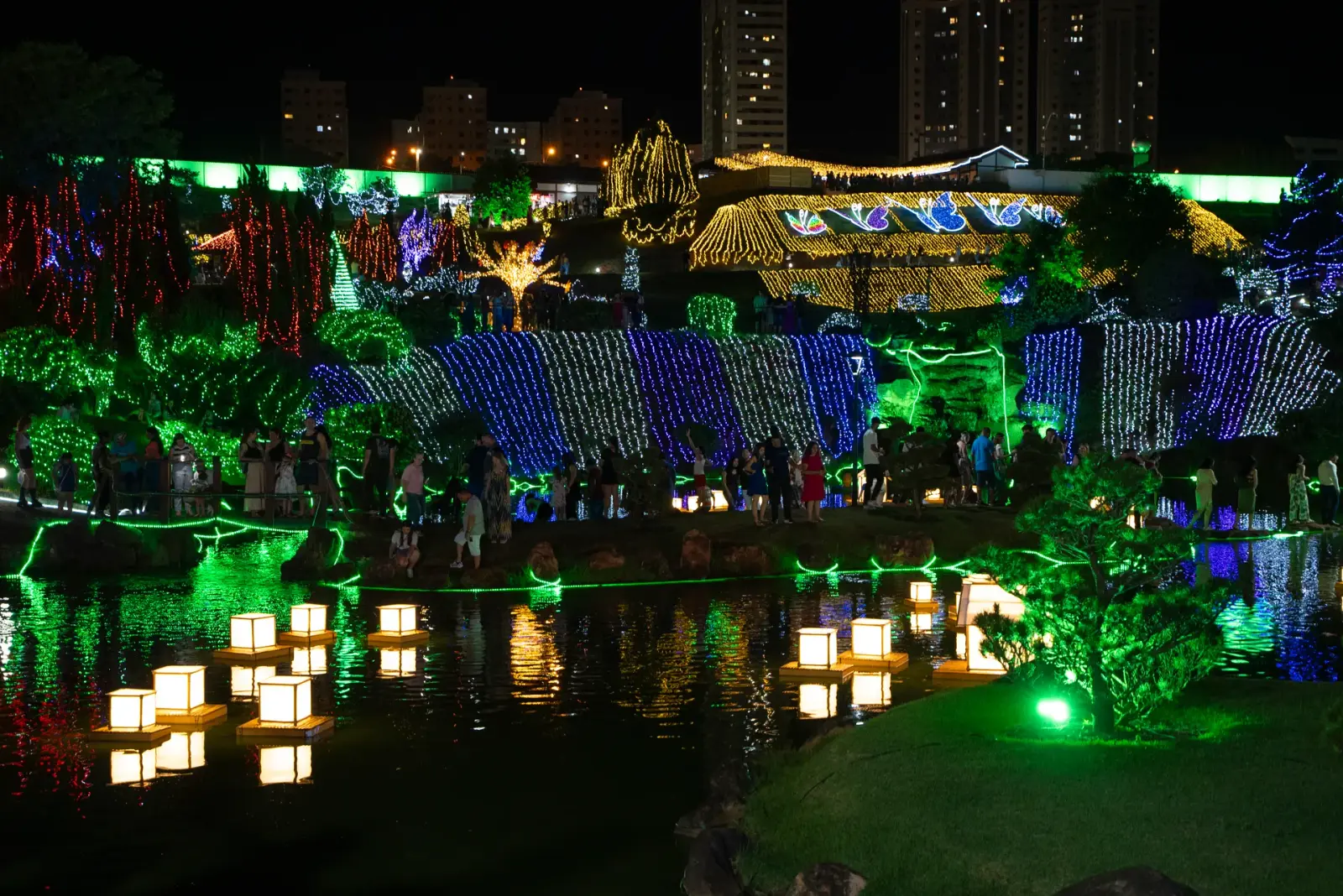
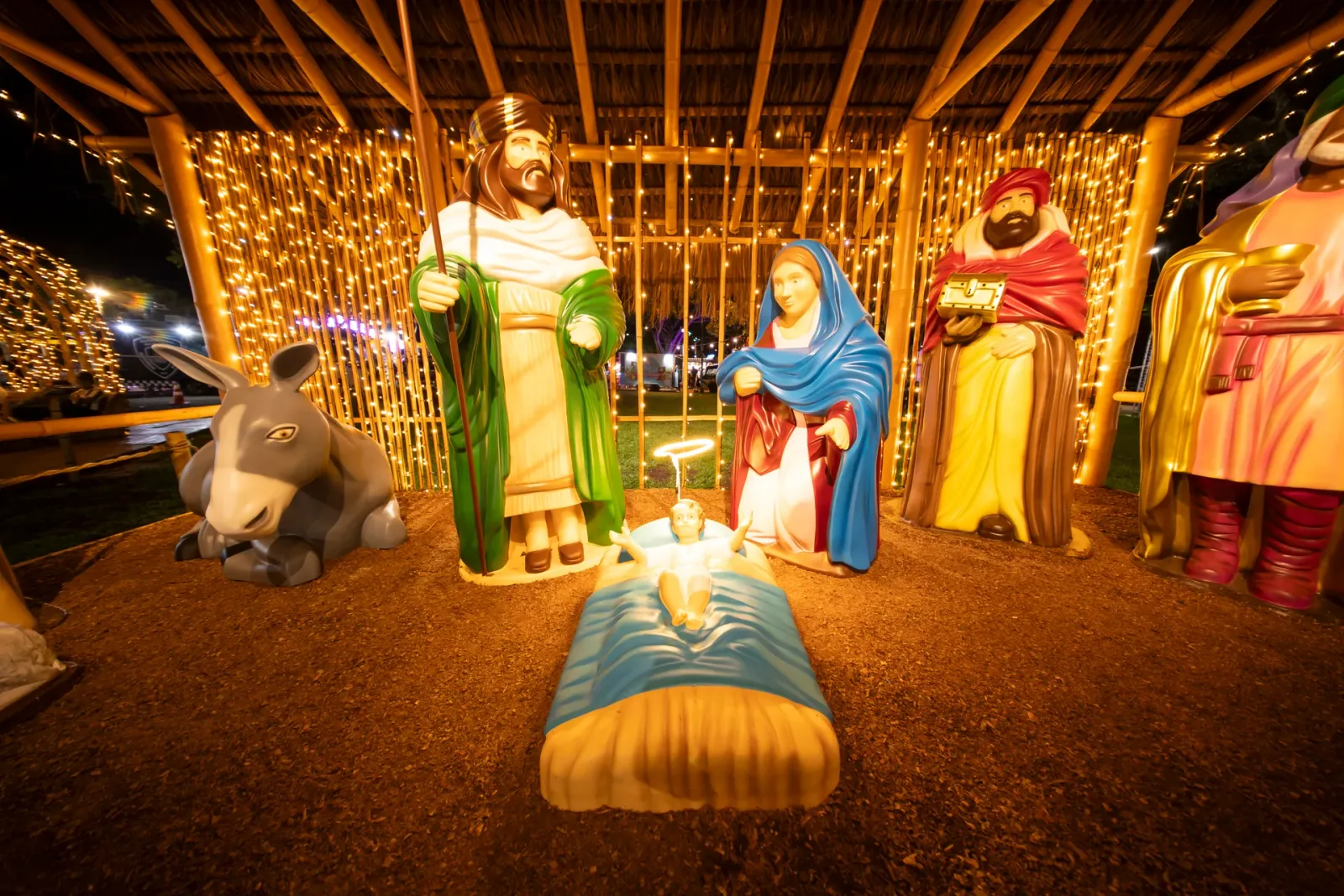
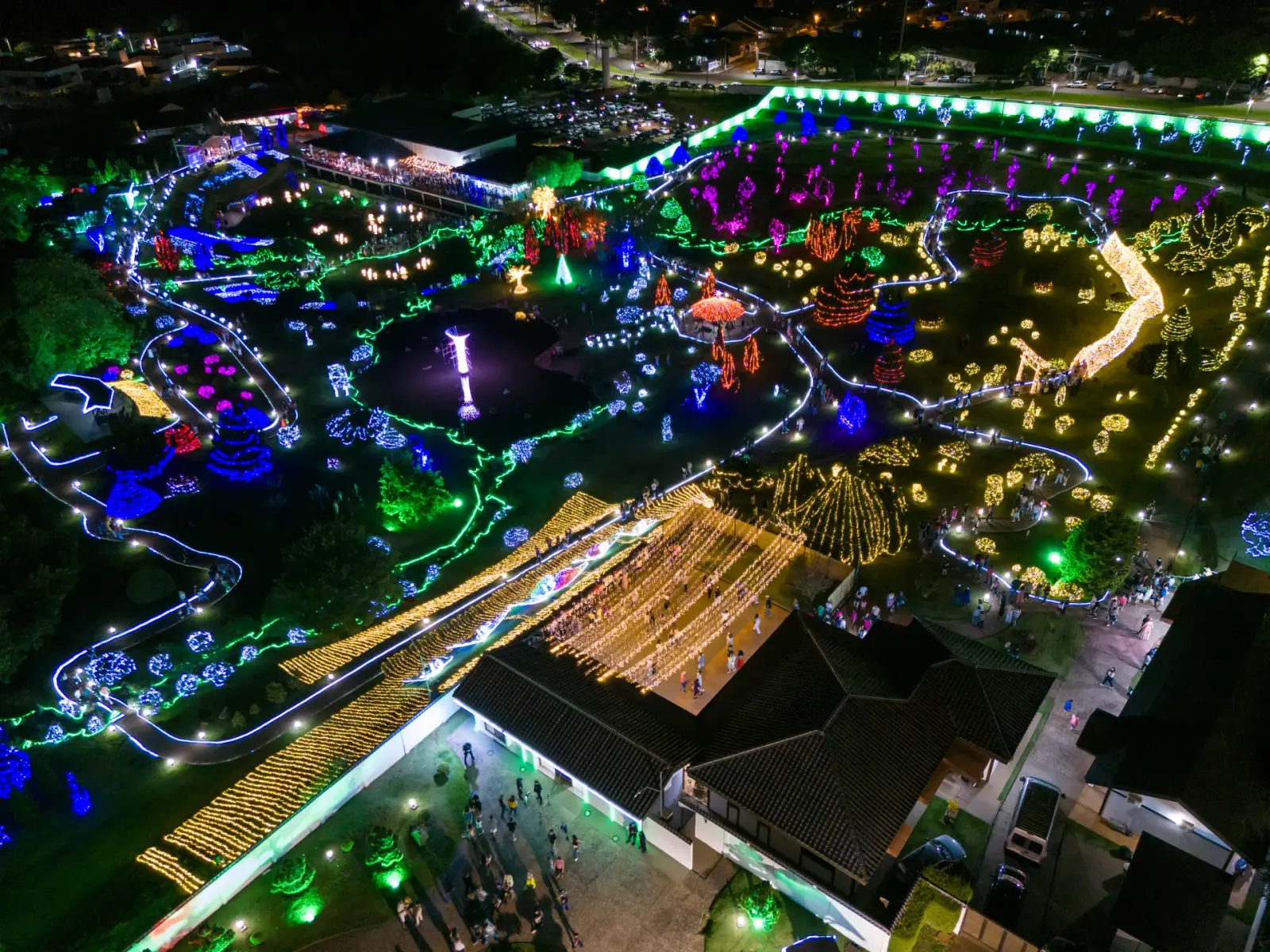
Maringá Christmas 2024 at Japan Park — bamboo set design by Bambusa Atelier.
The Project Journey
The End of Empty Talk
In the modern corporate and governmental market, intentions don't pay the bill. Saying an event is "sustainable" has become an empty cliché (greenwashing). When Bambusa Atelier took on the infrastructure for Maringá Christmas, the challenge was elevated to a new level: it was necessary to audit the project. We needed to answer a complex question with pure mathematics: If this same monumental structure were built with steel, what would be the true cost to the planet compared to bamboo?
Data Engineering — Life Cycle Assessment
To transform narrative into metrics, Bambusa commissioned UGREEN Consultoria. Using Open LCA software and the Ecoinvent 3.9.1 global database, every gram of carbon, kilometer driven, and kilowatt consumed was mapped.
Solução 1
Carbon Bank Engineering
The report revealed the material's true driving force. During its rapid growth (3 to 5 years), the bamboo used in the project sequestered an astonishing -35,564.8 kg of CO2. It not only avoided pollution; it actively cleaned the atmosphere.
Solução 2
The Stark Contrast
The simulation of the same infrastructure in steel exposed the burden of mining and steelmaking. While the steel process would emit over 267 tons of CO2, the life cycle of bamboo, even after extraction, freight, and manufacturing, concluded in the positive red: -27,822 kg of CO2. A carbon-negative material.
The Undeniable Proof
The Results
The choice between bamboo and steel should be adapted to local requirements and sustainability goals [...] This study offers a valuable resource for stakeholders and sectors wishing to make informed and environmentally conscious choices.
Outcome Indicators
| Indicator | Result Achieved |
|---|---|
| Emissions Gap | Steel would generate 267,214 kg of CO2. Bamboo concluded at -27,822 kg. |
| Direct Climate Impact | 295 tons of CO2 eq were avoided in the atmosphere. |
| Forest Equivalency | It would be necessary to plant 50,433 trees to neutralize the emissions from steel in this single event. |
| Vehicle Equivalency | The avoided emissions are equivalent to a car traveling 1,175,000 km (or 1,300 Curitiba-Maringá trips). |
Documento
Audited Report
Field Intelligence
What We Learned
The Maringá case forged lessons that elevate LCA from a technical tool to a strategic business asset:
LCA is the New "ART" of the ESG Market: High-level projects demand proven responsibility. Just as ART ensures structural safety, a Life Cycle Assessment (LCA) report ensures environmental safety. It is the document that unlocks green investments and wins bids.
Transport Does Not Nullify the Benefit: One of the biggest fallacies in the market is that freight destroys bamboo's sustainability. The data proved otherwise. Upstream transport (1,246 kg of CO2) was negligible compared to the plant's colossal carbon sequestration in the forest (-35,564 kg). The math doesn't lie.
Ephemeral Events Demand Smart Disposal: The project highlighted the life cycle of temporary structures. While disassembling and recycling steel is an "energy-intensive" process, bamboo, at the end of its useful life, is biodegradable and can be composted or used as clean biomass.
Perguntas Frequentes sobre este Projeto
Next Step
Turn This Intelligence Into Action
Does your next big project, event, or bid require mathematical proof of sustainability to attract investors and the public? Schedule a Strategic Session and bring data-driven bio-architecture into your scope.
Schedule an AssessmentDo you want to master the language of ESG reports and understand how to specify carbon-negative materials in your architectural projects? Join the waiting list for Tudubambusa Academy.
Talk to Engineering