

Christmas at Parque do Japão 2026: tradition, art and sustainability in Maringá
Bamboo transforms the landscape of Parque do Japão and brings a new experience to Maringá Encantada 2026.
Project Context
Technical Sheet
Client
Maringá Encantada 2026 — Parque do Japão
Location
Maringá, PR, Brazil
Execution
Tudubambusa — fourth consecutive year at the Parque do Japão Christmas
Scope
Restoration, maintenance, fabrication, installation, monitoring and dismantling of the bamboo scenographic structures, with a comparative environmental study between the bamboo solution and a reference steel alternative.
The Core Challenge
Preparing the installations for a new season, extending the use of the existing structures through inspections, technical interventions and proper conservation, in harmony with the architectural identity of the park.
The Project Journey
A Christmas that unites tradition and nature
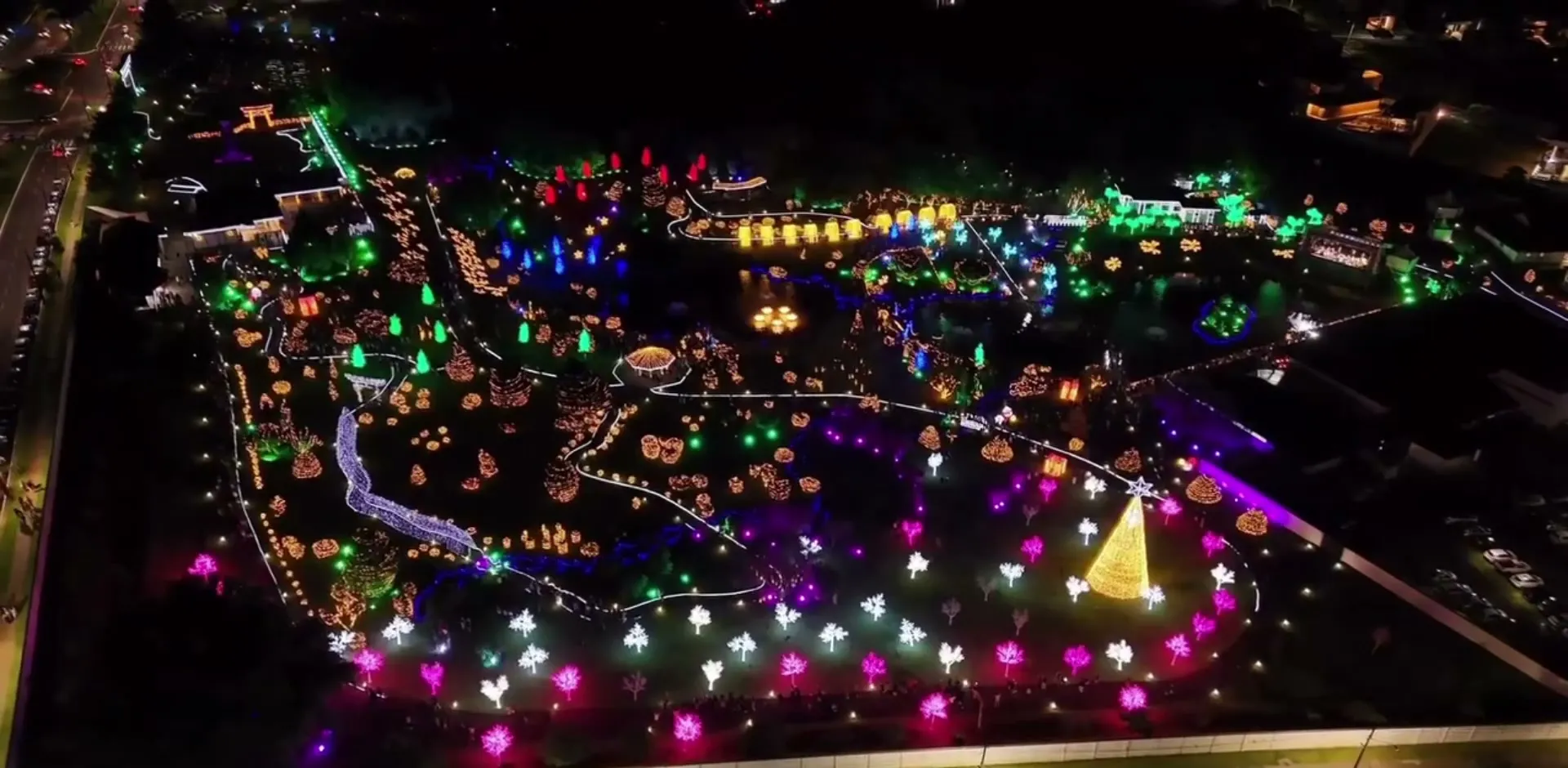
Parque do Japão, one of the most emblematic spaces in Maringá, hosts another edition of its Christmas decoration with bamboo scenographic structures developed by Tudubambusa. For the fourth consecutive year, the company takes part in the park's Christmas decoration, bringing together art, technical knowledge and the appreciation of natural materials.
In a setting marked by Japanese-inspired architecture, the bamboo scenography creates a connection between nature, culture and the Christmas spirit. More than creating illuminated settings, the project values the identity of the space and shows how bamboo can be part of urban experiences with great visual impact.
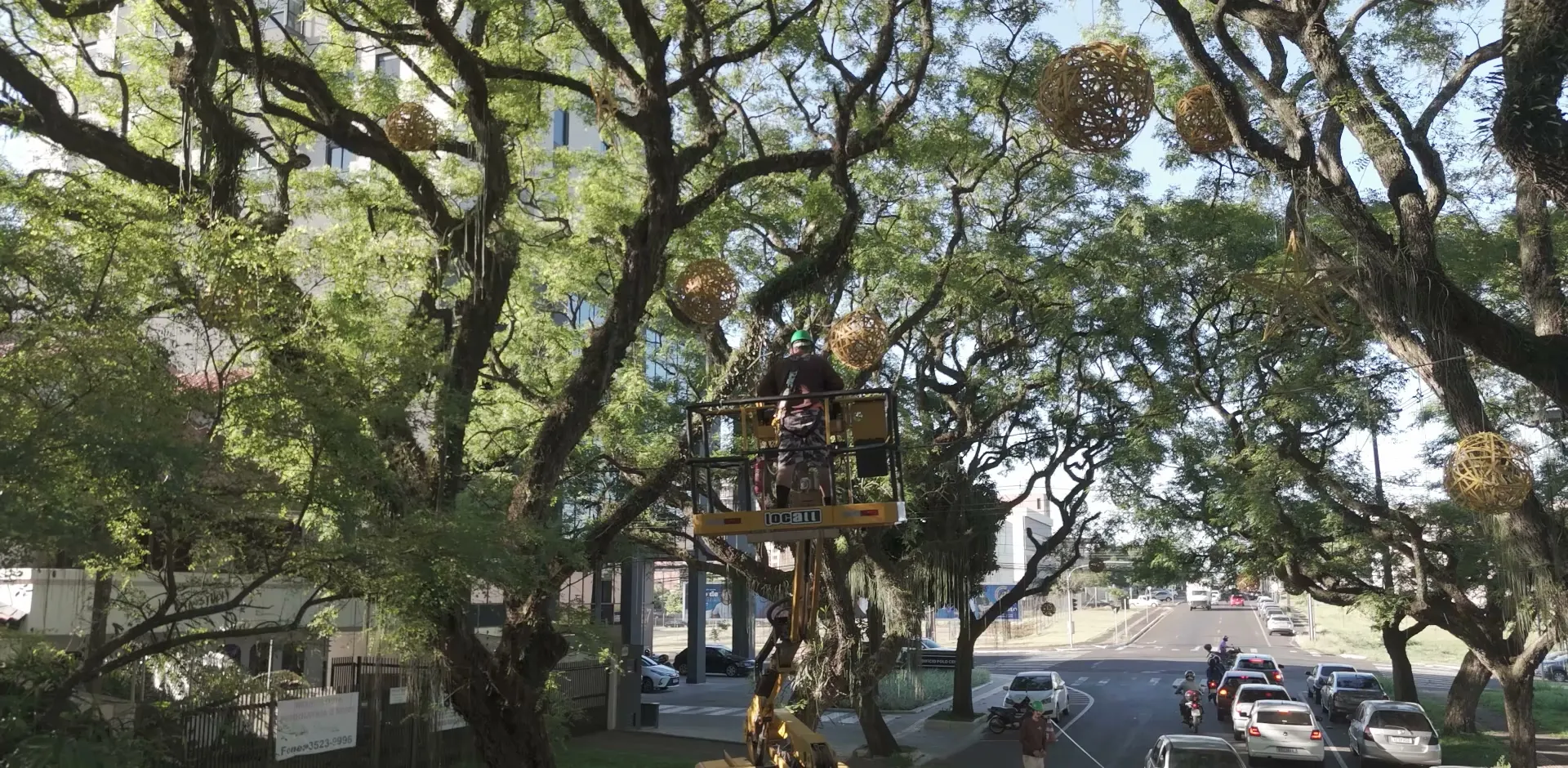
For the 2026 edition of Maringá Encantada, the project includes the restoration and enhancement of scenographic elements, combining fabrication, maintenance and installation techniques to prepare the installations for a new season. The proposal highlights a key feature of bamboo structures: their use can be extended through inspections, technical interventions and proper conservation.
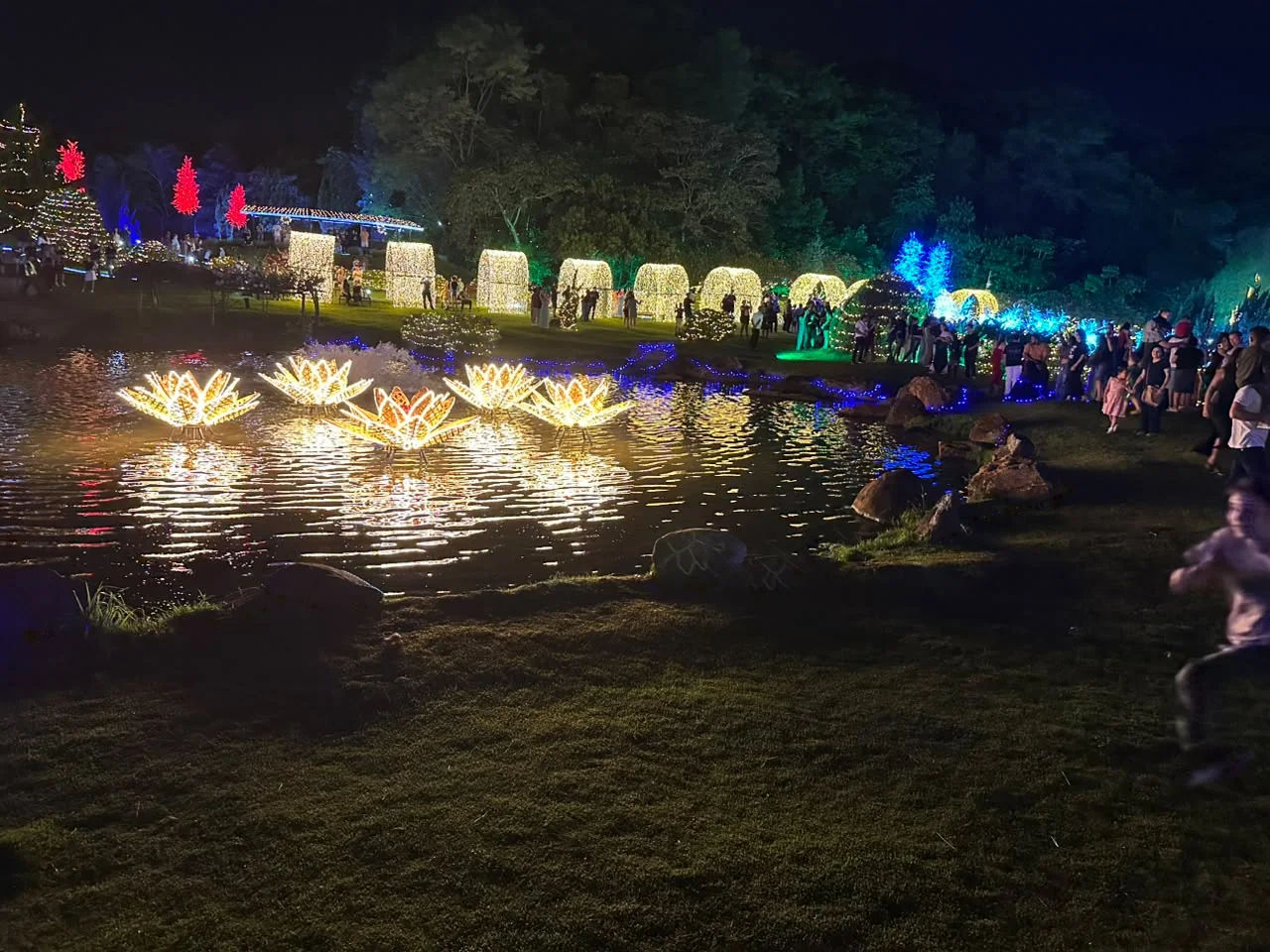
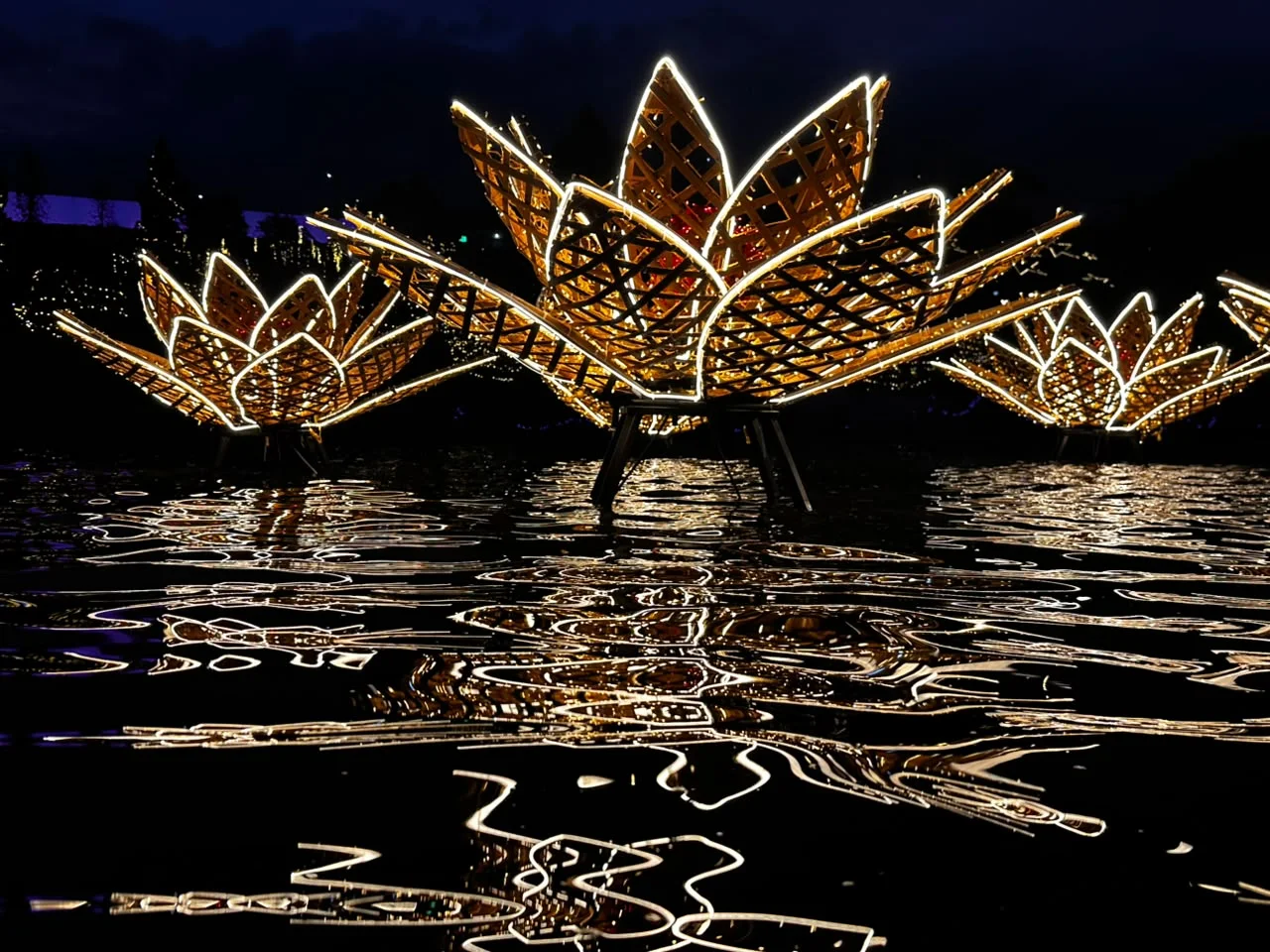
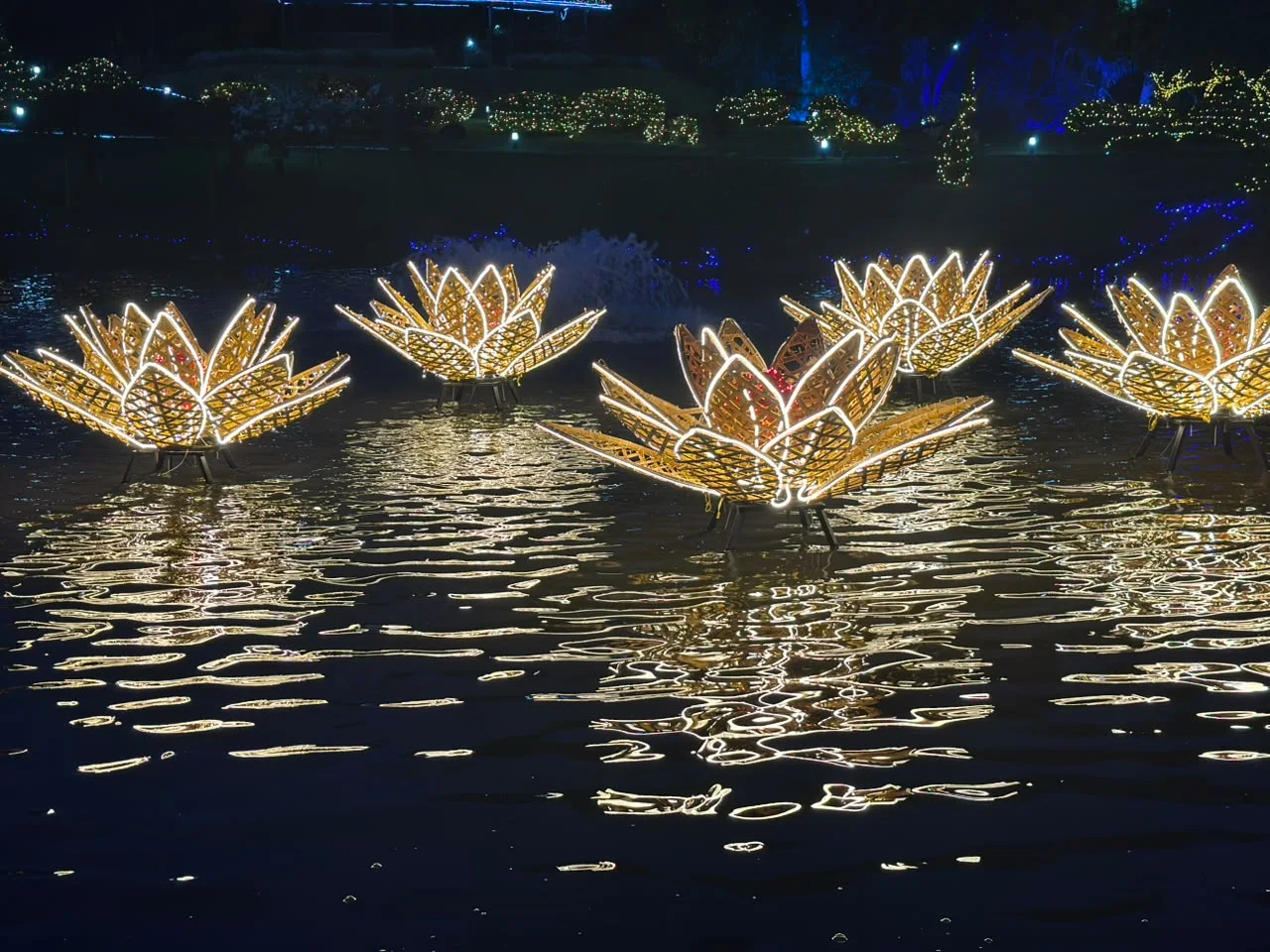
Meet the structures of Christmas at Parque do Japão 2026
Scenographic elements that combine architecture, art and lighting. The result is a scenography that dialogues with the park's landscape, respects its architectural identity and contributes to the Christmas atmosphere.
Solução 1
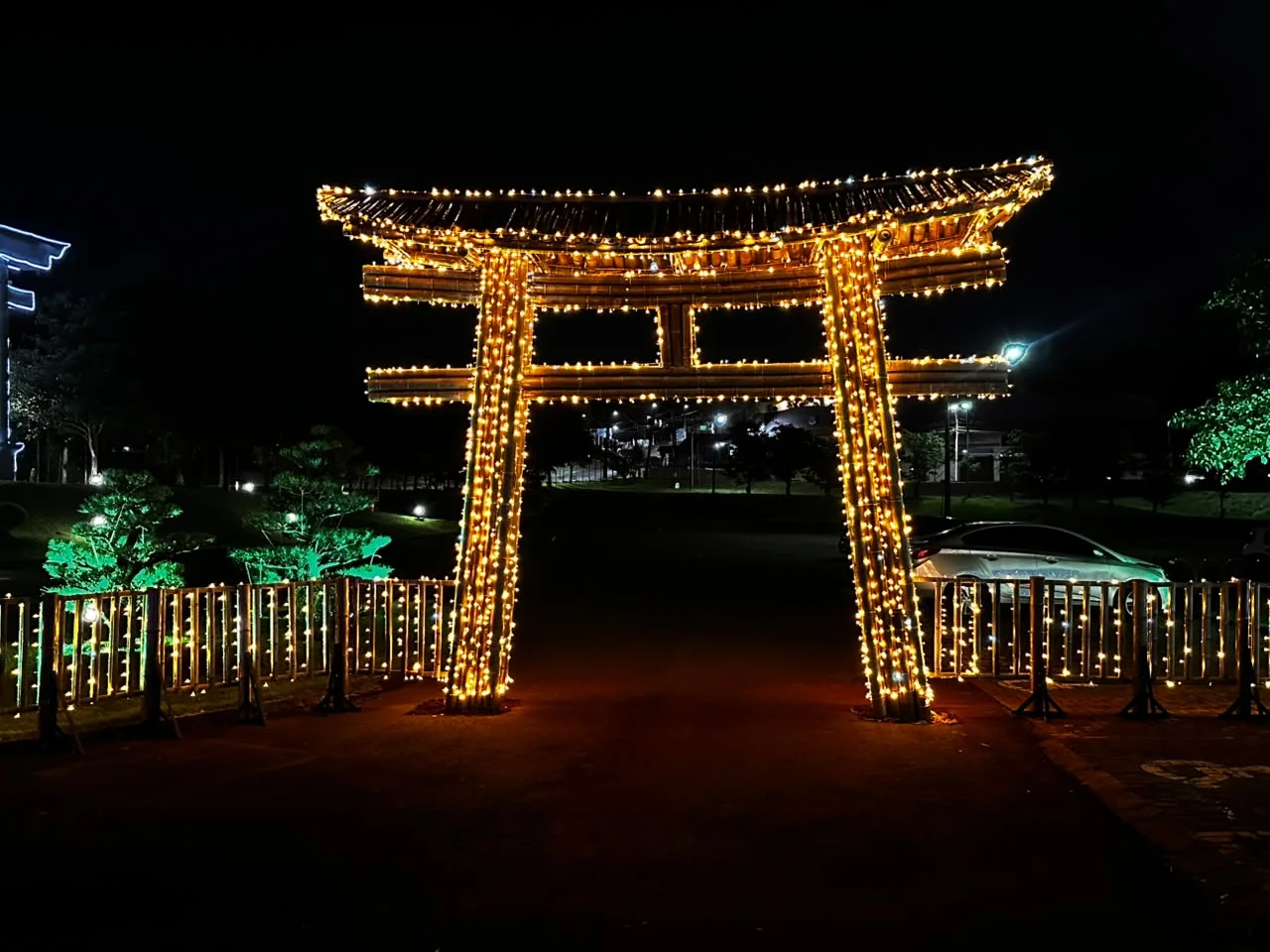
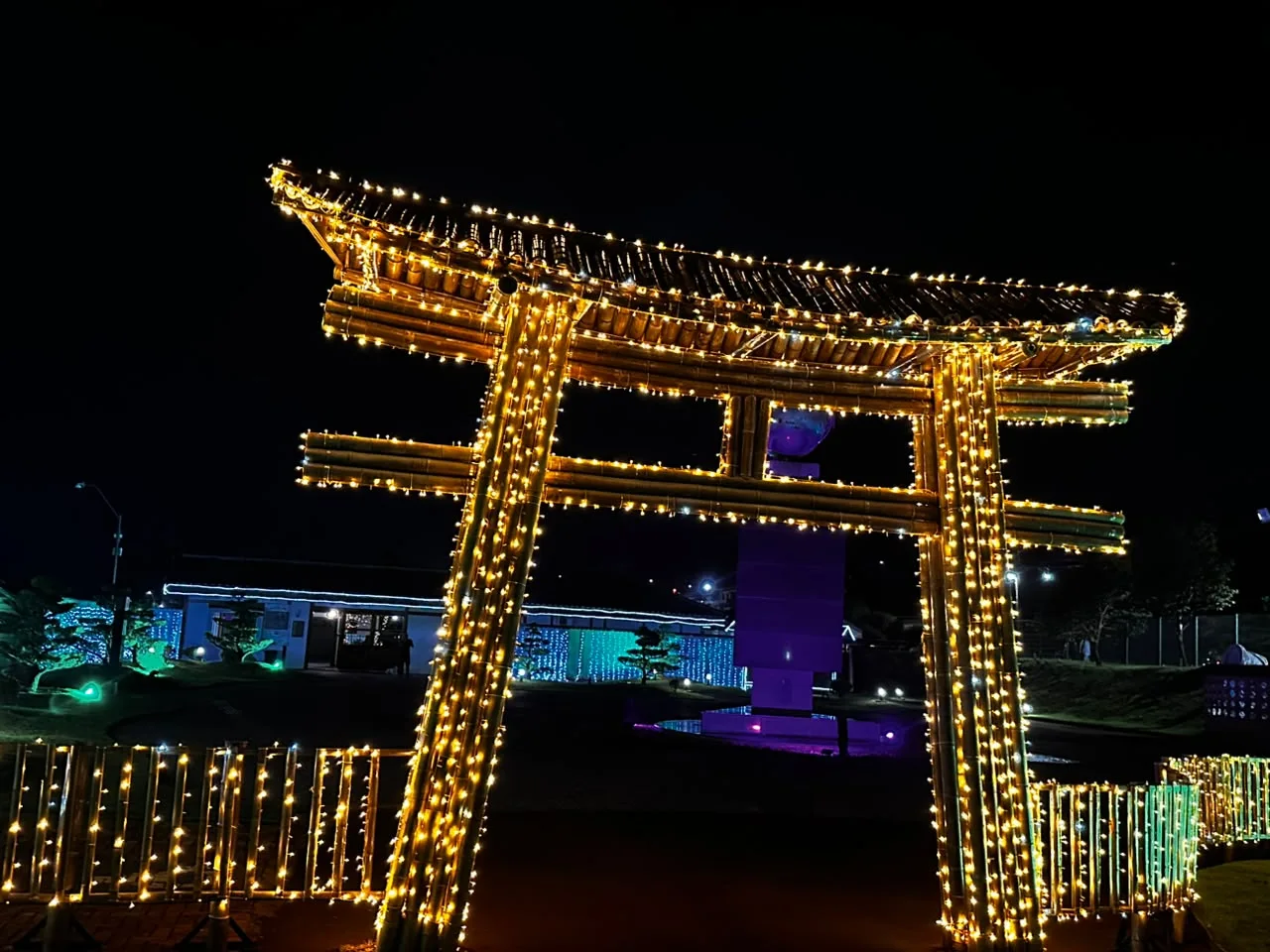
Torii: a symbol of Japanese architecture
Inspired by traditional Japanese gates, the bamboo Torii creates a direct connection between the scenography and the park's cultural identity. Its composition uses the natural characteristics of the culms to reinterpret this architectural element on a large scale. For 2026, the piece undergoes maintenance and restoration work, with attention to the condition of its components and its visual presentation.
Solução 2
Bamboo tunnel: an immersive experience
The tunnel invites visitors to experience the scenography in a different way. Its composition explores the repetition of structural elements, the geometry of the pieces and the continuity of the path, creating a relationship between architecture and movement. Preparation for 2026 includes the restoration of components and the interventions needed to conserve the structure.
Solução 3
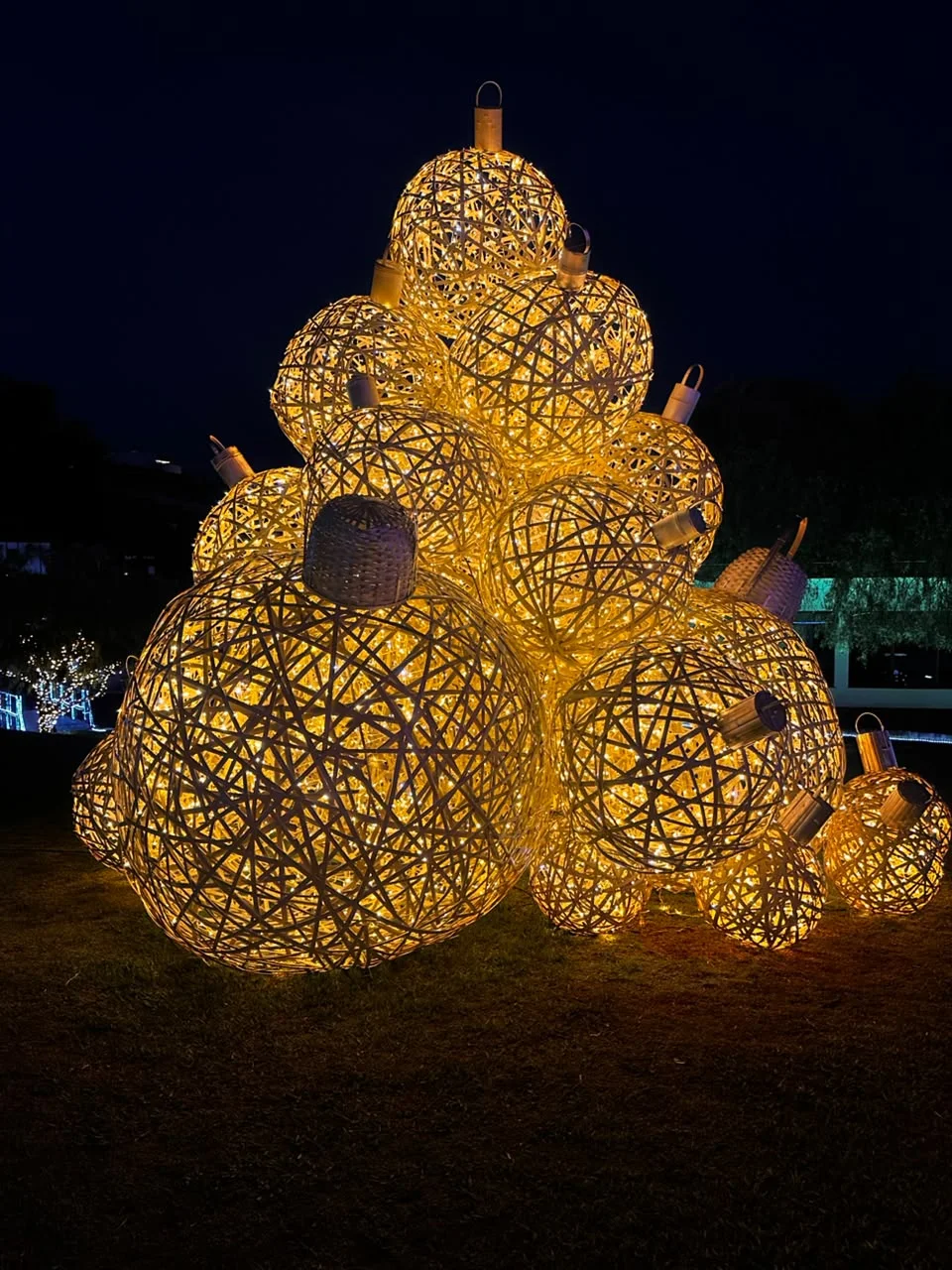
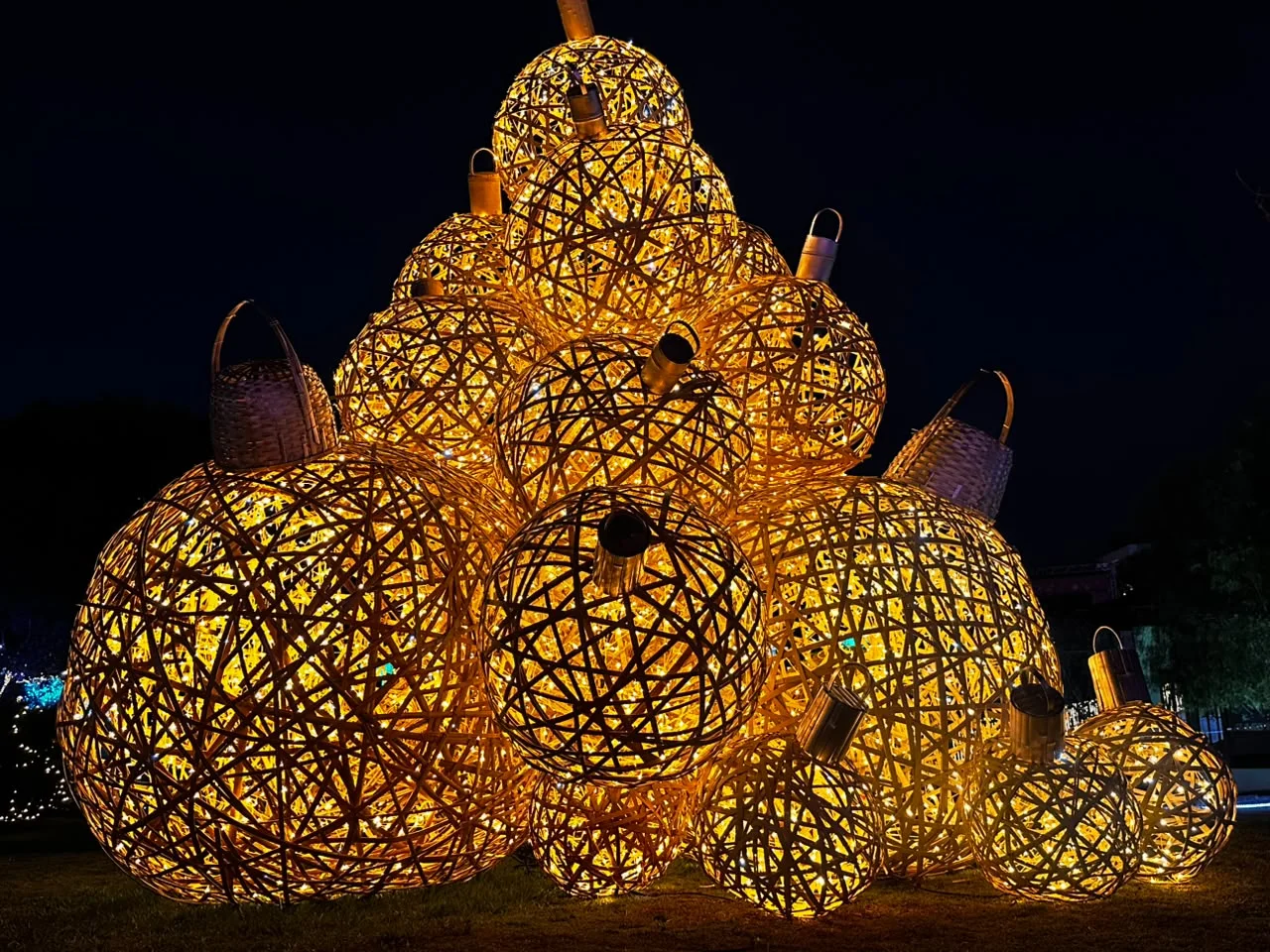
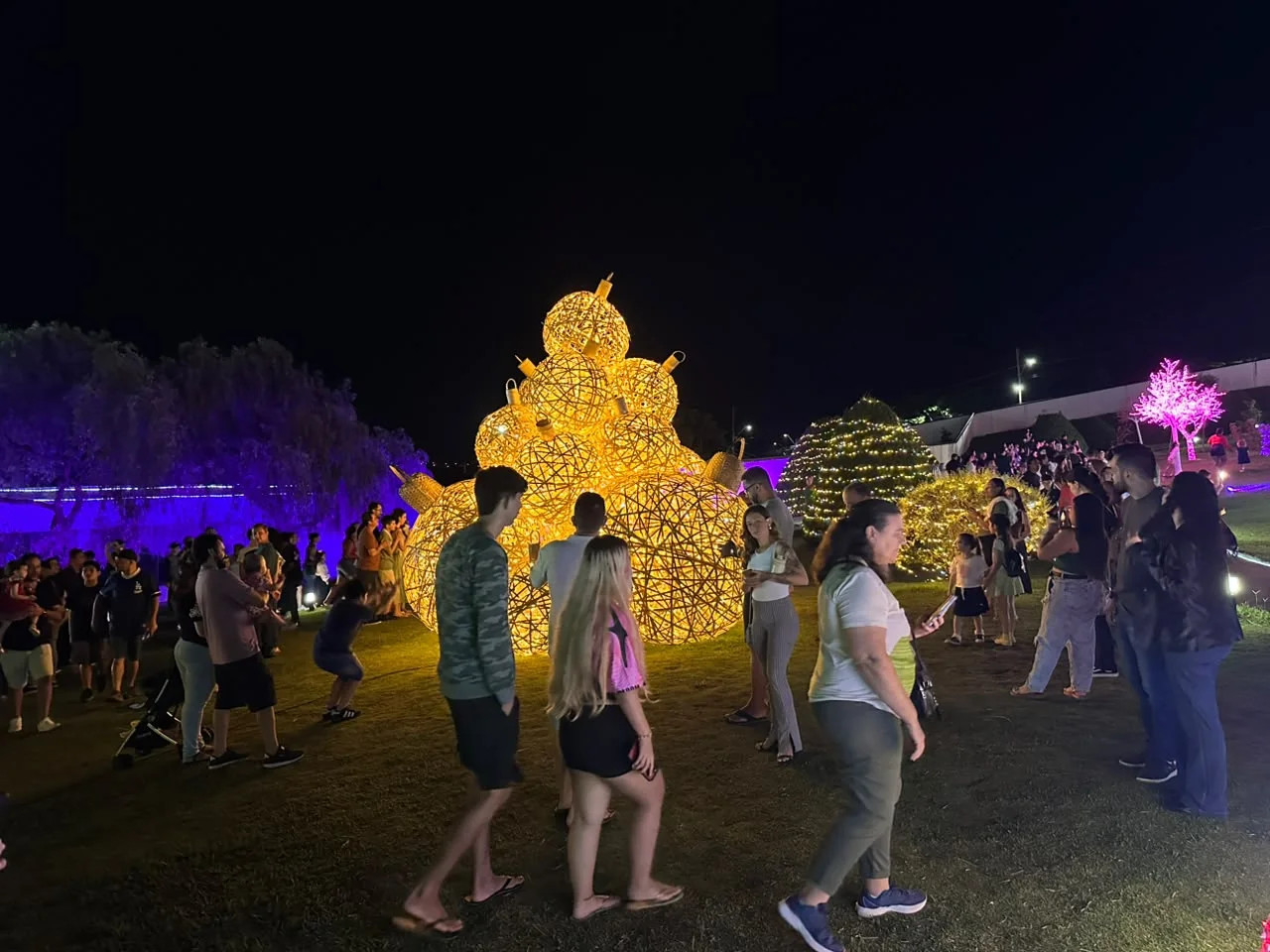
Christmas baubles: forms and volume
The set of Christmas baubles explores different sizes and three-dimensional geometry. The pieces show the versatility of bamboo in creating sculptural forms, combining natural elements with the traditional language of Christmas decoration.
Solução 4
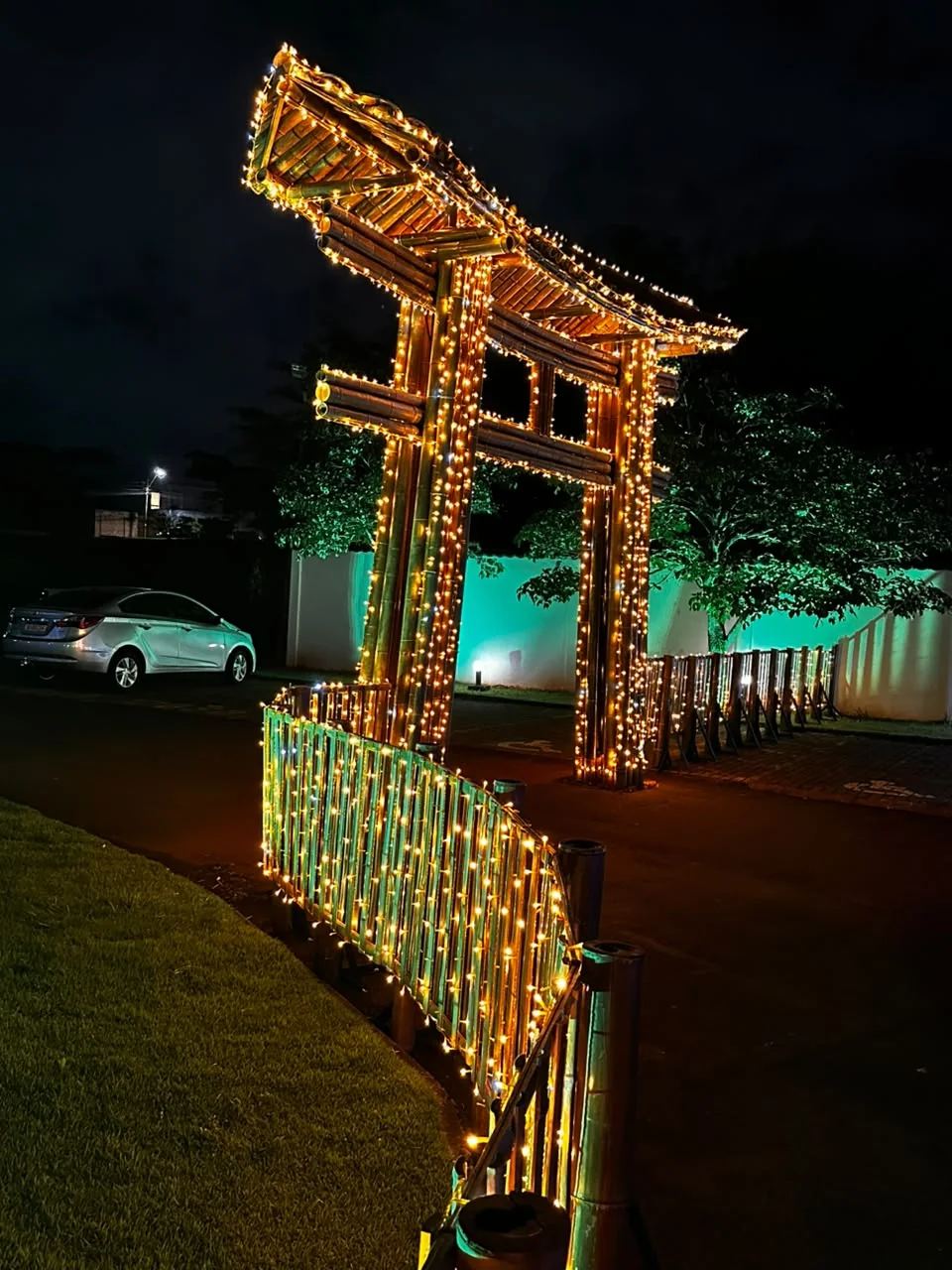
Bamboo fencing: integration with the landscape
Beyond the main structures, the project includes bamboo fencing elements that organize the spaces and give continuity to the visual language of the scenography. The same material in different applications reinforces the integration between the installations and the natural landscape of Parque do Japão.
Visual Record
Project Gallery
Comparative environmental study
Bamboo × steel: climate impact in numbers
The study compared the bamboo scenography with a reference steel alternative designed for the same scenographic function, considering materials, industrial production and processing, and transport to the event. The indicator is the 100-year global warming potential (GWP100).
14.99 t CO₂eq
Steel alternative
-1.70 t CO₂eq
Bamboo system, including the biogenic share
16.69 t CO₂eq
Calculated climate difference
The negative value for bamboo means that the carbon stored in the culms exceeds the production, manufacturing and transport emissions included in the assessment.
As it grows, bamboo absorbs atmospheric carbon into its biomass; part of this carbon remains stored in the culms after harvest and during use.
Industrial production and processing account for approximately 99.9% of the steel system's impact; transport adds up to 0.01 t CO₂eq.
Production and processing account for 87.6% of the difference and biogenic carbon for 12.9%. Supply transport slightly reduces bamboo's advantage (-0.5%): the raw material travels 525 km to fabrication, versus 9.8 km for steel.
The steel alternative was estimated by engineering, piece by piece, for the same scenographic function; it is not a detailed structural steel design.
≈ 19 million
full smartphone charges
+68,000 km
driven by a car
Equivalences calculated with the conversion factors used, only to give scale to the 16.69 t CO₂eq difference. Source: Comparative Materials Assessment — Parque do Japão, Maringá/PR, Brazil (2026). The assessment covers the material phase up to delivery at the event; the result is not a certified carbon credit.
Comparative environmental study
The Results
The 16.69 t CO₂eq result represents the calculated difference between two reference construction configurations. The assessment covers the material phase up to delivery at the event, not including the full use and end-of-life cycle. The value is not a certified carbon credit, nor does it prove an actual emissions reduction compared with an alternative installation that was built.
Outcome Indicators
| Indicator | Result Achieved |
|---|---|
| Calculated climate difference | 16.69 t CO₂eq between the bamboo system and the steel construction alternative. |
| Bamboo considered in the study | 1,267.74 kg |
| Steel estimated for the construction alternative | 3,755.53 kg |
| Positive emissions of the bamboo system | 0.46 t CO₂eq |
| Biogenic carbon accounted for in bamboo | -2.16 t CO₂ |
| Climate balance of the bamboo system | -1.70 t CO₂eq |
| Climate impact of the steel alternative | 14.99 t CO₂eq |
Field Intelligence
What We Learned
Sustainability that goes beyond decoration. For Christmas 2026, a comparative environmental study was carried out between the bamboo scenographic solution and a reference steel alternative, considering material quantities, production and processing, and transport to the event site. As it grows, bamboo absorbs atmospheric carbon into its biomass; part of this carbon remains stored in the culms after harvest and during use. From the workshop to Parque do Japão, the work follows these stages:
Assessment and planning: preparation begins with an analysis of the condition of existing components and the specific needs of each structure.
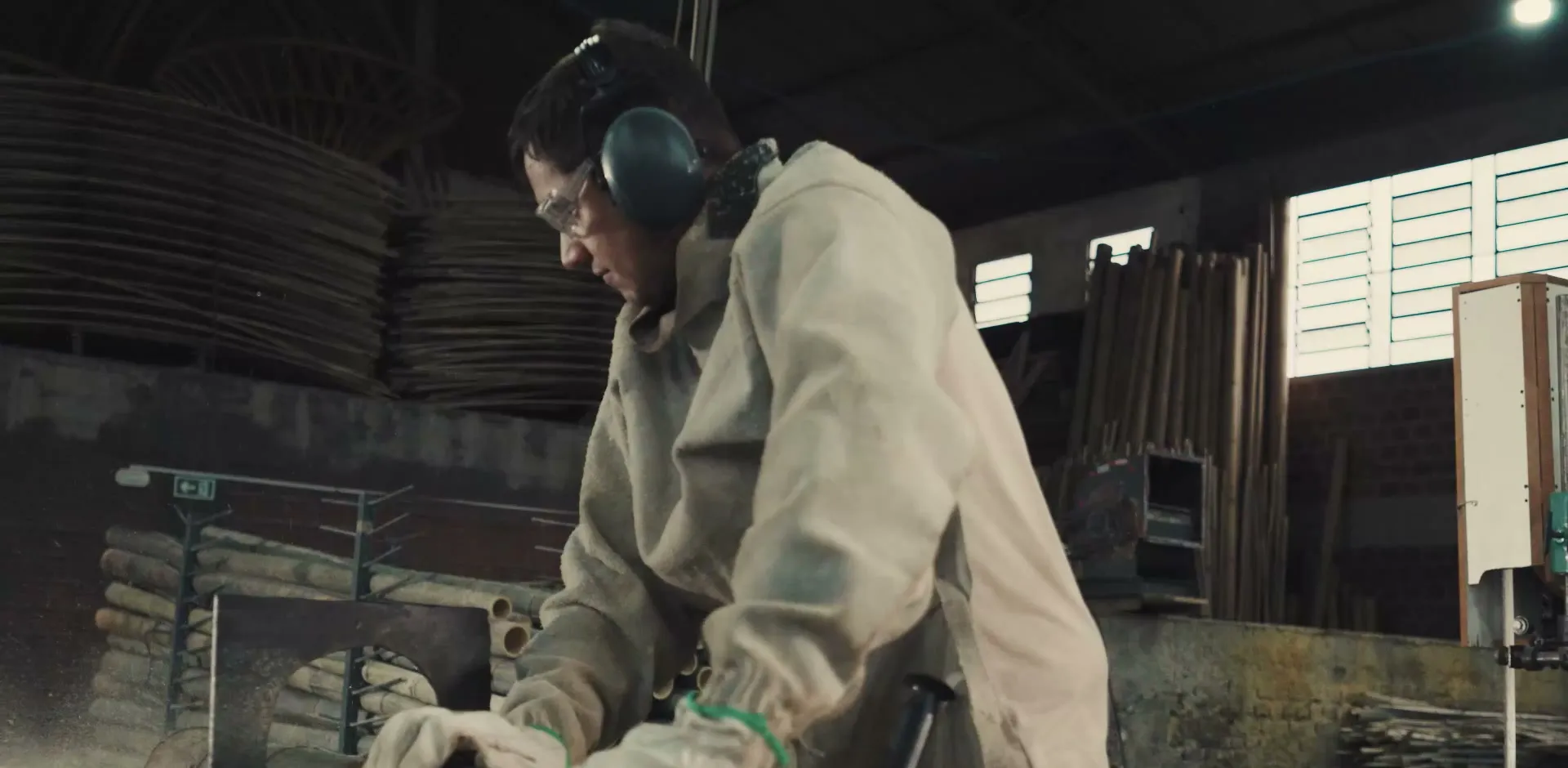
Restoration and fabrication: conservation work, replacement of components when needed and fabrication of elements suited to each piece.
Preparation and installation: the structures are organized for transport and installation, considering the characteristics of the site, technical procedures and execution conditions.
Monitoring and maintenance: during the exhibition period, the installations receive the monitoring and maintenance services planned for the project.
Dismantling: after the season ends, the structures are dismantled according to the execution plan.
Perguntas Frequentes sobre este Projeto
Next Step
Turn This Intelligence Into Action
Want to transform your city with bamboo scenography? We create and develop custom solutions for public events, urban installations, themed decorations and scenographic experiences.
Schedule an AssessmentWant to master the language of ESG reports and learn how to specify carbon-negative materials in your architectural projects? Join the Tudubambusa Academy waiting list.
Talk to Engineering